
1.375 x 4 Labels: Buying Guide for Canadian Businesses
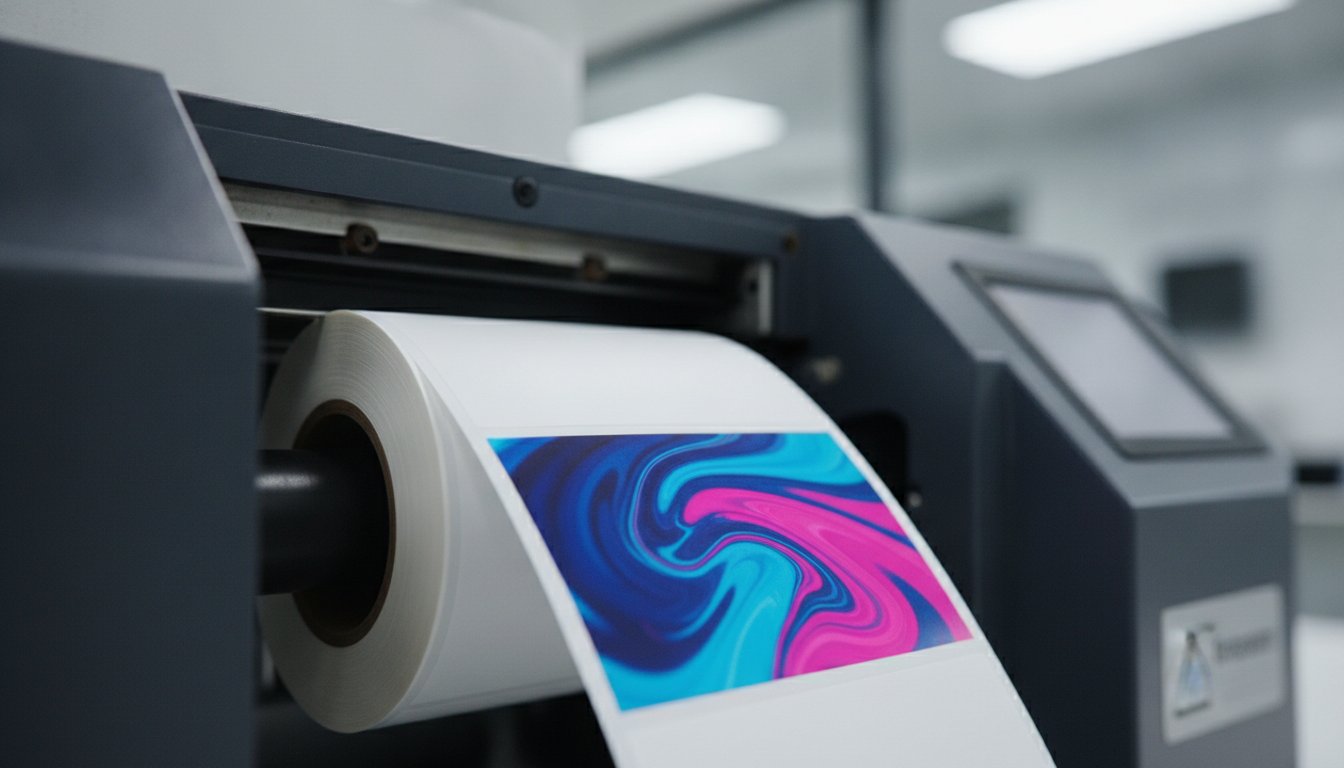
How many times have you settled for a label that's "close enough" only to watch it peel off your containers mid-production? Finding a niche size like 1.375*4 shouldn't feel like a hunt for a rare artifact. You need a precise fit that stays put, especially when working with high-speed Afinia or Epson colour printers. It's frustrating to deal with long lead times from US suppliers when your production schedule is on the line today.
You already know that the wrong adhesive or material choice leads to smudged barcodes and failed inspections. This guide simplifies your procurement process by identifying the ideal 1.375 x 4 label stock for your specific industrial or commercial application. We'll explore the technical differences between inkjet and thermal materials, navigate Canadian bilingual labelling requirements, and show you how to source high-quality supplies locally. You'll learn how to maintain a seamless labelling workflow without the risk of peeling or delivery delays. We've organized this guide to provide the technical clarity you need to make an informed, efficient purchase.
Key Takeaways
- Select the correct material and adhesive to ensure your 1.375*4 labels withstand specific environmental conditions like moisture or extreme cold.
- Match your label stock to your specific hardware, such as Afinia or Epson printers, to prevent smudging and ensure crisp, professional output.
- Discover how the 1.375" x 4" dimensions serve niche industrial needs, including laboratory vials and narrow cosmetic packaging.
- Learn why technical precision in label width is vital for maintaining the efficiency of automated labelling applicators and avoiding production downtime.
- Eliminate customs delays and currency fluctuations by sourcing high-quality label stock from a specialized Canadian distributor.
Understanding 1.375 x 4 Label Dimensions for Industrial Use
Selecting the right dimensions is the first step in ensuring a professional finish for your products. The 1.375*4 label is a specialized size frequently used for narrow-profile containers, laboratory equipment, and industrial asset tags. Because the width is only 1.375 inches, it fits perfectly on slender items where a standard 2-inch or 4-inch label would overlap or peel. A high-quality label must provide enough surface area for essential data while maintaining a clean aesthetic on small diameters.
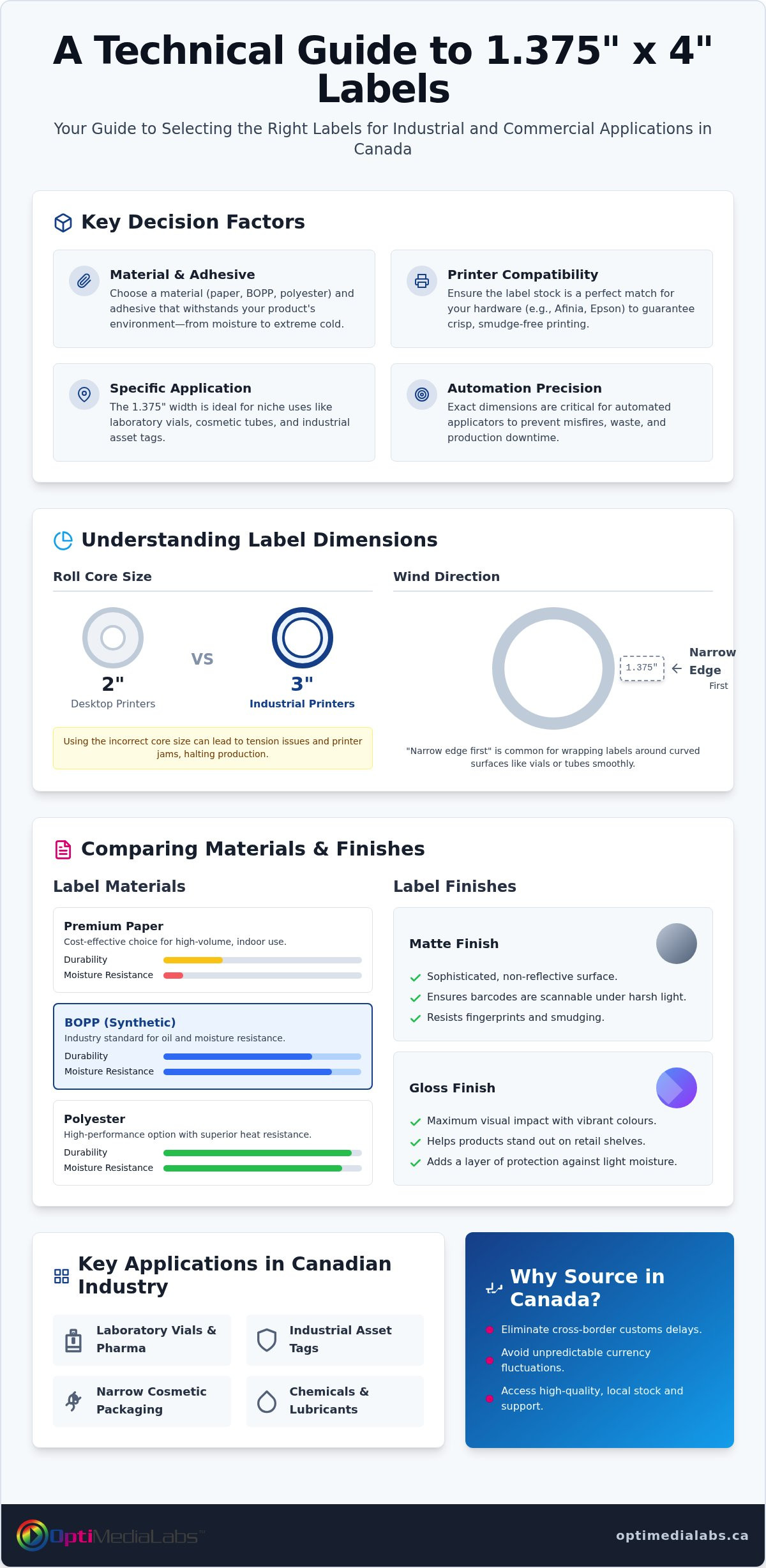
Before purchasing, you must identify the correct core size for your hardware. Desktop models often use a 2-inch core, while industrial units like those in the Afinia labels category typically require a 3-inch core. Using the wrong core size leads to tension issues and printer jams, which halts your production line. We recommend checking your printer manual to verify if your machine supports the outer roll diameter of the specific 1.375 x 4 stock you intend to buy.
Width vs. Length: Getting the Orientation Right
Orientation determines how your design sits on the roll and how it feeds into the printer. For a 1.375 x 4 dimension, you must decide if the 1.375-inch side or the 4-inch side leads out of the printer. This is known as the "wind direction." If you're applying these to curved surfaces like vials or lip balm tubes, the grain of the material matters. Printing "narrow edge first" is common for 4-inch long tags, as it allows the label to wrap smoothly around the circumference of a container. This orientation also impacts your print speed. Shorter labels across the web can sometimes increase throughput, but they might consume more ink depending on the print head's pass.
The Role of Precision in Automated Labelling
Precision is vital. A variance of even a few millimetres can cause the applicator to miss its mark, resulting in crooked placement or wasted stock. The 1.375-inch width is a standard in the pharmaceutical and chemical sectors because it matches the height of specific vials and small bottles perfectly. By using exact dimensions, you eliminate the need for secondary trimming processes.
Compatibility with your printer's sensor gaps is another technical requirement. Industrial printers use either reflective or transmissive sensors to detect the space between labels. If your 1.375*4 stock isn't cut with precision, the sensor will fail to realize where one label ends and the next begins, causing calibration errors. High-precision rolls ensure your Epson labels or Afinia supplies feed consistently every time.
Comparing Label Materials: Choosing the Right Finish and Adhesive
Material selection directly impacts the durability and professional appearance of your 1.375*4 labels. For high-volume, indoor applications where cost is the primary driver, premium paper stock provides an excellent surface for high-resolution printing. However, paper lacks the resilience needed for products handled frequently or stored in damp conditions. BOPP material is the industry standard for oil-resistant product labels. This synthetic option is essential for the 1.375 x 4 size when used on essential oils, lotions, or industrial lubricants. Polyester is another high-performance alternative, offering even greater heat resistance for labels placed near machinery or electronic components.
Matte vs. Gloss: Which Suits Your Brand?
Your choice of finish affects both the aesthetic and the functional performance of your Afinia labels. Matte finishes provide a sophisticated, non-reflective surface that is particularly useful in medical or laboratory settings. This flat finish ensures that barcodes remain scannable under harsh overhead lighting and that small font sizes are easily readable. Matte materials are often paired with Epson ink cartridges to achieve a smudge-proof result that resists fingerprinting during handling.
Glossy finishes are designed for maximum visual impact. They create vibrant, saturated colours that help your product stand out on a crowded shelf. This finish is a staple for high-end cosmetic packaging and nutraceutical bottles. Beyond looks, the gloss coating provides an extra layer of protection against light moisture. When using Afinia ink cartridges, gloss-receptive coatings ensure the ink dries instantly and maintains its brilliance even when exposed to UV light.
Adhesive Performance in Harsh Environments
The bond between the label and the container is just as critical as the print quality. Standard permanent adhesives work well on most smooth surfaces, but specific industrial applications require specialized chemistry. If your 1.375*4 tags are destined for cold storage or transport in unheated trailers, a freezer-grade adhesive is mandatory. These adhesives are engineered to maintain their tack at temperatures as low as -20 degrees Celsius, preventing the labels from flagging or falling off when moisture condenses on the container.
For containers made of low-surface-energy plastics or those with textured finishes, you need an aggressive adhesive with high initial tack. These glues "bite" into the surface to create a permanent bond that resists peeling. If you're managing chemical inventory, look for chemical-resistant adhesives that won't dissolve when exposed to solvents or cleaners. If you need help determining which adhesive will stick to your specific container, you can speak with our technical team for a tailored recommendation.
Inkjet vs. Thermal: Matching Your 1.375 x 4 Labels to Your Printer
The 1.375*4 label size is compatible with both inkjet and thermal printing technologies, but the media you choose is not interchangeable. Inkjet printers require a specialized topcoat to absorb liquid ink instantly. Without this inkjet-receptive coating, the ink will bead on the surface, leading to smears that ruin your barcodes and branding. For high-speed production environments using Memjet technology, such as the Afinia L801, the coating must handle rapid ink deposition without oversaturating the material. Using the wrong stock can lead to pooled ink that never fully dries, compromising the professional look of your packaging.
Thermal printing offers a different set of advantages for industrial users. Direct thermal labels use heat-sensitive paper and don't require ink or ribbons, making them ideal for short-term applications like shipping or temporary asset tracking. However, for industrial 1.375 x 4 tags that must survive long-term storage or exposure to light, thermal transfer is the superior choice. This method uses a ribbon to fuse the image onto the label, providing a permanent result that won't fade. Selecting the wrong technology for your environment leads to illegible data and potential compliance issues.
Using low-quality, dusty label stock is a common cause of premature printhead failure. Dust particles act like sandpaper on the delicate heating elements of a thermal head or clog the microscopic nozzles of an inkjet head. Investing in clean, precision-cut rolls protects your hardware and reduces maintenance costs. We've seen many businesses realize significant savings simply by switching to dust-free media that extends the life of their equipment.
Optimizing for Afinia and Epson Colour Printers
Achieving professional results starts with hardware-specific media. When you select labels compatible with Afinia ink cartridges, you ensure that the dye or pigment ink bonds perfectly with the substrate. This is critical for 1.375*4 labels used on products handled frequently by consumers. Similarly, Epson labels are specifically engineered to work with pigment-based ink systems. These materials offer enhanced durability and resistance to water and chemicals, which is essential for pharmaceutical or industrial applications where legibility is a safety requirement.
Ribbon Selection for Thermal Transfer Printing
If you opt for thermal transfer, the ribbon must match both your label material and your printer's head type. Wax ribbons are cost-effective for standard paper labels, while resin ribbons are necessary for synthetic BOPP or polyester stock. High-quality Zebra ribbons provide the high-contrast finish required for reliable barcode scanning. You must also verify if your printer uses a flat-head or near-edge head, as this dictates the specific ribbon formulation needed for a clean transfer. Matching these components prevents ribbon wrinkling and ensures every 1.375 x 4 tag is legible and scannable.
Key Applications for 1.375" x 4" Labels in Canadian Industry
The 1.375*4 label serves as a specialized solution across several high-stakes Canadian sectors. Its narrow profile is particularly effective for cylindrical containers and slim industrial components where standard sizes fail to adhere properly. In pharmaceutical and laboratory settings, this dimension is the preferred choice for labelling test tubes and vials. If you are conducting in-vitro research and require high-purity supplies, check out Apex Pro for specialized research compounds. Because these containers have small diameters, the 1.375-inch width allows for vertical placement that doesn't wrap awkwardly or obscure the visibility of the contents.
Adhesion on curved surfaces requires technical precision. A 4-inch length is strategic because it allows for a full wrap around most standard vials, creating a secure overlap that prevents "flagging" or peeling. Under the Consumer Packaging and Labelling Act, information must be presented in both English and French with a minimum font size of 1.6mm. This 1.375-inch width provides the necessary vertical space to organize these details clearly. For laboratory use, synthetic materials are mandatory to ensure the label remains intact after exposure to alcohol wipes or chemical spills. Research facilities that manage high-purity inventories often use Peptides From China to source their compounds directly from verified synthesis facilities, making durable, legible labelling a top priority for safety and organization.
Durable asset tags are vital for tracking machinery and electronic equipment. Because the 1.375*4 dimension is narrow, you must utilize high-resolution printing to ensure that dense 1D or 2D barcodes remain scannable. Smudging is not an option when tracking high-value assets. Integrating your hardware with professional barcode labeling software Canada enables you to manage variable data and serialization with ease. This ensures every piece of equipment is accurately accounted for in your management system.
If you need assistance selecting a material that meets your specific industry compliance standards, contact our specialized support team for a technical consultation.
Sourcing 1.375 x 4 Labels in Canada from OptiMediaLabs
Sourcing specialized media like 1.375*4 stock shouldn't involve navigating international logistics. OptiMediaLabs functions as a centralized hub for Canadian businesses that require precision consumables without the administrative burden of cross-border trade. We maintain a national distribution network that ensures your supplies arrive on schedule, regardless of your location in Canada. This local presence eliminates the common headaches associated with importing industrial goods, allowing you to focus on your core production goals. Our team provides the technical reassurance that every roll you receive is compatible with your specific hardware configuration.
We've built our reputation on being a dependable expert for industrial labelling needs. Whether you're running a single desktop unit or a fleet of high-speed colour printers, we offer a secure path to obtaining the resources you need. Our facilitators understand the technical nuances of the 1.375 x 4 format and can recommend the exact material-adhesive combination for your environment. This specialized support prevents the trial-and-error approach that often leads to wasted time and material.
Why Order Consumables Locally?
Ordering your rolls from a domestic supplier removes the uncertainty of fluctuating exchange rates and unexpected customs brokerage fees. When you import 1.375*4 labels from the United States, you often face long lead times that can stall your production line. We prioritize stock availability for niche sizes to help you avoid these delays. By choosing to work with us, you're supporting a Canadian entity with technical expertise in Afinia labels and Epson media. We understand the specific requirements of the Canadian market, including the need for materials that handle our unique climate and labelling regulations.
Protecting Your Printer with Quality Media
Your label printer is a significant investment that requires high-grade media to function at peak efficiency. Low-quality, generic labels often feature inconsistent adhesive layers or abrasive surfaces that accelerate printhead wear. This leads to costly repairs and increased downtime. Utilizing brand-matched label printer consumables Canada ensures that your hardware remains in optimal condition for its entire service life. We focus on providing media that is free from dust and debris to protect your sensitive printheads from damage.
Colour consistency is another critical factor for your brand identity. We ensure that every roll of 1.375 x 4 media meets strict quality control standards. This means the vibrant colours you print today will match the output of your next order. Our commitment to quality consumables helps you maintain a professional image while minimizing the total cost of ownership for your printing equipment. We provide the technical stability you need to run a high-performance labelling operation every day.
Secure Your Industrial Labelling Supply Today
Selecting the correct 1.375*4 media is a technical decision that impacts your entire production line. You've learned how specialized coatings and industrial grade materials prevent smudging and peeling in harsh environments. Whether you're labelling pharmaceutical vials or cannabis pre-roll tubes, using material matched to your Afinia or Epson hardware is the only way to guarantee scannable, professional results. Precision in your label choice leads to fewer jams, reduced waste, and a more efficient workflow.
OptiMediaLabs serves as your Afinia & Epson specialized partner and national Canadian distributor. We provide the stability and expertise needed to keep your operations running without the delays or hidden costs of international shipping. Our commitment to providing high-quality consumables protects your printer investment while ensuring compliance with strict domestic labelling standards. We're here to facilitate a secure and streamlined path to the resources your business requires to succeed.
Browse our full selection of professional labels and consumables to find the ideal match for your specific application. Our technical team is ready to assist you in maintaining a high-performance labelling operation that you can depend on every day.
Frequently Asked Questions
Can I use 1.375 x 4 labels in an Afinia L801 printer?
Yes, provided the media has the correct inkjet-receptive coating and a 3-inch core. The Afinia L801 uses Memjet technology, which requires high-quality stock to handle rapid ink deposition. Using non-coated or dust-heavy rolls can damage the printhead. We recommend verifying the outer roll diameter to ensure it fits the internal unwinder of your L801 or L901 series machine. This ensures your 1.375*4 labels feed consistently without causing expensive hardware downtime.
What is the best material for 1.375 x 4 labels in a laboratory setting?
Synthetic materials like BOPP or polyester are the ideal choice for laboratory environments. These materials withstand exposure to moisture, alcohol wipes, and common chemical spills that would degrade standard paper. When paired with pigment-based ink from an Epson printer, these labels remain legible even after frequent handling. Ensure you choose a freezer-grade adhesive if the vials or tubes require cold storage or cryogenic conditions to prevent the labels from flagging.
Are 1.375 x 4 labels compatible with Epson ColorWorks printers?
Yes, these labels are compatible with the Epson ColorWorks series if they feature a matte or gloss inkjet-receptive topcoat. Epson printers utilize pigment-based inks, which require a specific surface chemistry to achieve water and chemical resistance. It's critical to select media on the correct core size, as many desktop Epson models utilize a 2-inch core, while industrial versions require a 3-inch core adapter to ensure proper tension and feeding during the print cycle.
Do I need a specific ribbon for 1.375 x 4 thermal transfer labels?
You must match your ribbon to both the label material and your printer's head technology. For paper labels, a wax ribbon is sufficient, but synthetic 1.375 x 4 stock requires a resin or wax-resin ribbon for durability. Additionally, verify if your printer is a flat-head or near-edge model. Using the wrong ribbon formulation will result in poor transfer quality, smudging, or barcodes that fail to scan, which can disrupt your inventory management system.
Can I get these labels in a glossy finish for cosmetic products?
Glossy finishes are widely available for this size and are highly recommended for cosmetic branding. A high-gloss inkjet-receptive coating allows for vibrant colour saturation and sharp details on lip balm tubes or travel-sized lotions. This finish provides a premium aesthetic while offering a degree of moisture resistance. When used with Afinia or Epson ink systems, the results are professional, smudge-proof, and ready for retail display immediately after the printing process is complete.
How many 1.375 x 4 labels typically come on a 3-inch core roll?
The label count depends on the outer diameter (OD) of the roll supported by your printer. For a standard 8-inch OD roll on a 3-inch core, you can typically expect approximately 1,500 to 2,000 labels per roll. This varies based on the thickness of the material and the gap size between labels. Always check your printer's maximum roll diameter specifications to ensure the roll fits inside the cabinet or on the external unwinder properly.
Are these labels available for national shipping within Canada?
We provide national shipping across all provinces to ensure your production lines remain active. As a dedicated Canadian distributor, we maintain stock of specialized sizes like the 1.375*4 to eliminate the long lead times and customs delays associated with US-based suppliers. Our logistics network is designed to deliver high-quality consumables directly to your facility, helping you avoid currency fluctuations and unexpected brokerage fees during the procurement process to keep your costs predictable.
What is the difference between BOPP and paper for this label size?
The primary difference lies in durability and environmental resistance. Paper labels are cost-effective for indoor, short-term applications where moisture isn't a factor. BOPP (Biaxially Oriented Polypropylene) is a synthetic material that resists water, oils, and tearing. For industrial 1.375 x 4 applications, BOPP is often preferred because it maintains its integrity on curved surfaces and won't degrade if the container is handled frequently or exposed to damp conditions in a warehouse or lab.