
140Xi4 Ribbons: A Canadian Buyer’s Guide to Thermal Transfer Performance
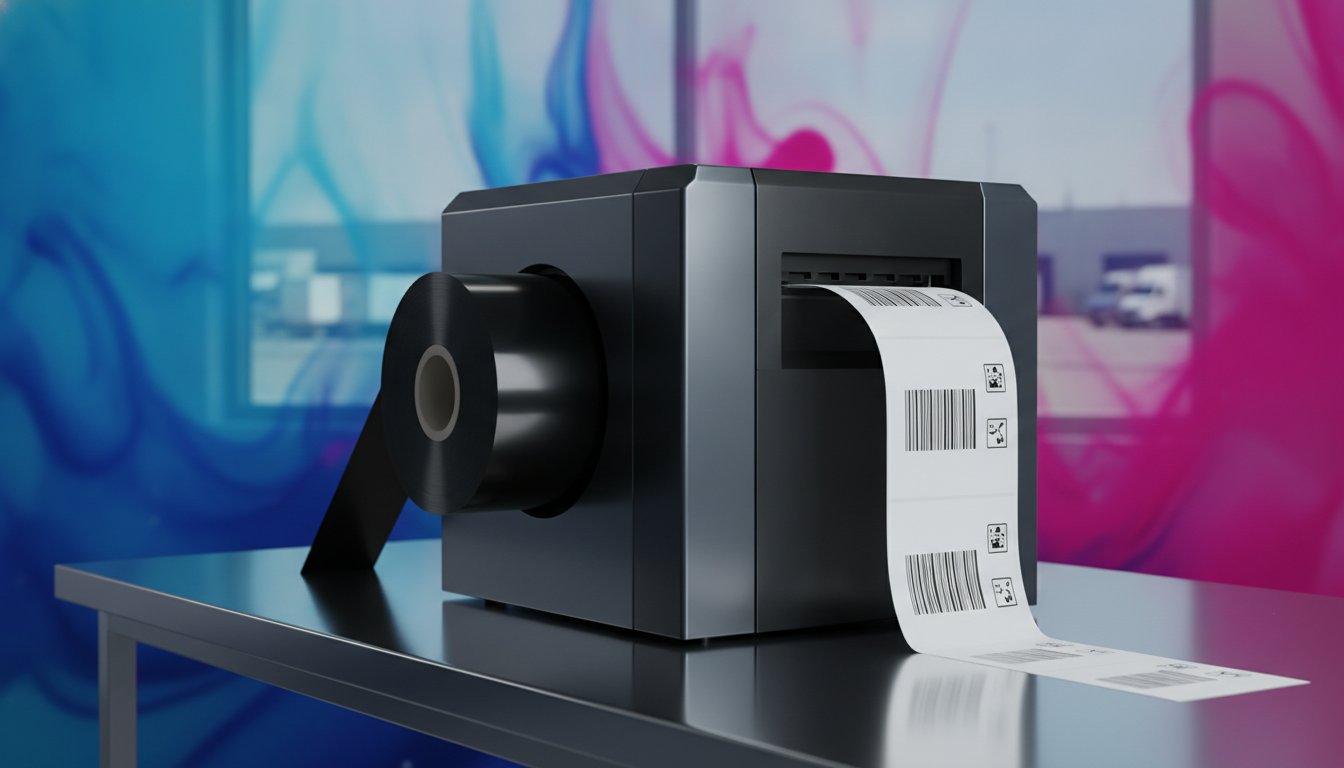
The Zebra 140Xi4 is a high-speed industrial workhorse, yet its performance is entirely dependent on the quality of the 140xi4 ribbons you select. A single ribbon break or a batch of unreadable, smudged barcodes can stall your entire shipping department and lead to costly retail chargebacks. We recognize that in a high-volume production environment, frequent downtime to change short rolls or troubleshoot poor print quality is a liability you can't afford. This guide provides the technical clarity required to identify the ideal ribbon grade and size for your specific applications, ensuring your labels remain crisp and durable throughout the rigours of the Canadian supply chain.
By selecting the correct thermal transfer chemistry, you can eliminate scanning failures and protect your printheads from premature wear. We will examine the performance differences between wax, wax/resin, and resin formulations while highlighting how high-capacity 450m rolls reduce changeover frequency. You'll also discover how to organize a reliable local supply chain to avoid the unpredictable delays of cross-border shipping. Let's ensure your 140Xi4 operates at peak efficiency with the right consumables for your facility.
Key Takeaways
- Match ribbon chemistry to your specific label substrate to ensure smudge-proof durability and extend the life of your Zebra printhead.
- Standardize on high-capacity 450m 140xi4 ribbons to reduce frequent roll changes and significantly decrease production downtime.
- Select specialized resin formulations to meet strict GHS compliance standards and survive the rigours of Canadian cold-storage environments.
- Balance ribbon grade with your desired print speed to maintain crisp barcode legibility during high-volume industrial runs.
- Secure a reliable supply chain through a national Canadian distributor to avoid the complications of cross-border shipping and international duties.
Understanding Zebra 140Xi4 Ribbon Requirements
The Zebra 140Xi4 is a high-performance industrial printer engineered for continuous 24/7 operation. It's built for heavy-duty cycles in demanding warehouse and manufacturing environments. To maintain its output quality, you must use high-performance consumables. Choosing the right 140xi4 ribbons is not just about price; it's about protecting your equipment and ensuring every barcode scans correctly. This printer requires specialized materials to handle its high torque and fast throughput.
Thermal Transfer vs. Direct Thermal for Industrial Use
While the 140Xi4 supports direct thermal printing, industrial applications in Canada almost exclusively use thermal transfer. In direct thermal mode, the printhead applies heat directly to chemically treated labels. This is fine for short-term use, but the labels fade when exposed to sunlight, friction, or heat. Industrial thermal transfer printing uses a ribbon to melt ink onto the label surface. This process creates a permanent bond that withstands the rigours of Canadian shipping and logistics.
Smudge-proof and heat-resistant labels are critical for items stored in unheated facilities or transported across vast distances. The 140Xi4 is a high-speed machine capable of printing at 12 inches per second. Low-grade ribbons often fail at these speeds, leading to "Ribbon In" errors or incomplete transfers. High-quality Zebra ribbons include a specialized backcoating that reduces friction against the printhead. This coating prevents static build-up and extends the life of your expensive 140Xi4 printhead.
The Anatomy of a 140Xi4 Ribbon Roll
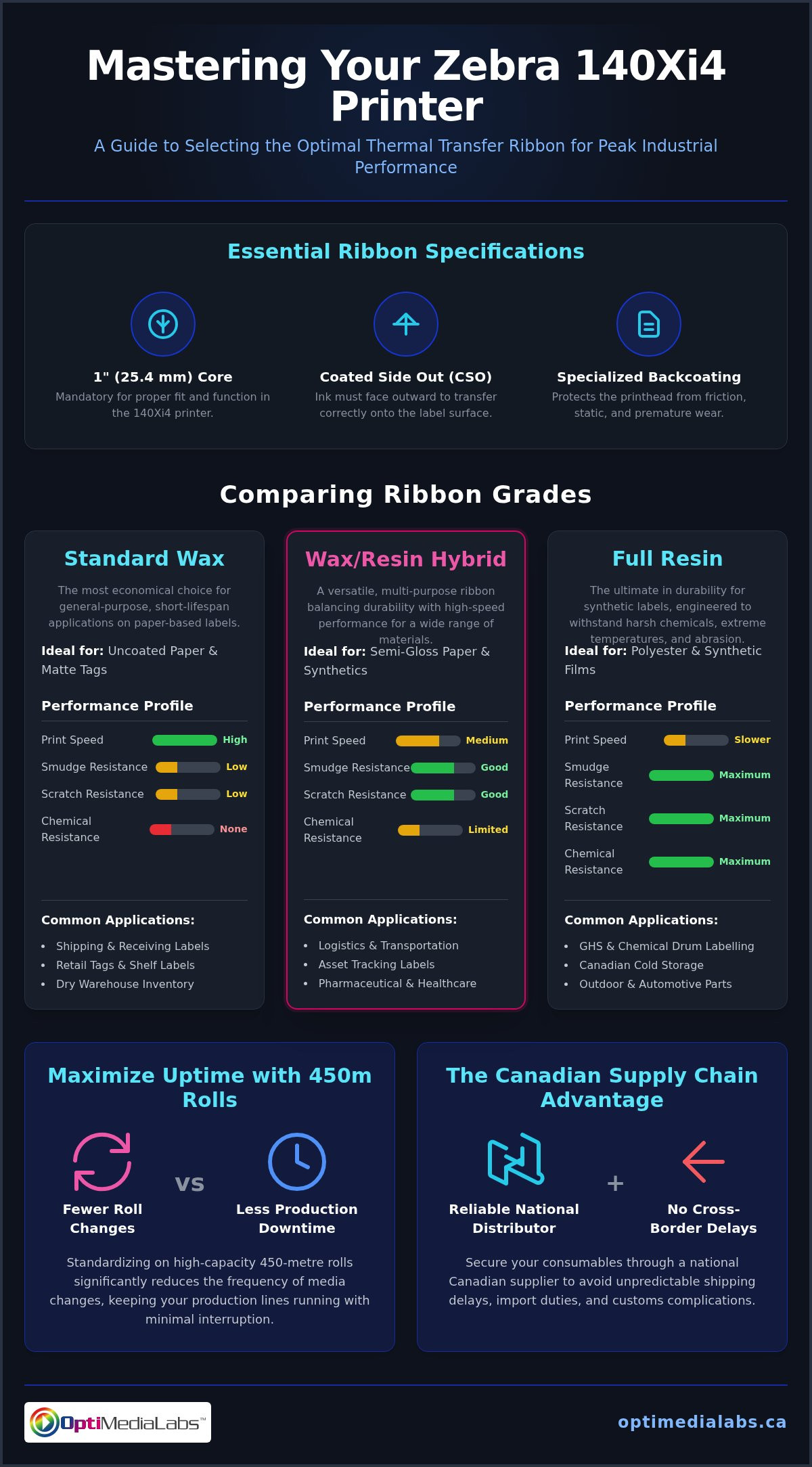
Industrial printers like the Xi series require specific physical roll dimensions to function. All 140Xi4 ribbons must be wound on a standard 1-inch (25.4 mm) core. Using the wrong core size or a roll that's too wide will cause mechanical jams and production delays. You must also verify the ink configuration before loading the media.
Ribbons come in either Coated Side Out (CSO) or Coated Side In (CSI) formats. Zebra industrial printers are designed for the CSO configuration, where the ink faces away from the core to contact the label. The CSI standard refers to ribbons where the ink is wound on the inside of the roll, which is incompatible with the 140Xi4's ribbon path. Installing the wrong configuration will result in ink transferring to the platen roller rather than the label, causing a significant mess and potential hardware damage.
Comparing Ribbon Grades: Wax, Wax/Resin, and Resin
Selecting the correct chemistry for your 140Xi4 determines the longevity of your barcode and the speed of your production line. This printer is a versatile machine, but its 12 ips speed capacity varies based on the melting point of the ink. High-quality 140xi4 ribbons ensure that the ink bonds instantly without bleeding, even at peak throughput. You must match the ribbon grade to your specific label substrate to avoid wasted media and unreadable scans.
Standard Wax Ribbons for Paper Labels
Standard wax is the most economical choice for uncoated paper and matte tags. It's ideal for shipping labels and retail applications where the label has a short lifespan. To optimize your 140Xi4 for high-speed wax printing, you must calibrate the darkness settings to prevent excessive heat build-up. While wax is fast, it offers minimal resistance to friction. These ribbons will smudge if handled frequently or exposed to the rigours of outdoor moisture. If your labels only need to survive a few days in a dry warehouse, wax provides the best return on investment.
Wax/Resin Ribbons for Enhanced Durability
This hybrid grade is the standard for semi-gloss paper and synthetic materials like BOPP. By blending wax with resin, these ribbons provide superior smudge and scratch resistance. They're perfect for logistics environments where labels face moderate moisture or chemical exposure. You'll find a reliable balance of print quality and speed here. It's a versatile option for mid-range industrial applications that require labels to remain legible for months rather than days. Using wax/resin 140xi4 ribbons allows you to maintain high productivity without compromising on barcode integrity.
Resin Ribbons for Maximum Environmental Resistance
Full resin is mandatory for polyester labels and environments involving harsh chemicals. It's the only formulation that achieves GHS compliance for Canadian safety standards in hazardous material labelling. Resin requires higher heat settings and slower print speeds to ensure the ink cures properly onto the synthetic surface. This grade survives extreme temperatures, solvent exposure, and heavy abrasion. For a deeper look at compliance requirements, see our Industrial Labeling Solutions Canada guide. If you aren't sure which grade fits your specific substrate, speak with our technical team for a compatibility assessment.
Optimizing Ribbon Dimensions to Minimize Downtime
Maximizing the throughput of your Zebra 140Xi4 requires more than just high print speeds. It requires strategic media selection to ensure the printer runs for extended periods without intervention. Every time an operator stops a high-speed run to change a roll, production efficiency drops. By standardizing your 140xi4 ribbons based on length and width, you can synchronize media changes and protect your hardware investment simultaneously.
300M vs. 450m: Choosing the Right Length
The Zebra 140Xi4 is specifically engineered to handle high-capacity 450m ribbons. While some desktop printers are limited to 74m or 300m rolls, the Xi series utilizes a robust internal drive motor designed to manage the torque of a larger roll diameter. Standardizing on 450m lengths offers several operational advantages:
- Reduced Intervention: A 450m roll provides 50 percent more capacity than a 300m ribbon, significantly cutting the number of daily roll changes.
- Labour Savings: Fewer changes mean lower labour costs per thousand labels printed.
- Production Planning: A 450m roll (45,000 cm) allows you to calculate exact yields. For example, a standard 4-inch label run will yield approximately 4,400 labels per roll, allowing you to schedule maintenance during natural breaks in the shift.
Width Matching and Printhead Protection
One of the most frequent errors in ribbon procurement is matching the ribbon width exactly to the label width. This practice leads to premature printhead failure. Label stocks, especially synthetic materials, have abrasive edges. If these edges come into direct contact with the printhead during high-speed operation, they will cause permanent physical damage. To prevent this, your ribbon must always be slightly wider than the label liner.
For the 5.5-inch (140mm) print width of the 140Xi4, you should select a ribbon that extends at least 2mm to 4mm beyond the edges of the label carrier. This ensures the printhead is always "lubricated" by the ribbon's backcoating, which is designed to dissipate heat and reduce friction. If you are running 4-inch labels, a 4.33-inch (110mm) ribbon is the industrial standard. Using a wider ribbon is a small upfront cost that prevents the massive expense of replacing a scarred or worn printhead. Always verify your liner width before finalizing your order to ensure total coverage.
Ribbon Selection for Canadian Industrial Environments
Canadian industrial operations face unique environmental stressors that demand more from your thermal consumables. From the high humidity of coastal manufacturing facilities to the sub-zero temperatures of Prairie distribution centres, 140xi4 ribbons must perform under pressure. Selecting the right grade ensures that your barcodes remain scannable during cross-border transit and meet strict federal safety standards. To achieve professional results, you must pair your ribbon with durable label materials that can withstand the rigours of your specific facility.
Logistics and Cold-Chain Performance
Cold-storage logistics present a significant technical challenge for standard thermal ribbons. Standard wax formulations often become brittle in temperatures below 0°C, leading to flaking or a complete loss of adhesion. For frozen food or pharmaceutical logistics, wax/resin ribbons are the preferred solution. These hybrid formulations offer the tackiness required to bond with synthetic liners in refrigerated environments. They also prevent "ghosting," a common issue where high humidity causes the ink to transfer poorly or smudge during the printing process.
The 140Xi4 often anchors high-speed sorting lines where labels are subjected to rapid mechanical friction. In these scenarios, a wax/resin ribbon prevents the barcode from wearing off as it passes through belt conveyors and automated scanners. Reliable legibility is particularly vital for customs clearance. A single unreadable barcode can lead to rejected shipments or significant delays at the US border. Ensuring your labels survive the journey is a critical step in maintaining a frictionless supply chain.
GHS and Chemical Safety Compliance
Federal safety regulations in Canada mandate clear, permanent labelling for hazardous substances. Resin ribbons provide the necessary durability to meet these GHS standards. They bond effectively with synthetic substrates like polyester to resist degradation from oils and industrial solvents. This permanence prevents safety information from becoming unreadable during the lifecycle of the product, even in harsh environments. Maintaining this level of compliance is a core requirement for any facility handling chemicals or heavy machinery. If you need assistance matching a specific resin grade to your chemical environment, contact our technical specialists for a consultation.
Choosing the correct 140xi4 ribbons involves more than just matching a part number. It requires an understanding of the entire lifecycle of the label. Whether your products are heading to a retail centre in Toronto or a mining site in the Northwest Territories, the ribbon is the foundation of your tracking system. Sourcing high-performance ribbons designed for the Canadian climate ensures your operations remain efficient and compliant.
Procuring 140Xi4 Ribbons from OptiMediaLabs Canada
Sourcing industrial consumables shouldn't be a gamble. When you buy 140xi4 ribbons from a national Canadian distributor like OptiMediaLabs Canada, you eliminate the risks associated with international logistics. This ensures your production lines remain active without waiting for customs clearance or paying unexpected import duties. We focus on providing a stable supply chain so you can focus on your facility's output. A domestic partnership means you have a reliable source for high-capacity rolls that keep your operation moving.
Fast National Shipping and Supply Stability
Efficiency is the priority in any high-volume environment. Local inventory reduces lead times from weeks to days, preventing the panic of a stockout. If you've ever dealt with "Ribbon Out" errors during a critical run, you know that immediate replacement is vital. OptiMediaLabs Canada provides consistent Zebra ribbons that meet the precise tension and backcoating requirements of the 140Xi4. Consistency is essential because variation in ribbon ink density can lead to scanning failures at downstream retail centres. By standardizing your supply through a domestic partner, you guarantee that every batch of labels maintains the same high contrast and durability. This reliability is the foundation of a frictionless Canadian supply chain.
Technical Support and Custom Solutions
The 140Xi4 is a complex machine. Sometimes, hardware and software settings conflict, causing "Ribbon In" errors even when the roll is loaded correctly. Our technical specialists at OptiMediaLabs Canada help you troubleshoot these issues by optimizing your Zebra printers for the specific chemistry of your chosen ribbon. Whether it's adjusting the darkness settings for a resin-enhanced wax or fine-tuning the printhead pressure for high-speed polyester runs, expert guidance prevents wasted media. We don't just sell rolls; we provide the technical clarity needed to maximize your hardware investment.
High-volume manufacturing environments require strategic procurement. We offer bulk ordering solutions that allow you to maintain a buffer of 140xi4 ribbons without overextending your storage space. This approach protects your facility against global supply chain fluctuations and ensures that your operators always have the 450m high-capacity rolls they need. By aligning your ribbon procurement with your production schedule, you can realize significant labour savings and maintain 24/7 operational uptime. Trusting a specialized Canadian vendor ensures your barcode systems remain robust and reliable year-round.
Maximize Your Industrial Printing Efficiency
Refining your consumables strategy is the final step in securing a high-performing production line. Throughout this guide, we've established that 140xi4 ribbons are not a generic commodity but a technical component that dictates your equipment's longevity and scan accuracy. By prioritizing chemistry compatibility and roll capacity, you eliminate the common failure points of industrial labelling. OptiMediaLabs Canada stands as a specialized partner to help you navigate these specifications and maintain a stable inventory.
As an authorized distributor, OptiMediaLabs Canada provides fast national shipping and expert technical guidance to ensure your Zebra 140Xi4 operates at its intended capacity. We understand the pressure of industrial environments and the need for reliable, smudge-proof barcodes that survive the rigours of logistics. Shop our complete range of Zebra 140Xi4 ribbons at OptiMediaLabs Canada to optimize your facility's output and minimize unnecessary maintenance. We're committed to supporting your long-term success with high-quality thermal transfer solutions.
We look forward to helping you streamline your labelling process and achieve professional, high-contrast results in every facility.
Frequently Asked Questions
Can I use direct thermal labels in my Zebra 140Xi4 without a ribbon?
You can print on direct thermal labels without a ribbon by changing the print mode in your printer settings. You must ensure the labels are chemically treated for direct thermal use. While this eliminates ribbon costs, these labels are prone to fading from heat and sunlight. For long-term legibility in industrial environments, thermal transfer with 140xi4 ribbons remains the standard for durability and barcode integrity.
Why is my Zebra 140Xi4 showing a "Ribbon In" error when I have a ribbon loaded?
A "Ribbon In" error typically occurs when the printer is set to "Direct Thermal" mode but detects a ribbon is actually installed. You must enter the printer menu and change the "Print Method" to "Thermal Transfer." If the setting is correct, check the ribbon sensor for dust or debris. This error can also trigger if the ribbon is loaded incorrectly or if the sensor requires recalibration.
What is the standard ribbon width for a 5-inch wide label on a 140Xi4?
For a 5-inch label, you should use a ribbon that is at least 5.12 inches (130mm) or 5.25 inches wide. The ribbon must always be slightly wider than the label liner to protect the printhead from the abrasive edges of the paper. Using a 5.5-inch ribbon ensures total coverage and prevents premature wear. This overlap provides a necessary layer of lubrication between the printhead and the moving label stock.
Is there a difference between genuine Zebra ribbons and compatible ribbons for the 140Xi4?
Genuine Zebra ribbons are engineered to match the specific thermal profiles of Zebra printheads, often providing more consistent darkness. Compatible ribbons from reliable Canadian distributors offer a cost-effective alternative while maintaining high-quality backcoatings. The primary difference lies in the rigorous testing for high-speed performance. Always verify that compatible 140xi4 ribbons include a protective backcoating to prevent friction damage and ensure your industrial printer maintains its duty cycle.
How do I clean the printhead after a ribbon break or roll change?
Clean the printhead using a lint-free cloth or a specialized cleaning swab dipped in 99.7 percent isopropyl alcohol. Gently wipe the entire length of the printhead element to remove adhesive residue and carbon buildup. You should perform this maintenance every time you change a ribbon roll or if a ribbon break occurs. Regular cleaning prevents "hot spots" and ensures consistent barcode quality while extending the life of your hardware.
Which ribbon grade is best for labels that will be exposed to sunlight or heat?
Full resin ribbons provide the highest resistance to heat, sunlight, and UV exposure. If your labels will be stored outdoors or in high-temperature manufacturing areas, resin is mandatory to prevent the ink from melting or fading. For moderate outdoor exposure, a high-performance wax/resin blend may suffice. However, full resin formulations are the only choice for achieving permanent legibility on synthetic stocks in the most demanding Canadian environmental conditions.
Can I use 600m ribbons in my Zebra 140Xi4 printer?
No, the Zebra 140Xi4 is designed to support a maximum ribbon length of 450m (1476 feet). Using a 600m roll would result in a diameter that exceeds the printer's internal clearance, leading to mechanical jams or motor strain. Standardizing on 450m rolls allows you to maximize uptime without exceeding the physical capacity of the ribbon spindles. This length is the industrial standard for the Xi series, providing mechanical safety.
How do I know if my ribbon is ink-side out (CSO) or ink-side in (CSI)?
You can determine the ink side by performing a simple adhesive test with a piece of tape or a label. Press the adhesive against the outside surface of the roll; if the ink transfers to the tape, it's a Coated Side Out (CSO) ribbon. Zebra industrial printers like the 140Xi4 require CSO ribbons. If the ink only transfers from the inside surface, it is Coated Side In (CSI), which is incompatible with the printer's ribbon path.