
5 Ways to Maximize a Blank Label Roll’s Shelf Life
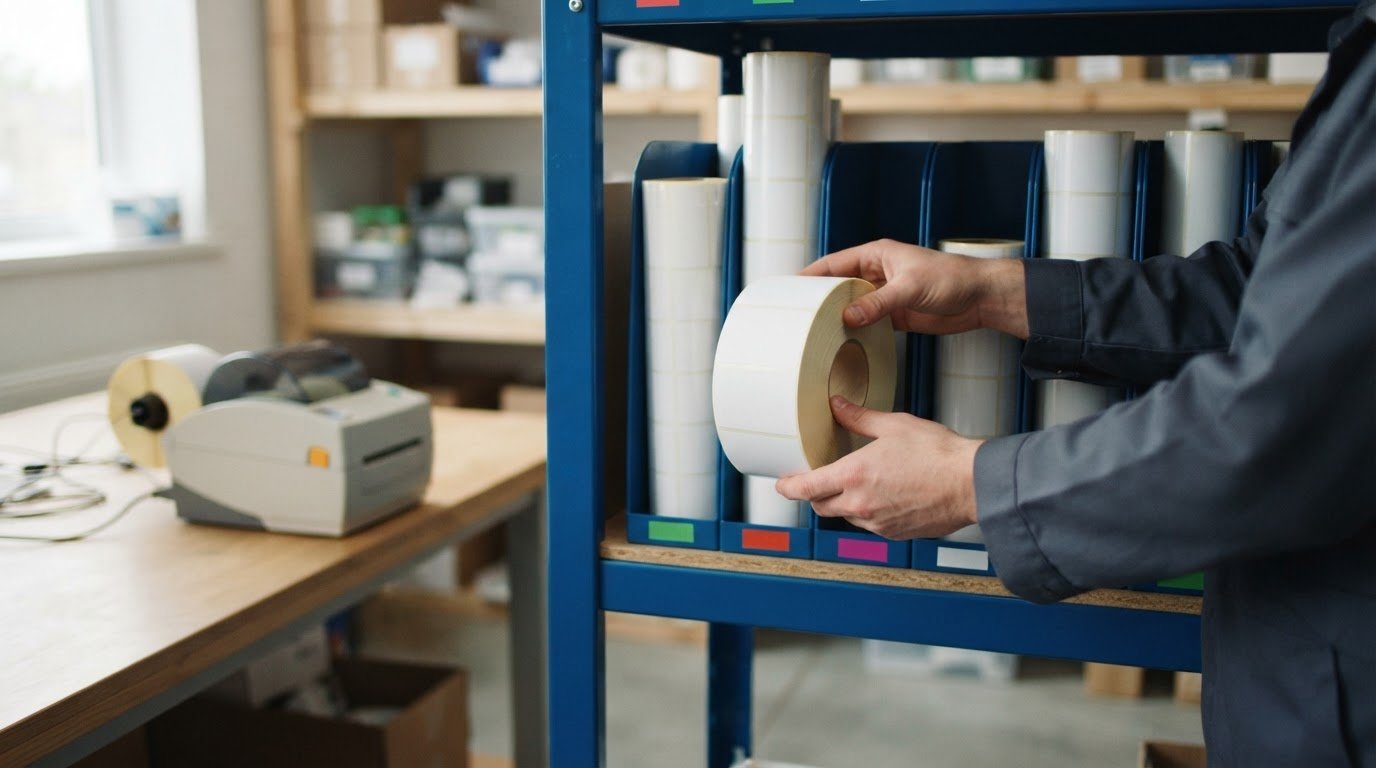
Upright storage matters as much as temperature and humidity when you want blank label rolls to stay usable. Proper storage guidelines for blank label rolls include keeping them in a cool, dry place, away from sunlight, dust and moisture, and storing them upright or on dedicated racks to help prevent creasing and damage.
It’s easy to focus on the storage room and overlook how rolls are positioned. Pressure or bending can damage a roll, while heat, humidity and exposure to the environment can affect the label material and adhesive. Consistent storage habits help protect stock between delivery and use.
This guide covers five practical ways to manage storage: control temperature, maintain suitable humidity, choose the right orientation, preserve protective packaging and limit exposure to heat, light, moisture and dust. You’ll also learn what to inspect before loading a roll, so you can spot visible damage or adhesive concerns before they interfere with printing or application.
Key Takeaways
- Keep storage conditions consistent, and use the recommended temperature range to help preserve label materials.
- Return partially used rolls to protective packaging and track stock so older materials are used first.
- Reduce exposure to environmental conditions that can affect label surfaces and adhesive performance.
- Maintain suitable humidity to help limit changes to the label material during storage.
- Choose a storage position that supports the roll and helps prevent creasing or deformation.
1. Recommended storage temperature
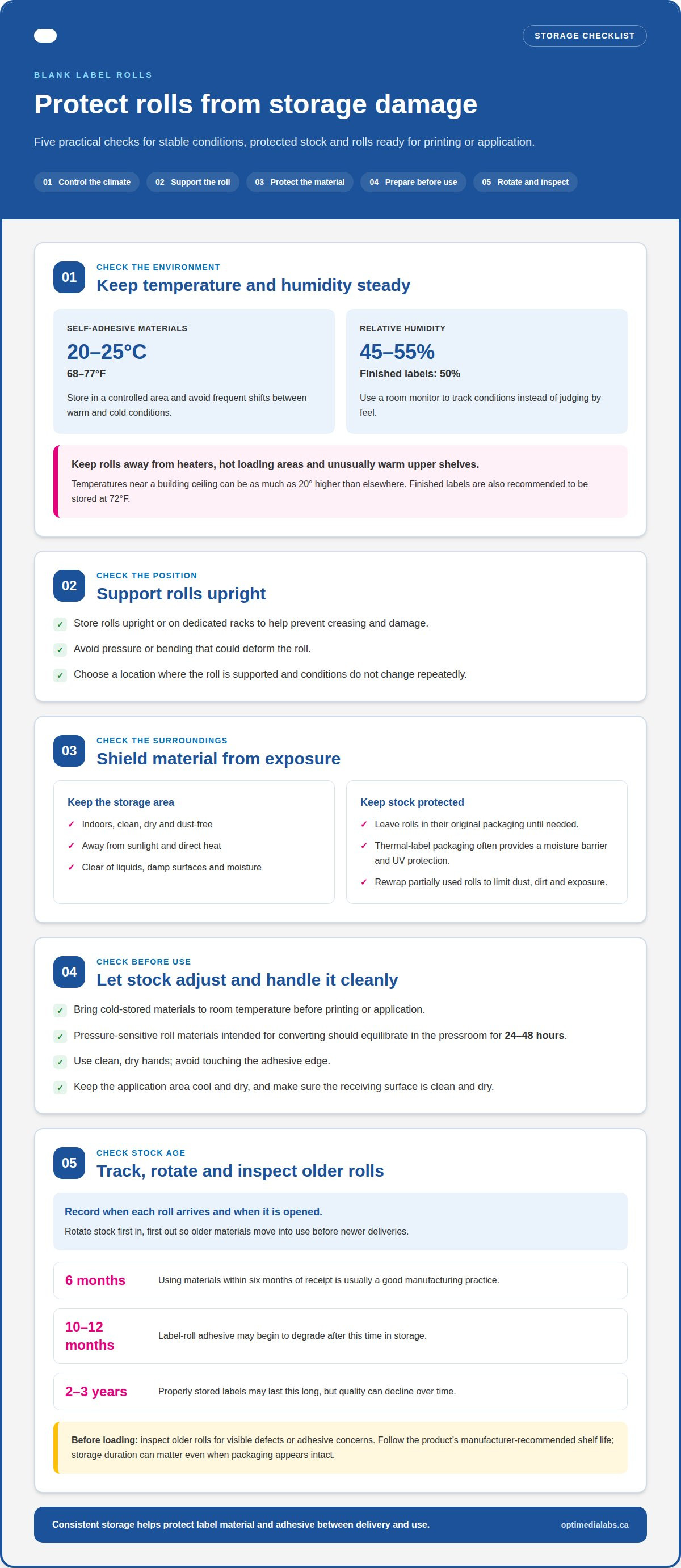
Store self-adhesive label materials at 20-25°C (68-77°F). Finished labels are also recommended to be stored at 72 degrees F, within that range. Keeping rolls in a controlled environment helps avoid the temperature extremes that can shorten their useful shelf life. Aim for stable conditions rather than frequent shifts between warm and cold areas.
Choose an indoor storage spot away from direct heat sources and unusually warm locations. A shelf near a heater or in a hot loading area can expose rolls to heat. Even vertical position matters: temperatures near a building ceiling can be as much as 20 degrees higher than elsewhere. Avoid high storage shelves if the room’s upper area becomes warmer than the rest of the space.
Temperature works alongside humidity. Store self-adhesive label materials at 45-55% relative humidity; finished labels are recommended at 50% relative humidity. Use a room monitor to keep track of both conditions, rather than judging the environment by feel. A cool, dry storage area supports label storage and application. Avoid placing stock near locations where temperature or moisture conditions change repeatedly.
Application conditions matter, too. If label materials have been kept in cold conditions, bring them to room temperature before use so the stock can adjust to the working environment. Keep the application area cool and dry, and make sure the surface receiving the label is clean and dry. For example, don’t apply a roll straight from cold storage to a damp container.
Normal room temperature is a useful baseline, but it doesn’t replace product-specific storage directions. If the label material’s packaging or manufacturer gives different temperature instructions, follow them for that stock. Record the storage location and conditions when receiving a new batch, then use the same controlled area for subsequent rolls. These proper storage guidelines for blank label rolls establish a consistent routine without treating every material as identical.
Before loading a roll, consider how it was stored and whether it has reached room temperature. If stock has been exposed to heat or cold, give it time to adjust before printing. Follow the manufacturer’s recommended shelf life and track how long each batch has been stored. First-in, first-out rotation helps move older stock into use before newer deliveries. These steps make temperature management practical throughout storage and application.
2. What are the precautions for storage and use of self-adhesive label materials?
Store paper and thermal label materials in their original packaging, following the manufacturer’s storage instructions. Keep thermal labels packaged until needed, since their packaging often provides a moisture barrier and UV protection. For paper stock, intact packaging helps keep the roll protected between uses. Keep both types clean, dry and away from contaminants.
After using part of a roll, protect the exposed adhesive before returning it to storage. Dust, dirt and handling can contaminate adhesive and affect application. Close or cover the remaining roll with its original packaging where possible, and keep it in a clean, dry place. Handle the material with clean, dry hands, and avoid touching the adhesive edge.
Track when each roll arrives and when it is opened. Using materials within six months of receipt is usually a good manufacturing practice, while the recommended shelf life depends on the product. Label rolls typically have an adhesive lifespan of 10 to 12 months in storage before the adhesive begins to degrade. Properly stored labels may last 2–3 years, but quality can decline over time. Follow the manufacturer’s recommended shelf life, rotate stock first in, first out, and inspect older rolls for defects before use.
Give cold-stored materials time to reach room temperature before use. Pressure-sensitive roll materials intended for converting should be placed in the pressroom for 24 -48 hours before converting, allowing them to equilibrate. A roll stored for two years may cause application problems, so storage duration matters even when its packaging appears intact.
Keep label-roll storage dates separate from food-package date requirements. In Canada, prepackaged foods with a durable life of 90 days or less require date markings and, where applicable, storage instructions. If a retailer repackages food that already bears a packaging date, the original date must be retained. These rules concern food packaging, not the shelf life of unused label rolls. For businesses that outsource packaging rather than managing label application in-house, contract partners like Simplepack Ltd provide professional packing services across the food and health sectors.
If food is packaged away from the retail premises where it will be sold, storage instructions are required when its storage conditions differ from normal room temperature. This distinction matters when selecting label stock for a food package: the label must remain suitable for the intended use, while the food’s required information remains clear. For help matching label materials to your application, get in touch about your label requirements.
3. Protection from heat, light, moisture, and dust
Store blank label rolls indoors in a clean, dry, dust-free area, away from sunlight and direct heat. Keep rolls in their packaging until needed, then rewrap partially used stock to protect it. This helps limit exposure to moisture and airborne contaminants. For thermal labels, packaging often provides a moisture barrier and UV protection, so removing it early can leave the material more exposed.
Sunlight exposes label materials to UV light, and bright areas can also bring unwanted heat. Choose a storage location away from windows, skylights and sunlit workbenches. A closed cabinet or shaded indoor shelf can reduce direct exposure, provided the area stays clean and dry. Keep thermal rolls in their packaging during storage to retain its UV protection.
Keep rolls away from liquids and damp surfaces. A spill, leak or wet shelf can reach the roll edges and affect the material or adhesive. Store stock above areas where water could collect, and move rolls away from sinks, cleaning stations and open containers. If packaging gets wet, separate the affected roll from dry stock and inspect it for visible damage before use.
Dust and handling can contaminate exposed adhesive. Wash and dry your hands before touching a roll, and avoid touching the adhesive edge or label surface. Return a partially used roll to its original packaging when possible, keeping the opening closed around the material. If the packaging is damaged, use a clean protective covering to shield the roll from dust and contact during storage.
Heat can build up in locations that seem suitable at floor level. Temperatures near a building ceiling can be as much as 20 degrees higher than elsewhere, so avoid high shelves in warm rooms. Keep rolls away from heaters and other direct heat sources. Hot and humid conditions, as well as very cold storage, can reduce label lifespan; select an indoor area with steady, dry conditions.
Make protection part of your stock routine. Keep the storage area clean, remove dust from shelves before placing rolls, and keep liquids away from stored materials. Check packaging when receiving a delivery and again after opening a roll. Look for tears, dampness or visible contamination, then protect the remaining stock before returning it to storage. These steps limit environmental exposure between uses.
4. Recommended storage humidity
Keep self-adhesive label materials at 45-55% relative humidity. Finished labels are recommended to be stored at 50% relative humidity, which sits within that range. These figures provide a practical target for a storage area holding rolls for printing or application. Stable humidity helps limit exposure to conditions that can reduce label quality during storage.
Use a humidity monitor in the storage area rather than relying on how the room feels. Place it near the label stock, away from a window, exterior door or another spot with noticeably different conditions. Readings from elsewhere in the building may not reflect the environment around the rolls. Keep a simple record of readings alongside stock-receiving notes to identify recurring changes.
Location matters in Canadian workplaces where indoor conditions can change with heating, ventilation and seasonal weather. Avoid storing rolls beside sources of dampness, such as a sink or a spot where condensation forms. A clean, dry indoor room is a better choice. If one section of the room feels damp while another stays dry, move stock to the more stable area and monitor it there.
Humidity control starts with reducing direct exposure to moisture. Keep rolls in their packaging until needed, and protect partially used stock before returning it to storage. Don’t place rolls on a damp shelf or near liquids. If a package gets wet, separate it from dry materials and inspect the roll for visible damage before printing. These steps help limit moisture reaching the label material or adhesive.
Respond to changing readings with practical adjustments. If the storage area moves outside the recommended 45-55% range, relocate the stock to a drier or more stable indoor space. Avoid moving rolls repeatedly between areas with different conditions, since the materials then experience further changes. Keep the packaging intact during relocation, and let the stock settle in its new environment before use.
Humidity records also support stock rotation. Note the storage location and condition when a shipment arrives, then keep older rolls identifiable as they move through use. Inspect materials for visible damage before loading, especially after a period of damp conditions. A roll can look intact while its adhesive or material quality changes over time, so follow the manufacturer’s shelf-life recommendation alongside humidity controls.
For a consistent routine, assign one suitable area for label storage, keep its humidity monitor visible, and return each opened roll to protective packaging. Those simple controls make it easier to maintain conditions near 50% relative humidity for finished labels and within the 45-55% range for self-adhesive materials.
5. Label storage orientation
Store label rolls upright or on dedicated racks to help prevent creases and damage. Don’t lay them flat in a stack, where their weight can press against the material below. Keep each roll supported and positioned so it won’t roll off a shelf or be crushed by nearby stock. This is a practical way to protect blank rolls between delivery and use.
Original packaging and upright positioning work together. Keep a roll in its packaging where possible, then place it upright on a stable shelf or rack. Packaging helps shield the material, while correct positioning reduces pressure and bending. When returning a partially used roll to storage, close its packaging securely and set it upright rather than leaving it loose on a workbench.
Choose a rack or shelf that keeps rolls steady without squeezing them. Avoid narrow gaps where a roll could wedge against other supplies, or edges where it could tip. For example, separate label stock from boxes that may shift during routine handling. A dedicated rack can make each roll easier to identify and retrieve while keeping it in position.
Make storage orientation part of receiving and stock rotation. Place new rolls upright when they arrive, then return opened rolls to the same position after printing. Group labels with different sizes or materials clearly, so reaching for one roll doesn’t disturb the others. Use first-in, first-out rotation to move older stock into use without repeatedly rearranging the shelf.
Before loading a roll, inspect its edges and outer layers for creases, dents or other visible damage. A roll stored under pressure may unwind unevenly or present damaged labels during use. Set visibly affected material aside for closer inspection instead of feeding it straight into a printer. Record the issue and the roll’s storage location to help identify a shelf or rack that needs adjustment.
Sheet labels should remain flat in their original packaging to help prevent curling or bending. Rolls need a different position: keep them upright or use a dedicated rack. This distinction prevents sheet-storage habits from being applied to roll stock. Keep each roll stable and protected, and avoid stacking other materials on top.
Review the storage area whenever stock is moved or replenished. Check that rolls remain upright, packaging stays intact and no nearby cartons press against the labels. For help with your label roll and printing setup, contact the team.
OptiMediaLabs Canada: Labelview software
OptiMediaLabs Canada offers Labelview software for businesses managing label-printing workflows. Consider it when you’re ready to move from storing blank rolls to preparing and printing labels as part of a consistent process. The right setup depends on your printing requirements and the equipment used.
OptiMediaLabs Canada also offers Afinia Color Label Printers, RFID Label Printers and Afinia Label Cutters & Finishers. These offerings may suit different label production needs, from colour printing to RFID applications or finishing. Storage practices still matter: organized stock and suitable handling help keep rolls ready for use.
If you’re planning your label workflow, contact OptiMediaLabs Canada to discuss Labelview software and related equipment.
Build a label workflow that supports your next run
Make storage a repeatable part of production planning. Pair clear stock rotation with a record of which materials suit each job, so the next print run starts with organized supplies and a defined process. Proper storage guidelines for blank label rolls are one part of that workflow; matching materials and equipment to the label’s purpose is the next.
OptiMediaLabs Canada offers Afinia Color Label Printers, Epson Ink Cartridges and RFID Label Printers. These options serve different printing needs, from colour labels to RFID applications. Consider how your materials, printer and planned output fit together before setting up your next run.
Contact OptiMediaLabs Canada to discuss your label workflow and equipment needs. A clear plan can help you move forward with confidence.
Frequently Asked Questions
How to Maximize a Label’s Shelf Life?
Use stock before it reaches the manufacturer-recommended shelf-life limit, and rotate older rolls into production first. Keep a receiving or inventory record of each batch’s arrival date and material type. For example, mark the carton when it arrives, then update the record when a roll is opened. This makes older stock easier to identify and helps prevent it from remaining unused behind newer deliveries.
What are the precautions for storage and use of self-adhesive label materials?
Follow the manufacturer’s storage and shelf-life directions for each material, and inspect every roll before use. Check for edge lifting, visible damage or changes to the stock, especially if it has been stored for an extended period. Handle rolls with clean, dry hands and avoid touching exposed adhesive. If the material looks damaged or contaminated, set it aside rather than loading it into a printer.
What temperature range is recommended for storing blank label rolls?
Store self-adhesive label materials at 20-25°C (68-77°F). This range applies to storage, while the manufacturer’s instructions remain important for the particular label stock. Keep a thermometer near the rolls and note readings if the storage area changes throughout the day. For example, a shelf beside a warm machine may not reflect conditions in the rest of the room.
What humidity level is best for storing blank label rolls?
Keep self-adhesive label materials at 45-55% relative humidity; finished labels are recommended at 50%. A humidity monitor near the stored rolls can show whether conditions stay within the target. If readings vary between storage locations, use the area with more consistent conditions. Record readings alongside batch details to help identify whether a recurring change in the room affects stored materials.
How should label rolls be packaged and protected from dust, moisture, and sunlight?
Keep rolls in their original packaging until use, particularly thermal labels, whose packaging often provides a moisture barrier and UV protection. After opening, repackage the remaining roll to limit dust and contact with exposed adhesive. Keep cartons away from windows, wet surfaces and areas where liquids are handled. For example, don’t store a partially used roll beside a sink or cleaning station.
How long can blank label rolls be stored before adhesive or print quality degrades?
Storage life depends on the label material and its manufacturer’s recommendation. Roll adhesives typically have a 10 to 12 months lifespan in storage before degradation begins; properly cared-for labels may have a shelf life of 2–3 years. These figures describe different storage-life guidance, not a universal guarantee. Check the stock’s age and condition, and use the manufacturer’s limit for that material.
What are the risks of storing label rolls near heat, chemicals, or direct sunlight?
Heat and direct sunlight can expose label materials to conditions that reduce their useful lifespan, while spills or contact with liquids can damage stock or contaminate exposed adhesive. Keep rolls away from heat sources, windows and chemical-handling areas where splashes could reach them. The risk depends on the exposure and the material, so inspect packaging and the roll before use after any spill or heat exposure.
How should stored label rolls be acclimatized before printing or application?
If rolls were stored in cold conditions, bring them to room temperature before use. Let the material adjust in the work area rather than loading it straight from cold storage. For pressure-sensitive roll materials going to converting, allow 24 -48 hours in the pressroom before converting. This equilibration step is specific to converting; follow the manufacturer’s directions for other applications.