
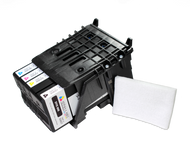
Afinia Ink Cartridges: The Complete Guide to Industrial Print Quality and ROI
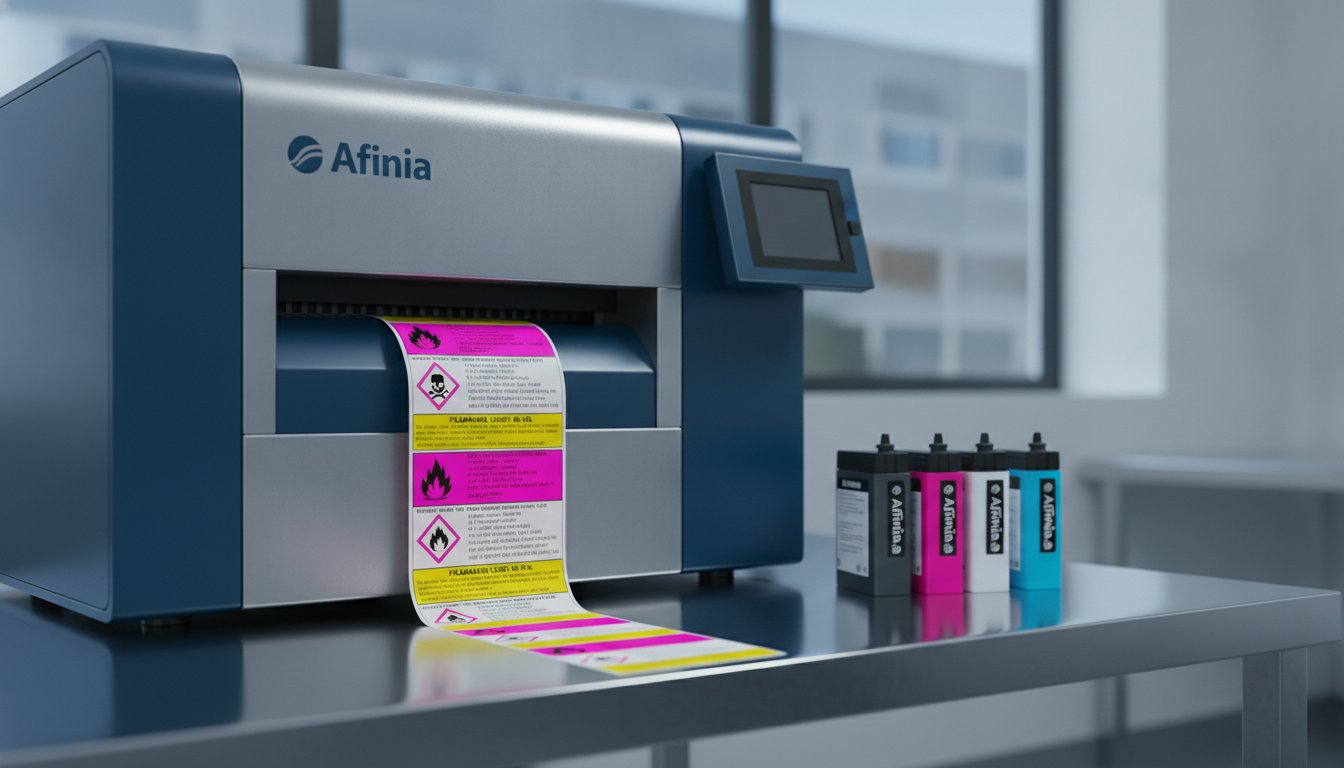
Selecting the wrong ink chemistry doesn't just ruin a label; it can quietly compromise your hardware and inflate your operational costs by thousands of dollars. You likely already realize that frequent replacements and clogged printheads are more than a minor nuisance. They're a drain on your productivity. When sourcing Afinia ink cartridges for your Canadian facility, identifying exactly which cartridge is compatible with your specific model is the first step toward ensuring print durability and GHS compliance.
We understand the pressure to maintain consistent colour matching while driving down the total cost of ownership. This guide provides the technical clarity you need to optimize your industrial labelling performance. You'll learn how to match Afinia’s precise ink formulations to your specific media and environmental conditions. We'll examine how to protect your investment, ensure durability for chemical labels, and maximize the ROI of your printing infrastructure.
Key Takeaways
- Master the technical relationship between ink viscosity and thermal inkjet processes to protect your industrial printheads from unnecessary wear.
- Distinguish between dye and pigment formulations to achieve either high-vibrance retail branding or durable, GHS-compliant chemical labelling.
- Identify the exact Afinia ink cartridges designed for your hardware, from the compact L301 to the versatile dual-ink L502 system.
- Adopt environmental maintenance protocols to prevent nozzle drying and minimize the financial impact of frequent stop-start print cycles.
- Reduce production downtime by leveraging a dedicated Canadian supply chain for genuine consumables and fast domestic shipping.
Understanding Afinia Ink Cartridge Technology and Performance
Afinia printers operate at speeds that would overwhelm standard consumer hardware. Their reliance on specific Afinia ink cartridges isn't just a manufacturer's preference; it's a mechanical requirement. These systems use a high-frequency thermal process to eject millions of droplets per second. For this to work without failure, the ink's viscosity must remain perfectly consistent. If the ink is too thick, the nozzles clog. If it's too thin, the "waterfall" effect fails. This precision is a hallmark of modern Inkjet printing technology, where the fluid itself acts as a critical component of the machine's cooling system.
Using genuine supplies is vital for protecting your investment in high-end models like the L801 or L901. These industrial printers come with warranties that often depend on the use of OEM (Original Equipment Manufacturer) fluids. Third-party inks can introduce particulates that damage delicate printhead structures. Beyond hardware safety, genuine ink plays a functional role in maintenance. It facilitates self-cleaning cycles that flush out microscopic debris and prevents the printhead from overheating during long, continuous production runs.
The Science of Memjet-Powered Ink
Afinia's high-speed performance often relies on Memjet technology. This system uses "waterfall" printheads featuring tens of thousands of tiny nozzles packed into a stationary bar. Genuine Afinia ink cartridges undergo micron-level filtration to ensure no contaminants reach these nozzles. Because the printhead doesn't move back and forth, any single clogged nozzle creates a visible line down the entire label roll. Specialized formulations include humectants that keep the ink fluid at the nozzle tip, even in fast-paced Canadian industrial environments.
Colour Consistency and Brand Integrity
Your brand's visual identity depends on colour accuracy. Genuine Afinia inks are calibrated to work with specific ICC profiles within your labelling software. This alignment ensures that the "brand red" you print in January matches the batch you produce in June. In the Canadian market, where professional presentation is a prerequisite for retail shelf space, inconsistent labels can signal poor quality to consumers. Using OEM cartridges eliminates the guesswork, ensuring your software settings translate perfectly to the physical media.
Comparing Dye-Based vs. Pigment Ink for Industrial Labelling
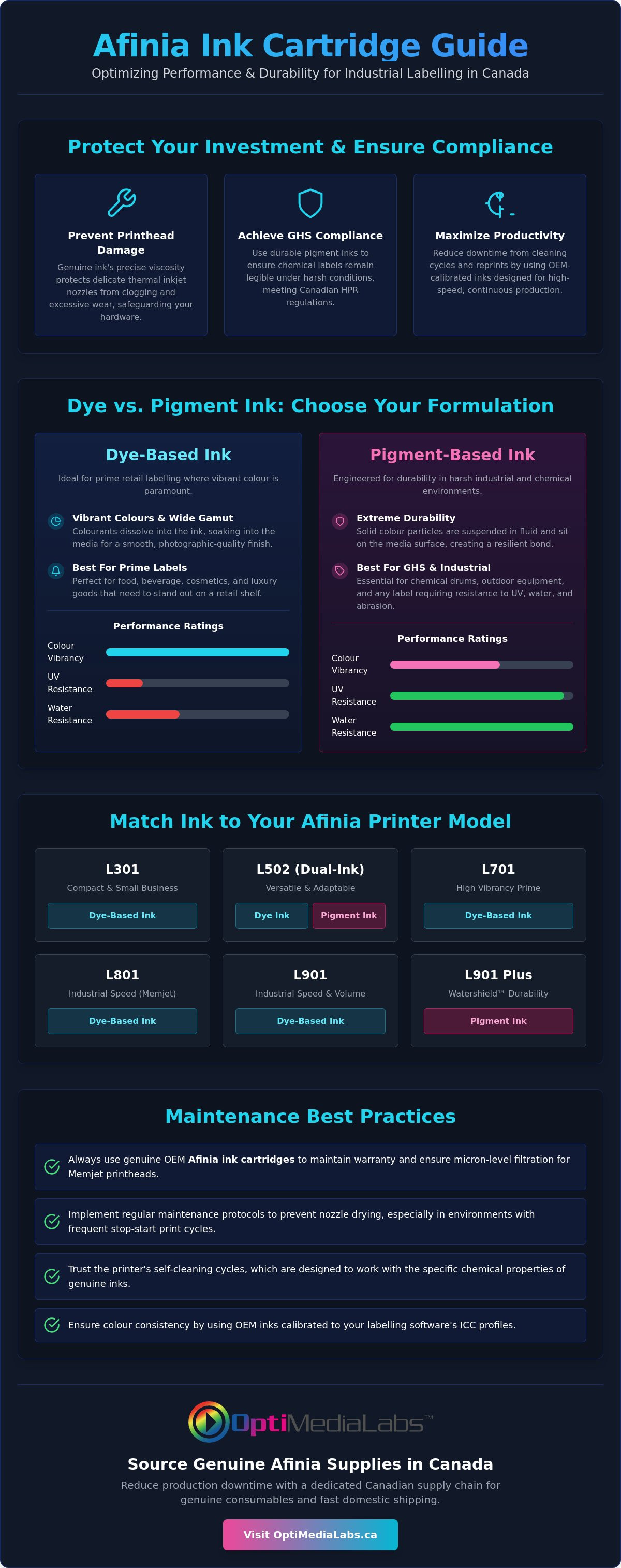
Selecting the right formulation for your Afinia ink cartridges depends entirely on the environmental conditions your labels will face throughout their lifecycle. Industry professionals often view this choice as a balance between visual impact and physical durability. While one ink type excels at catching a consumer's eye on a retail shelf, the other is designed to survive the rigours of a chemical warehouse or an outdoor shipping yard. Identifying the "life of the label" is the first step in protecting both your brand's reputation and your operational budget.
In Canada, industrial labelling must often meet strict regulatory standards. For example, chemical products require compliance with the Hazardous Products Regulations (HPR), which incorporate the Globally Harmonized System (GHS). These regulations mandate that labels remain legible under harsh conditions; this is where the choice of ink chemistry becomes a legal necessity rather than just a design preference. Beyond compliance, businesses must also consider the environmental footprint of their consumables. Scientific insights found in a toner waste recycling review highlight the importance of choosing efficient ink systems that minimize waste during high-volume production runs.
Dye Ink: Vibrancy for Retail and Prime Labelling
Dye-based inks, such as those used in the Afinia L701 or the standard L901, are engineered for maximum "pop." These inks consist of colourants dissolved in a liquid, allowing them to soak into the top layer of the media. This creates a smooth, vibrant finish with an exceptionally wide colour gamut. It's the ideal choice for food and beverage, cosmetics, and luxury goods where visual fidelity is paramount. When paired with high-gloss paper, dye ink produces photographic quality that helps products stand out. However, dye ink is susceptible to moisture and UV fading; it isn't suitable for products stored in damp refrigerators or direct sunlight for extended periods.
Pigment Ink: Durability for Harsh Environments
Pigment inks use solid particles of colour suspended in a carrier fluid. Instead of soaking in, these particles sit on the surface of the media, creating a bond that is highly resistant to external factors. This formulation is essential for chemical drums, outdoor equipment, and pharmaceutical applications. When used with synthetic media like BS5609-certified polypropylene, pigment-based Afinia ink cartridges provide superior resistance to water, chemicals, and abrasion. If your labels must survive heavy shipping and handling without smudging, pigment is the required standard. To ensure you have the correct formulation for your specific printer model, you can browse genuine Afinia supplies tailored for industrial durability.
Selecting the Right Cartridges for Your Afinia Printer Model
Selecting the correct cartridge involves more than just checking a compatibility list. It requires an understanding of how each printer model manages fluid consumption to balance upfront costs with long-term ROI. While the ink chemistry (dye vs. pigment) was established in the previous section, the physical delivery system, the cartridge itself, determines your production speed and maintenance frequency. Matching your output volume to the right hardware and ink combination is the most effective way to stabilize your labelling budget.
High-volume production environments typically rely on the L801 or L901 Memjet systems. These machines utilize 250ml high-capacity tanks designed for continuous industrial output. The financial advantage of these larger volumes is clear; they offer a significantly lower cost-per-label than smaller desktop units. The L901 Plus series further optimizes this process with the "Plus" ink formulation. This specific chemistry provides improved water and UV resistance while maintaining the record-breaking speeds Memjet is known for. Using these Afinia ink cartridges ensures that your labels remain legible even in harsh Canadian logistics chains.
Mid-Volume Solutions: L301 and L502 Series
For small-batch artisanal production, the Afinia L301 offers a compact entry point. It utilizes separate colour and black cartridges, allowing users to replace only what is empty. This is a practical way to manage costs for businesses that don't yet require high-speed industrial throughput. Moving up to the L502 series provides dual-ink versatility. This model is unique because it allows for a full swap between dye and pigment ink types without requiring separate hardware. When shifting from high-vibrance retail designs to durable industrial labels, you simply swap the printhead and the corresponding Afinia ink cartridges. To maintain system health during this transition, always ensure the printhead is properly seated and the ink lines are primed to prevent air bubbles from compromising the thermal inkjet process.
High-Volume Production: L801 and L901 Memjet Systems
Handling high-capacity supplies requires attention to workplace protocols. Adhering to standards such as OSHA printing industry safety guidelines helps maintain a secure environment for operators managing chemical inks and high-speed machinery. Prioritizing safety and technical precision ensures that your facility remains both compliant and efficient. The shift toward these high-capacity systems has become a standard for Canadian firms looking to scale their operations without a linear increase in consumable costs. The 250ml tanks not only reduce the frequency of cartridge swaps but also provide a more stable internal pressure for the printhead, leading to more consistent colour output across long runs.
Optimizing Ink Consumption and Maintenance in Canadian Facilities
Managing the environmental conditions of your print room is a primary factor in controlling labelling costs. In many Canadian facilities, seasonal fluctuations in humidity can lead to ink drying within the nozzles, especially during dry winter months. Maintaining a stable relative humidity between 40% and 60% prevents the printhead from clogging and reduces the need for aggressive cleaning cycles. When the environment is controlled, your Afinia ink cartridges perform more reliably, ensuring consistent droplet size and placement across every label.
Operational habits also dictate your total fluid spend. Frequent stop-start cycles force the printer to perform initialization routines that consume more ink than continuous production runs. To maximize efficiency, batch your print jobs together. You can also utilize professional labelling software like BarTender to generate ink usage estimates before you commit to a high-volume run. This foresight allows you to calculate accurate job costs and manage your inventory levels without the risk of mid-production shortages.
Storage and Environmental Control
Proper storage protocols protect the chemical integrity of your supplies. Spare cartridges should be kept in a climate-controlled environment between 15°C and 30°C. Do not store ink boxes directly on concrete warehouse floors. Concrete acts as a heat sink and can cause temperature transfers that destabilize the ink's viscosity over time. Keeping your Afinia ink cartridges in their original sealed packaging until the moment of installation ensures a shelf life of up to 24 months, protecting your backup stock from oxidation and dust contamination.
Maintenance Routines for Printhead Longevity
A proactive maintenance schedule prevents minor issues from becoming expensive hardware failures. Run a nozzle check daily to identify early signs of dehydration or blockage. If you notice missing lines, use the Afinia internal cleaning utility rather than performing manual deep purges. The internal utility is designed to use the minimum amount of ink necessary to clear the nozzles. Deep purges should be a last resort, as they consume significantly more fluid. If consistent banding persists despite cleaning, it may be more cost-effective to replace the printhead than to continue wasting ink on unsuccessful purges. To maintain your production schedule, you can order genuine Afinia ink cartridges and printheads for immediate dispatch across Canada.
Sourcing Genuine Afinia Supplies from OptiMediaLabs
OptiMediaLabs serves as a dedicated Canadian distributor for Afinia Label hardware and consumables. Securing genuine Afinia ink cartridges through a domestic partner is the most effective way to eliminate production bottlenecks. We maintain a comprehensive inventory that includes everything from high-capacity ink tanks to blank inkjet labels and thermal transfer ribbons. This ensures you have a single, reliable point of contact for your entire labelling ecosystem. Our commitment to fast, reliable shipping across Canada minimizes your production downtime, keeping your facility operational even during peak demand periods.
Clients sourcing their supplies through our portal gain access to specialized technical support. We understand the nuances of the thermal inkjet process and can assist with troubleshooting or optimization. Whether you're managing a single L301 or a fleet of L901 systems, having an expert partner ensures your hardware performs to its original specifications. This support is a critical component of maintaining the long-term ROI discussed throughout this guide.
The Advantage of a Specialized Canadian Partner
Sourcing your supplies within Canada removes the friction of international logistics. You won't face unpredictable cross-border customs delays or hidden brokerage fees that can disrupt your operational budget. We provide direct expertise in Canadian labelling standards, including the specific HPR and GHS requirements for industrial chemical containers. While we specialize in Afinia, our inventory also supports a full suite of industrial solutions from brands like Epson, Primera, and VIPColor. This breadth of hardware knowledge allows us to offer insights that general office supply retailers cannot provide.
Bundling Supplies for Maximum Efficiency
Operational efficiency improves when you coordinate your ink and media orders. Matching your Afinia ink cartridges with the correct blank label stock ensures optimal ink absorption and drying times. This prevents common issues like smudging or poor colour adhesion that can occur with incompatible third-party media. For high-capacity production facilities, we offer volume pricing opportunities to help stabilize your procurement costs. By consolidating your supplies, you simplify your inventory management and ensure that every component of your printer is calibrated for peak performance.
View our full range of Afinia ink cartridges and supplies
Maximizing Your Industrial Labelling ROI
Achieving consistent print quality requires a strategic approach to your consumable supplies. By matching your specific printer model with the correct ink chemistry and maintaining a climate-controlled production environment, you protect your hardware and ensure professional results across every batch. Whether you require the vibrant colour of dye-based systems for retail packaging or the rugged durability of pigment inks for GHS-compliant chemical labels, using genuine Afinia ink cartridges is the most reliable way to avoid costly downtime and maintain brand integrity. Precision in your ink selection directly translates to long-term hardware stability and lower total cost of ownership.
OptiMediaLabs has operated as a trusted partner for Canadian businesses and industrial labelling experts since 2026. As an Authorized Afinia Distributor, we provide the technical expertise and inventory depth needed to support high-volume operations from coast to coast. Our national shipping network ensures your facility remains stocked with the precise tools required for industrial excellence and regulatory compliance. Shop Genuine Afinia Ink Cartridges at OptiMediaLabs to secure the stability of your labelling workflow today. We look forward to supporting your production goals with reliable service and specialized industry knowledge.
Frequently Asked Questions
Can I use third-party or remanufactured ink in my Afinia printer?
Using third-party or remanufactured ink is not recommended and typically voids your manufacturer's warranty. These industrial systems require precise ink viscosity and micron-level filtration to prevent clogging the thousands of tiny nozzles in the printhead. Genuine Afinia ink cartridges are specifically formulated to cool the printhead during high-speed runs. Non-OEM inks often contain particulates that cause permanent hardware damage and inconsistent colour output across your production batches.
How long do Afinia ink cartridges typically last before expiring?
Afinia ink cartridges typically have a shelf life of up to 24 months when kept in their original, sealed packaging. To maintain this longevity, store your cartridges in a climate-controlled environment between 15°C and 30°C. Once you install a cartridge, it is best to use it within six to twelve months. Exposure to air and temperature fluctuations can eventually destabilize the ink's chemical composition, which leads to reduced print quality and potential nozzle dehydration.
What is the difference between Afinia L901 and L901 Plus ink?
The primary difference lies in the durability and chemical formulation of the ink sets. The standard L901 uses VersaPass DG dye-based inks, which are ideal for vibrant retail labels. The L901 Plus utilizes the newer VersaPass DN formulation. This version provides significantly higher resistance to water, UV light, and chemicals. These ink sets are not interchangeable; you must use the specific series designed for your hardware to avoid damaging the internal fluid delivery system.
Why is my Afinia printer showing an "ink low" warning when the cartridge feels heavy?
An "ink low" warning on a heavy cartridge occurs because the printer estimates consumption via a digital chip rather than physical weight. The system counts every microscopic droplet ejected during printing and maintenance cycles. If you perform frequent deep cleanings, the software may signal an empty status while some fluid remains. Always trust the digital gauge to prevent air from entering the printhead, as this can cause expensive and permanent hardware failure.
Are Afinia ink cartridges recyclable in Canada?
Yes, Afinia ink cartridges are considered electronic or hazardous waste in Canada and must be recycled through designated programs. You should not dispose of them in regular blue bins or household trash. Many Canadian businesses utilize retail take-back programs at locations like Staples or Best Buy. Alternatively, you can take them to municipal household hazardous waste depots to ensure the plastic and chemical components are processed responsibly according to provincial regulations.
How do I calculate the cost per label for my Afinia L801?
To calculate the cost per label, use the built-in cost estimator tool within the Afinia printer driver or professional software like BarTender. These tools analyze your specific artwork to determine the exact volume of ink required for each colour. By dividing the cost of the 250ml cartridges by the estimated yield per job, you can determine your precise cost per label. This data is essential for maintaining accurate product margins in the Canadian market.
Does pigment ink require special labels to be effective?
Pigment ink requires specialized inkjet-receptive labels to achieve its full durability and resistance. While the ink provides the protective properties, the media must have a specific coating that allows the pigment particles to bond to the surface. For maximum durability in harsh environments, use synthetic media like BS5609-certified polypropylene. Using standard paper labels with pigment ink may result in poor colour density or smudging, as the particles cannot properly anchor.
Can I mix dye and pigment inks in the same Afinia printer?
You cannot mix dye and pigment inks within the same fluid lines or printhead. Doing so causes a chemical reaction that leads to immediate coagulation and permanent nozzle blockages. While models like the Afinia L502 support both ink types, you must perform a complete swap that includes the printhead and all cartridges. Always follow the manufacturer's purge protocols to ensure no residual ink remains when transitioning between different formulations to protect your hardware investment.