
Afinia Knife Finisher: The 2026 Canadian Buyer’s Guide to Digital Label Finishing
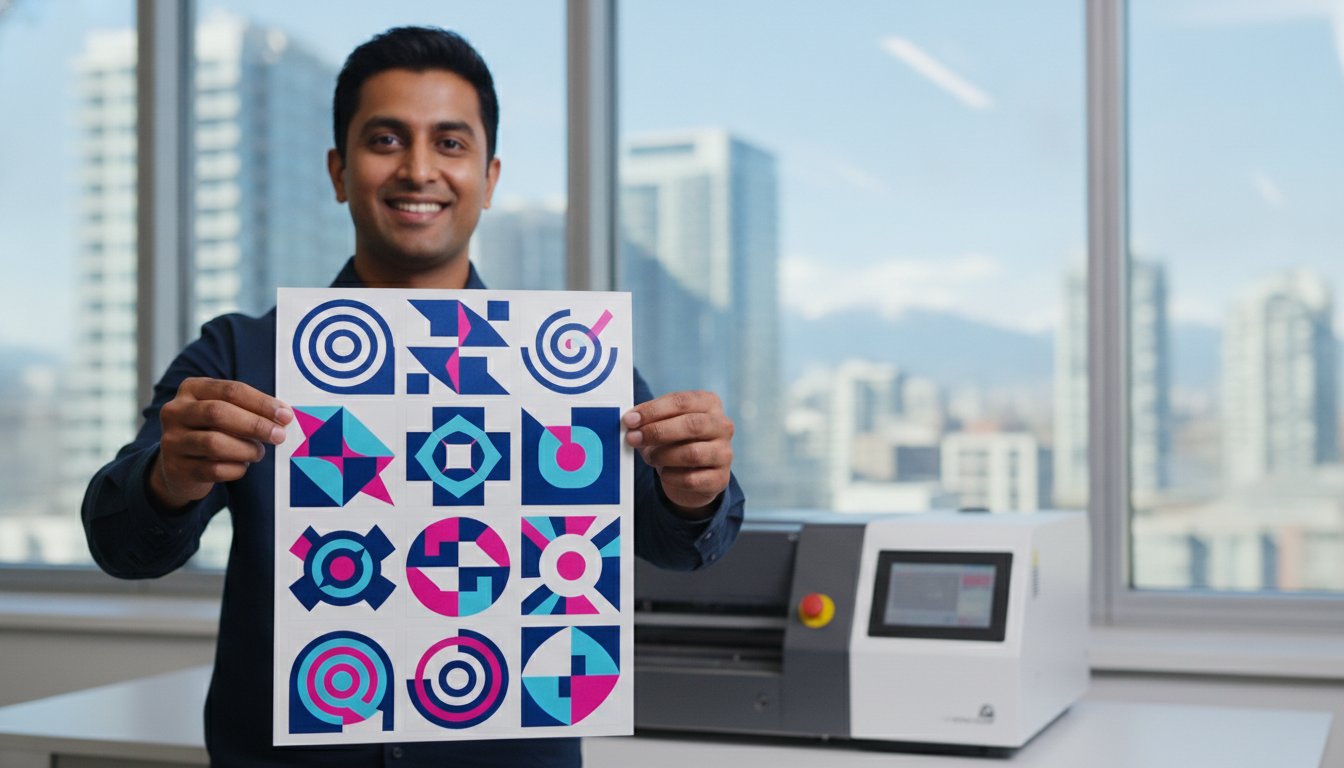
What if the most expensive part of your label production wasn't the ink or the media, but a piece of metal that takes two weeks to arrive? For many Canadian businesses, waiting for custom physical dies is the ultimate bottleneck. Integrating an afinia knife finisher solves this by replacing heavy iron with digital precision. You've likely felt the frustration of turning away a short-run client because the die cost alone exceeded their entire budget. It's a common pain point that stalls growth and limits your ability to offer rapid prototyping.
This guide shows you how to produce professional, custom-shaped labels in-house with zero lead time and no inventory waste. We'll explore the 2026 DLF series line-up, compare plotter-style cutting to traditional methods, and help you select the right model for your specific production volume. By the end of this guide, you'll understand how to achieve full in-house production and reduce your label turnaround time from days to mere minutes. You'll see how to eliminate die costs completely while maintaining the high quality your customers expect.
Key Takeaways
- Discover how digital plotter technology replaces expensive physical dies with a precision drag knife for instant shape changes.
- Compare the DLF-140S and DLF-220 series to identify the ideal media width and production capacity for your specific label volume.
- Calculate your total ROI by seeing how an afinia knife finisher eliminates the "die tax" and reduces material waste through digital nesting.
- Master the technical requirements for perfect registration using black mark sensors and vector-based design software.
- Learn how to streamline your Canadian supply chain for hardware and official Afinia consumables to ensure maximum equipment uptime.
Understanding the Afinia Knife Finisher: Digital Label Finishing in 2026
An afinia knife finisher represents the shift from mechanical constraints to digital freedom. Unlike traditional finishing methods that rely on physical tooling, these systems utilize a precision drag knife to execute cuts. This technology is essentially an advanced evolution of cutting plotter technology, adapted for high-speed, roll-to-roll label production. In the 2026 Canadian market, where consumers demand hyper-customized packaging, the ability to change label shapes without ordering new hardware is a significant competitive advantage.
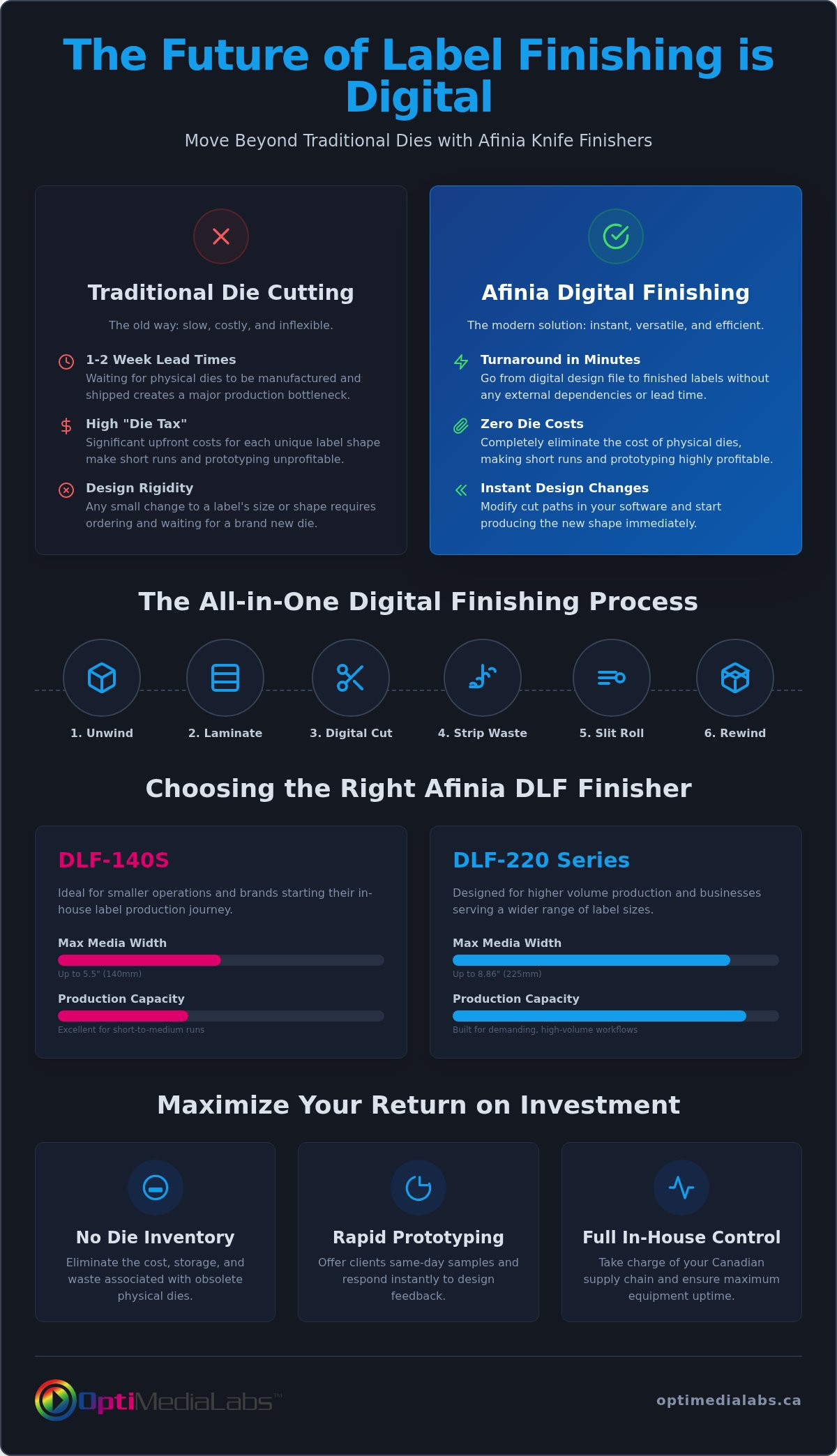
The digital workflow is a continuous, automated process. It begins with the unwinding of a printed roll. The system can then apply a laminate, perform precise contour cutting, strip away the waste matrix, slit the roll into multiple lanes, and finally rewind the finished labels. This all-in-one approach ensures that labels are ready for application immediately after the finishing cycle completes. It's a streamlined path that keeps production moving without external dependencies.
Digital Plotter Technology vs. Traditional Die Cutting
Traditional die cutting requires a physical metal die for every unique label shape. These dies often come with a lead time of one to two weeks and an upfront cost that makes short production runs expensive. If your brand decides to tweak a label's corner radius or size, you're forced to buy a new die and wait for delivery. You can realize significant savings by moving away from this rigid model.
An afinia knife finisher removes these barriers. Because the system is software-driven, you can adjust cut paths instantly. This makes it the ideal solution for seasonal products, rapid prototyping, and private labelling contracts where design iterations are frequent. You don't have to worry about the "die tax" on small orders or the risk of obsolete inventory when a label shape changes.
The Role of the Finish in Brand Perception
The quality of a label's finish directly impacts how customers perceive a brand. For products in high-moisture or industrial environments, adding a laminate layer is essential for protecting the ink and substrate. A professional label finish for high moisture environments ensures the brand remains legible and premium throughout the product's lifespan. It's about building trust through durability.
These finishers produce roll-to-roll results that are fully compatible with automatic label applicators. This professional output is indistinguishable from labels produced by large-scale commercial print houses. It allows Canadian small-to-medium businesses to maintain high standards while keeping production entirely in-house. You get the benefit of industrial quality with the flexibility of a desktop setup.
The Mechanics of Digital Plotter Cutting: Precision Without Physical Dies
The afinia knife finisher operates by translating digital vector data into precise physical movements. Instead of a fixed metal shape, the system uses a high-speed drag knife that follows complex paths created in software such as BarTender. This digital-first approach means you can cut intricate logos, sharp corners, and custom curves without the lead times associated with traditional tooling. It provides the flexibility to pivot between designs in seconds.
For accuracy, the system relies on an integrated "black mark" sensor. This sensor scans for printed registration marks on the media roll to synchronize the cut position with the printed graphics. It compensates for any minor shifts in the web, ensuring that every label is centred and aligned. Once the cut is complete, the matrix remover peels away the waste material, leaving only the finished labels on the liner. Achieving this requires correct pressure settings; users must adjust the force based on the substrate, whether it's thin paper or durable synthetic film. If you're encountering issues with specific materials, speak with our specialists for calibration guidance.
Maintaining the Cutting Edge: Drag Knives and Strips
Consistent cut quality depends on the condition of your consumables. The Afinia replacement Teflon cutting strip provides a smooth, resilient surface for the knife to press against. If this strip becomes deeply grooved or worn, you'll notice inconsistent cut depths. Similarly, a dull drag knife will produce ragged edges or fail to pierce the face stock entirely. You should inspect the blade regularly and replace it when the cut quality begins to degrade. Proper adjustment of the knife holder is also vital; the blade should extend just enough to cut the label without scoring the backing liner.
Slitting and Rewinding for Final Production
The final stage of the process involves converting the master roll into a usable format. By using multiple slitter blades, you can divide a wide web into several narrow rolls simultaneously. This maximizes production efficiency for small bottle labels or narrow barcodes. During rewinding, managing tension is essential. If the tension is too loose, the roll may "telescope" during shipping; if it's too tight, labels can "pop" or bleed adhesive at the edges. Balancing these factors ensures your labels are ready for high-speed automatic application.
Explore our full range of Afinia Label Cutters & Finishers to see which system fits your facility's specific production requirements.
Comparing the Afinia DLF Series: 140S vs. 220S vs. 220L
Selecting the right afinia knife finisher depends on your maximum label width and daily throughput. While every model in the range utilizes the same digital plotter technology, their physical capacities are tailored for different operational scales. All units integrate seamlessly with standard vector-based PDF files. This allows you to move from design to a finished roll without proprietary software hurdles. You can maintain a lean production line by matching the finisher's capacity to your printer's output and your specific packaging dimensions.
Media compatibility is a critical factor for long-term efficiency. The series handles various roll diameters and core sizes to match your existing equipment. For example, the DLF-220L supports a maximum roll diameter of 9.8 inches (250 mm), which is the standard for industrial-scale media. Most units are designed for 3-inch cores, ensuring they can process rolls from almost any professional label printer on the market. This versatility allows Canadian businesses to source media from multiple suppliers without worrying about hardware limitations. It also simplifies the transition if you decide to upgrade your primary printer later.
DLF-140S: The Entry-Level Powerhouse
This model is the ideal starting point for boutique Canadian brands and small-scale manufacturing. It features a compact footprint that fits easily into limited office or warehouse spaces. With a maximum media width of 5.5 inches (140 mm), it's optimized for smaller containers like cosmetics or specialty food jars. It serves as a perfect companion for the Afinia L502 or L701 printers. If your production involves thousands of labels rather than tens of thousands, this unit provides excellent capability without a massive footprint.
DLF-220S and 220L: Industrial Scale Digital Finishing
When your labels must wrap around wine bottles or chemical drums, the DLF-220 series provides the necessary width. The 220S and 220L models support media up to 8.5 inches wide. The "L" designation indicates a full-size system with enhanced rewinding and a larger unwind capacity for industrial environments. These finishers keep pace with high-speed systems like the Afinia L801 or L901. They offer faster linear speeds and robust tension control for continuous, high-volume workflows. An afinia knife finisher from the 220 series is the standard choice for industrial environments where uptime is the primary metric of success.
Maximizing ROI: Integrating Knife Finishers into Your Production Line
Integrating an afinia knife finisher into your facility transforms your cost structure by eliminating the "die tax" that plagues traditional production. In a standard setup, every new label shape requires a custom physical die, often costing between $200 and $500 per tool. For a company launching a seasonal product line with five unique shapes, that represents up to $2,500 in tooling costs before a single label is applied. The digital finisher pays for itself by removing these recurring expenses, allowing you to allocate those funds toward product development or market expansion instead.
Waste reduction is another significant pillar of your return on investment. Digital systems allow for tight nesting of labels on the web, maximizing the use of every square centimetre of material. Because you're finishing on-demand, you realize the benefits of "Just-in-Time" production. You won't hold obsolete pre-cut label stock again; if a regulatory requirement changes or a logo is updated, you simply update the digital file. This agility prevents thousands of dollars in wasted inventory from sitting on warehouse shelves. Additionally, labour efficiency is improved; these systems are designed for ease of use, allowing a single operator to manage both the printer and the finisher simultaneously without specialized technical training.
Cost Analysis: In-House vs. Outsourced Finishing
Outsourcing custom-cut labels introduces hidden costs like shipping fees and high minimum order quantities that often exceed your actual needs. When you factor in the two-week wait for a third-party supplier, the true cost of outsourcing becomes clear. Moving to an in-house model gives you the freedom to experiment with new shapes and sizes without financial penalty. You can test a star-burst shape or a custom contour today and have it on the shelf tomorrow. For a deeper dive into these economics, read our guide on In-House Label Printing vs Outsourcing.
Optimizing Your Workflow with Labeling Software
The transition from a digital design to a finished roll relies on a robust software workflow. Using BarTender software, designers can create dedicated cut layers that the afinia knife finisher recognizes instantly. Automating the placement of registration points minimizes setup time between different jobs, ensuring the machine spends more time cutting and less time in configuration. Training your staff on this process is straightforward; once the vector paths are established, the hardware handles the precision work. This setup ensures that your production remains flexible and responsive to shifting market trends.
If you're ready to calculate the specific break-even point for your business, request a custom ROI consultation with the technical team at OptiMediaLabs Canada.
Procuring Afinia Finishing Equipment in Canada: The OptiMediaLabs Canada Advantage
Purchasing an afinia knife finisher requires a logistics partner capable of managing heavy industrial shipments across the country. These DLF units are substantial pieces of machinery that demand specialized handling and secure transport to maintain their precision calibration during transit. OptiMediaLabs Canada provides comprehensive national distribution, ensuring your equipment arrives safely at your facility regardless of your location. We simplify the entire procurement process by acting as a single Canadian source for both the initial hardware investment and the ongoing consumables required to keep your production line active. You avoid the complexities of cross-border shipping, currency fluctuations, and unexpected customs duties by partnering with an authorized local distributor. Our team manages the logistics and brokerage details so you can focus entirely on your production schedule.
Genuine Afinia Consumables and Parts
Maintaining your equipment with official parts is essential for long-term reliability and consistent cut precision. OptiMediaLabs Canada stocks a comprehensive range of official Afinia replacement parts, including high-grade drag knives, slitter blades, and Teflon cutting strips. Using genuine components protects your manufacturer's warranty and ensures the mechanical integrity of your machine over years of heavy use. To prevent unexpected downtime, we recommend keeping a rotating backup stock of Afinia labels and official ink cartridges. Our national delivery network is optimized for speed, ensuring that replacement parts reach your production floor quickly. This reliable supply chain is vital for Canadian businesses operating in a just-in-time manufacturing environment where every hour of uptime is critical.
Building a Complete In-House Labelling Suite
A finisher is only one component of a high-performance labelling ecosystem. Our technical experts assist you in selecting the right companion hardware, such as Epson printers or high-speed Afinia digital colour systems, to ensure your entire line operates at peak efficiency. We understand the specific material requirements of various Canadian industries, from GHS-compliant chemical labels to moisture-resistant packaging for the food and beverage sector. By consulting with OptiMediaLabs Canada, you can design a workflow that utilizes specialized media for unique applications. This holistic approach ensures your in-house afinia knife finisher setup is fully optimized for your specific volume and quality standards. We provide the technical guidance necessary to realize your full production potential while maintaining a single, reliable point of contact for ongoing support.
Future-Proofing Your Canadian Label Production
Transitioning to an afinia knife finisher is more than a technical upgrade; it's a strategic shift toward complete operational independence. By removing the need for physical dies, you eliminate the rigid constraints and wait times that often stall business growth. You gain the ability to prototype new designs instantly and fulfill short-run orders with professional accuracy. This agility is essential for staying competitive in the 2026 Canadian market, where packaging trends shift rapidly.
As an Authorized Afinia National Distributor, OptiMediaLabs Canada provides the technical expertise and logistics support required for a seamless integration into your facility. We maintain a robust inventory of in-stock replacement knives and blades to ensure your production never stops for maintenance. Our team offers expert Canadian support to help you select the right model for your specific industry requirements and volume needs. Don't let traditional tooling limit your packaging potential any longer.
Speak with our specialists today to discover how digital finishing can transform your workflow. OptiMediaLabs Canada is ready to help you achieve a faster, more cost-effective production line that is ready for the future of label finishing.
Frequently Asked Questions
What is the main difference between an Afinia knife finisher and a die cutter?
The primary difference is the lack of physical tooling. An afinia knife finisher uses a digitally controlled plotter blade to follow vector paths, whereas a die cutter requires a custom-made metal die for every specific shape. This digital approach eliminates the lead times and upfront costs associated with ordering physical tools. It allows for instant design changes and is far more cost-effective for short-run production or rapid prototyping where shape variety is high.
How long do the drag knives last on a DLF-220S?
Drag knife longevity depends heavily on the abrasiveness of the media and the pressure settings used. While there isn't a fixed expiration date, users typically notice a decline in cut quality after several thousand linear metres of production. Signs of wear include ragged edges or incomplete cuts through the face stock. OptiMediaLabs stocks official replacement drag knives to ensure your production facility maintains peak precision without extended downtime for maintenance.
Can the Afinia knife finisher cut any shape?
Yes, these finishers can cut virtually any shape defined by a vector path. Because the system follows digital coordinates, it handles complex contours, sharp internal corners, and intricate logos that would be difficult or impossible for traditional dies to replicate. This flexibility is ideal for boutique brands that require unique packaging shapes to stand out on the shelf. You aren't limited to standard circles or rectangles; your design imagination is the only constraint.
Do I need special software to run an Afinia digital finisher?
You don't necessarily need proprietary software, but vector-based design tools are required to create cut paths. Standard PDF files containing vector layers are compatible with the system. However, using professional labelling software like BarTender or NiceLabel simplifies the process of adding the black mark registration points needed for the sensor. These programs help automate the workflow from the initial design phase to the final roll-to-roll finishing process in your facility.
What is the maximum speed of an Afinia knife finisher?
Speed varies by model and the complexity of the label shape being cut. For example, the Afinia DLP-2100 digital label press can print and finish labels at speeds up to 60 feet per minute. Plotter-style finishers like the DLF series are generally slower than semi-rotary systems because the physical knife must move along the X and Y axes. Simple shapes allow for faster throughput, while intricate designs require the machine to slow down for precision.
Is it difficult to change the slitter blades on an Afinia DLF unit?
Changing the slitter blades is a straightforward process designed for the end user. The blades are mounted on a sliding rail system that allows for quick adjustment or replacement without specialized technical training. Regular maintenance of these blades ensures a clean, burr-free edge when converting wide master rolls into multiple narrow finished rolls. It's a critical step for preparing labels for high-speed automatic application where edge quality is a major factor in performance.
Does OptiMediaLabs ship Afinia finishers to all Canadian provinces?
Yes, OptiMediaLabs provides national shipping coverage across all Canadian provinces and territories. We specialize in the logistics of transporting heavy industrial equipment like the afinia knife finisher to your business location. Our distribution network ensures that both the primary hardware and the ongoing consumables, such as slitter blades and cutting strips, reach your facility reliably. We manage the domestic supply chain to minimize your lead times and simplify procurement.