
Afinia Label Cutters & Finishers: The Complete 2026 Guide to In-House Label Finishing Solutions in Canada
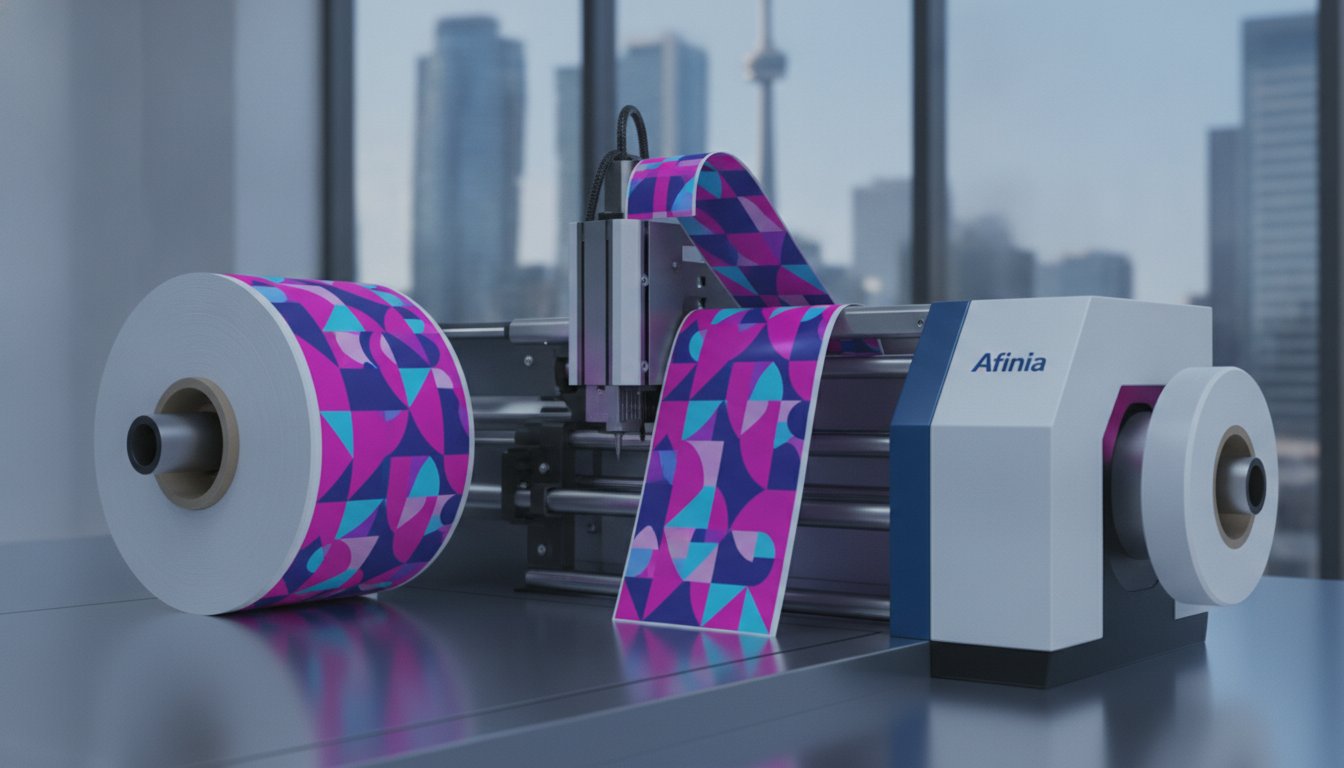
Why are you still paying a premium for pre-cut label rolls when your production floor could be cutting any shape on demand for a fraction of the cost? For many Canadian manufacturers, the hidden drain on profits isn't the ink; it's the lack of control over the final cut. Relying on external vendors for custom dies or stocking expensive pre-die-cut media often leads to long lead times and wasted inventory. By implementing professional in-house label finishing solutions Canada businesses can finally eliminate these bottlenecks and take full control of their supply chain.
You likely realize that waiting weeks for a custom die to arrive can stall a product launch, especially with the 2026 Health Canada front-of-package labelling regulations now in full effect. This guide will show you how to transform raw printed rolls into retail-ready products using digital finishing equipment that slashes costs and lead times. We'll explore the Afinia DLF series, compare digital plotters to traditional die cutting, and show you how to achieve a professional finish that survives high-moisture Canadian environments without the need for expensive third-party services.
Key Takeaways
- Understand how professional finishing protects your labels against moisture and abrasion through lamination and precise matrix removal.
- Compare digital plotter and rotary die technologies to find the right balance between short-run flexibility and high-speed production.
- Learn how to deploy in-house label finishing solutions Canada wide to eliminate the need for expensive pre-die-cut media and custom tooling.
- Explore the technical specifications of the Afinia DLF series, including the 350mm media width capacity of industrial finishers like the DLF-350L.
- Discover the steps to synchronize your existing printer output with a finishing system for a seamless, retail-ready production workflow.
What is Label Finishing? Why Printing is Only Half the Battle
A high-quality print job is only the first step toward a market-ready product. While your printer handles the ink and design, the finishing stage provides the structure, durability, and final shape. To understand the full scope, one must ask: What is a label? Beyond being a simple sticker, it's a durable piece of functional branding that must withstand environmental stressors. Label finishing is the multi-step process of laminating, cutting, and stripping printed media to create a professional, retail-ready result.
Without proper finishing, even the most vibrant designs are vulnerable. In Canada, products often face high-moisture environments or extreme temperature shifts during shipping. Finishing equipment provides a protective barrier against UV light, abrasion, and moisture; this ensures your brand identity remains intact from the warehouse to the customer's shelf. It's the bridge between a raw roll of media and a custom-shaped asset that defines your brand's presence in the marketplace.
The Four Pillars of the Finishing Process
Modern Afinia label cutters & finishers utilize a four-stage workflow to transform media:
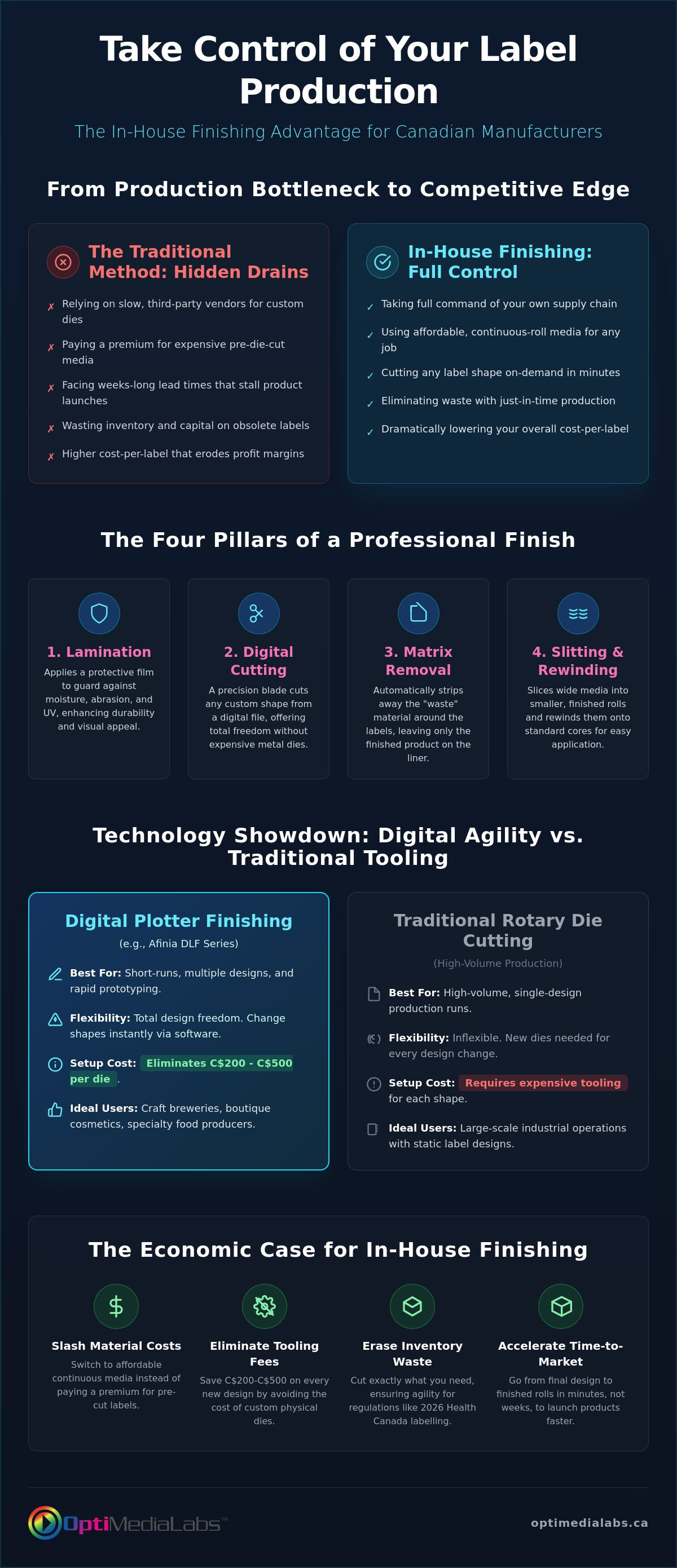
- Lamination: This stage applies a protective matte or gloss film over the print. It enhances visual appeal while providing essential resistance to oils, water, and chemicals.
- Digital Cutting: Rather than using physical metal dies, digital finishers use precision blades. This allows for any shape to be cut directly from a digital file, offering total design freedom.
- Matrix Removal: Once the labels are cut, the machine strips away the excess "waste" material from the liner. This leaves only the finished labels on the backing paper.
- Slitting and Rewinding: Wide rolls are divided into smaller, individual rolls. These are then rewound onto standard cores, making them ready for manual or automatic application.
The Economic Case for In-House Finishing in 2026
Adopting in-house label finishing solutions Canada wide has become a strategic necessity as supply chains remain volatile. The primary financial benefit is the elimination of the "die-cut tax." When you buy pre-cut blank labels, you pay a significant markup for the vendor's labour and tooling. By finishing in-house, you can use continuous, non-cut rolls which are much cheaper per square inch. This shift significantly lowers your cost per label over time.
This transition also reduces inventory waste. Instead of stocking thousands of pre-cut labels for a product that might undergo a design change, you cut only what you need. This agility is vital for meeting the 2026 Health Canada front-of-package nutrition labelling requirements. You can update designs and cut new shapes in minutes. You avoid the weeks of lead time typically required for external die orders, allowing you to launch products faster and respond to market shifts instantly.
Digital Plotter vs. Rotary Die Cutting: Choosing Your Technology
Selecting the right cutting technology is a pivot point for your production efficiency. For decades, the process of die cutting was synonymous with heavy machinery and expensive, fixed-shape metal plates. Today, in-house label finishing solutions Canada have evolved to offer digital alternatives that provide unprecedented agility. The choice generally falls between digital plotter technology and rotary die systems, each serving a specific production scale and business model.
Plotter technology utilizes a precision blade controlled by digital software, allowing for instant shape changes. In contrast, rotary systems use cylindrical dies for high-speed, repetitive tasks. For businesses managing complex shapes at industrial speeds, laser finishing systems like the Taurus series provide a middle ground by using high-powered lasers instead of physical blades or dies. This technology allows for extreme precision without the mechanical wear associated with traditional tools.
Digital Plotter Finishing: The DLF Series
Digital plotters are the standard for flexibility. Machines like the DLF-140S and DLF-220S replace physical steel dies with digital cut files. This "no-die" workflow removes the C$200 to C$500 setup cost typically associated with custom tooling for every new shape. It's an ideal setup for Canadian craft breweries, boutique cosmetics, or specialty food producers who manage dozens of SKUs. If your production runs are frequently under 2,500 labels per job, the DLF series ensures you aren't penalized for short-run variety.
Rotary and Semi-Rotary Solutions: The DLP and DC Series
When your production moves into high-volume repetition, rotary and semi-rotary systems offer the necessary throughput. These units, such as the DLP-2100, can reach finishing speeds of up to 12 inches per second (IPS). They utilize flexible steel dies that are wrapped around a magnetic cylinder, allowing for rapid, consistent cutting over long distances. The Afinia DC350 is a robust industrial solution for wide media, often used in large-scale manufacturing where speed is the primary driver of profitability.
Integrating these systems with your Afinia color label printers creates a streamlined, end-to-end production line. This synergy reduces manual handling and ensures that your finishing speed keeps pace with your printing output. If you're ready to compare specific models for your facility, request a technical consultation to find the best fit for your volume requirements.
Exploring the Afinia Label Cutters and Finishers Lineup
The hardware selection for in-house label finishing solutions Canada ranges from compact tabletop units to massive laser-powered systems. Each machine in the Afinia lineup addresses specific volume and width requirements. For small to medium-sized enterprises, the DLF-220S provides a compact footprint that handles lamination and cutting without requiring dedicated industrial space. If your production requires wider media, the DLF-350L steps up to handle up to 350mm wide rolls; this makes it suitable for larger industrial labelling needs where standard 8-inch widths are insufficient.
For high-intensity 2026 production cycles, the Afinia Taurus offers high-speed laser finishing. This removes the mechanical limitations of blades entirely, allowing for complex geometries at speeds that match high-output printers. The Taurus is particularly effective for businesses dealing with frequent design changes, as the laser path is updated via software in seconds. Additionally, tools like the SMR-100 and SR-100 provide essential support for simplified workflows. The SMR-100 allows you to slit wide rolls into multiple narrow ones while simultaneously removing the waste matrix, ensuring your final rolls are ready for applicator machines.
Entry-Level Precision: The DLF-140S and 220S
The DLF-140S and 220S series are designed for precision and operator ease. These units don't require specialized engineering training or mechanical backgrounds, making them accessible for small teams. A standout feature is the "Dual Plotter" option. This configuration doubles your cutting speed by using two heads simultaneously without increasing the machine's physical footprint. It's a logical upgrade for businesses that have outgrown single-blade systems but aren't ready for a full rotary press. You can browse our full selection of Afinia label cutters and finishers to view detailed technical specifications for each model.
Industrial Power: The DLP-2100 and DLP-2200
Scaling up to the DLP-2100 or DLP-2200 transforms your facility into a professional digital label production centre. These systems are often integrated with the Afinia L901 to create a complete digital label press experience. By utilizing Memjet-powered printing speeds and semi-rotary die efficiency, these units manage massive runs with minimal downtime. They're built for stability and high-volume repetition, providing the reliability needed for 24-hour production environments. For more information on selecting the right printer to pair with these finishers, reference the Afinia Color Label Printers: The Ultimate Canadian Buyer’s Guide for 2026.
How to Integrate a Finisher into Your Labelling Workflow
Integrating in-house label finishing solutions Canada requires a methodical approach to ensure your hardware investment delivers a high return on investment. It isn't just about adding a machine to your floor; it's about creating a seamless physical and data link between your print station and the finishing unit. This process transforms a raw roll of printed media into a professional product ready for the Canadian retail market.
The first step involves synchronizing your printer output with the finisher’s unwinder system. Most Afinia finishers utilize an adjustable dancer arm to manage tension. This arm ensures the media feeds smoothly without bunching or snapping as it moves from the printer's take-up roll into the finishing unit. Once synchronized, you must select the appropriate lamination film. For the Canadian market, consider environmental stressors like humidity in coastal provinces or the extreme cold of winter shipping. Choosing a UV-resistant or moisture-proof laminate ensures your brand remains legible throughout the product's lifecycle.
Precision is maintained through the use of registration marks. Digital plotters use optical sensors to read black marks or QR codes printed alongside your artwork. This ensures the blade stays perfectly aligned with the print, even if the media shifts slightly during the run. Finally, set up your matrix removal and slitting blades. The slitting knives divide wide rolls into the specific narrow widths required by your automatic applicators, while the matrix system strips away the excess waste material for a clean finish.
Software Requirements for Digital Finishing
Precise cutting begins during the design phase. You'll need BarTender label design software to define cut paths and place registration marks accurately. Modern digital finishers read these software-generated marks to realize perfect registration across thousands of labels. This digital "handshake" allows you to change shapes instantly without waiting for new hardware. For more tips on creating complex geometries, refer to our guide on Professional Sticker Printing Equipment.
Maintenance and Consumables for Longevity
Consistent quality depends on the condition of your consumables. Replace plotter blades and slitting knives as soon as you notice dulling to maintain clean, professional edges. Managing waste matrix rolls is also essential; if the waste roll becomes too large, it can cause tension issues and production jams. Always select lamination rolls that match the width of your Afinia labels to prevent adhesive bleed and ensure total protection. If you're ready to design a custom workflow for your facility, contact our integration specialists for technical assistance.
Why OptiMediaLabs is Canada’s Trusted Source for Afinia Finishing
Choosing the right partner is as critical as choosing the right machine. OptiMediaLabs Canada serves as the primary bridge for in-house label finishing solutions Canada wide. We provide a stable foundation for businesses looking to move away from the high costs and long lead times of outsourced production. Our expertise isn't limited to just one machine; we support the entire ecosystem. This means we ensure your ink, media, and finishers work in perfect harmony to produce retail-ready results. As an authorised Canadian Afinia distributor, we understand the technical nuances required to keep a production line running smoothly.
We prioritise industrial-grade reliability. Every piece of equipment we distribute meets rigorous Canadian manufacturing standards. This focus on stability ensures that your production line remains operational during peak seasons. We simplify the procurement process for enterprises transitioning to in-house workflows. We provide a clear path from initial consultation to full-scale production. Our national shipping coverage extends across all provinces; this ensures that whether you are in British Columbia or Newfoundland, your equipment and supplies arrive via streamlined logistics.
The Advantage of a Specialised Canadian Distributor
Ordering large industrial hardware from outside the country often leads to cross-border shipping delays and complex customs issues. These hurdles can stall your production for weeks. By partnering with a domestic distributor, you avoid these logistical headaches. We maintain a full inventory of essential consumables. This includes lamination rolls and replacement blades to ensure your facility never faces unnecessary downtime. Our team provides specialised technical guidance on matching finishers with Epson printers or Afinia units. We ensure your hardware configurations are optimised for your specific label materials and adhesive requirements.
Ready to Professionalise Your Production?
The shift to in-house production allows you to realise significant cost savings and total creative control. You no longer have to settle for standard shapes or wait weeks for external vendors to deliver custom dies. With the right finishing equipment, your brand can respond to market changes in minutes. This agility is essential for staying competitive in the 2026 Canadian retail landscape. Consult with our labelling specialists to determine which hardware solution fits your current volume and future growth plans. We are here to help you bridge the gap between raw printing and finished retail products.
Contact our team today to discuss your in-house label finishing requirements.
Modernize Your Labelling Workflow for Long-Term Growth
Transitioning to in-house label finishing solutions Canada allows your business to bypass the high costs and delays of third-party vendors. You've seen how digital plotter technology eliminates expensive die-cutting fees while lamination ensures your branding survives harsh environments. Whether you choose a compact tabletop unit or an industrial-scale press, the goal is the same: professional results with total production autonomy. Meeting new regulatory requirements or launching seasonal products no longer requires weeks of lead time; it now takes minutes.
OptiMediaLabs stands as your authorized Canadian Afinia distributor, providing expert technical support for industrial labelling across the country. We maintain a full stock of lamination and replacement blades to ensure your facility never stops running. Don't let your production be limited by external schedules or rising material markups. Take the final step toward a streamlined, cost-effective label production line today. Our team is ready to help you bridge the gap between raw media and retail-ready packaging.
Browse our full range of Afinia Label Cutters & Finishers
Frequently Asked Questions
What is the difference between a label cutter and a label finisher?
A label cutter focuses strictly on the cutting process; a label finisher is a comprehensive system that handles lamination, matrix removal, slitting, and rewinding in a single pass. While a cutter might be used for simple sheets or rolls, a finisher is required to produce professional, applicator-ready rolls for retail. Most Canadian manufacturers prefer finishers to ensure their labels are fully protected and ready for the shelf.
Do I need a different die for every label shape with an Afinia DLF-220S?
No, you don't need physical dies for the DLF-220S because it uses digital plotter technology. The machine follows a digital cut path created in your design software, allowing you to change shapes instantly without any tooling costs. This flexibility is ideal for businesses managing multiple SKUs or seasonal products, as it eliminates the C$200 to C$500 cost typically associated with custom metal dies.
Can Afinia finishers apply lamination to my labels?
Yes, most models in the Afinia DLF series include a dedicated lamination station as a standard feature. This station applies a protective matte or gloss film to the media before the cutting process begins. Lamination is essential for in-house label finishing solutions Canada wide, as it protects the ink from the moisture, oils, and abrasion common in domestic shipping and retail environments.
How fast can an Afinia digital label finisher cut labels?
Cutting speeds vary depending on the complexity of the shape and the specific model. Industrial units like the DLP-2100 can reach finishing speeds of up to 12 inches per second. Tabletop digital plotters are generally slower than rotary systems, but you can double the throughput by selecting the "Dual Plotter" configuration. This option uses two cutting heads simultaneously to increase production speed without expanding the machine's physical footprint.
Is it difficult to learn how to operate a digital label finisher?
Operating an Afinia digital finisher is straightforward and doesn't require specialized mechanical engineering training. Most operators become proficient with the hardware and software within a single production shift. The systems feature intuitive controls for managing roll tension and alignment. Once the digital cut file is loaded and the media is threaded, the machine handles the precision work with minimal manual intervention.
What software do I need to run an Afinia label cutter?
You'll need professional label design software such as BarTender or NiceLabel to create the necessary cut lines and registration marks. These programs allow you to define the exact geometry of the cut and place the black marks that the finisher's optical sensor reads. This digital "handshake" ensures that the blade stays perfectly aligned with the printed artwork throughout the entire roll, preventing wasted media and misaligned cuts.
Can I use an Afinia finisher with labels printed on an Epson or Primera printer?
Yes, Afinia finishers are compatible with rolls printed on Epson, Primera, or other color label printers. As long as the media width fits the finisher's specifications and you include the required registration marks, you can integrate these in-house label finishing solutions Canada with your existing hardware. This cross-brand compatibility allows Canadian businesses to build a hybrid production line that suits their specific volume and budget requirements.
How much space does an industrial label finisher require in a facility?
Tabletop units like the DLF-220S require approximately 3 to 4 feet of bench space to operate effectively. Larger industrial systems, such as the DLF-350L or the DLP-2100, require a dedicated floor area of about 8 to 10 feet in length. You should also ensure there's enough clearance for operators to load heavy rolls, manage the waste matrix, and access the slitting blades for routine maintenance and adjustments.