
Barcode Hardware Supplier Canada: The Professional’s 2026 Procurement Guide
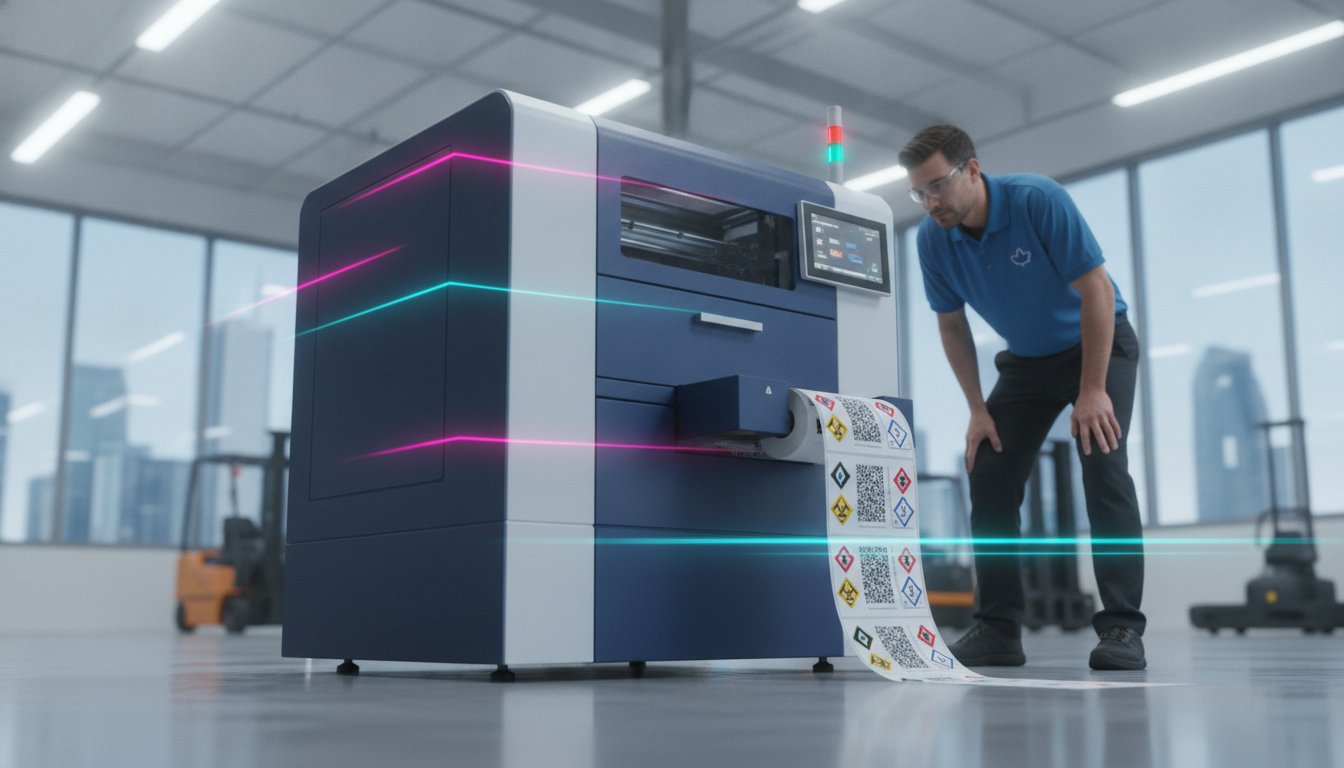
If your labelling system isn't 2D-ready, you're already trailing behind the regulatory curve set by the 2025 Canadian pharmacy and cannabis mandates. Relying on legacy 1D scanners or waiting for US-based shipments is no longer a viable strategy for modern industrial logistics. Partnering with a dedicated barcode hardware supplier Canada is the first step toward securing your supply chain against cross-border duties and stock inconsistencies. You need hardware that integrates seamlessly with your existing software and consumables that arrive exactly when you need them.
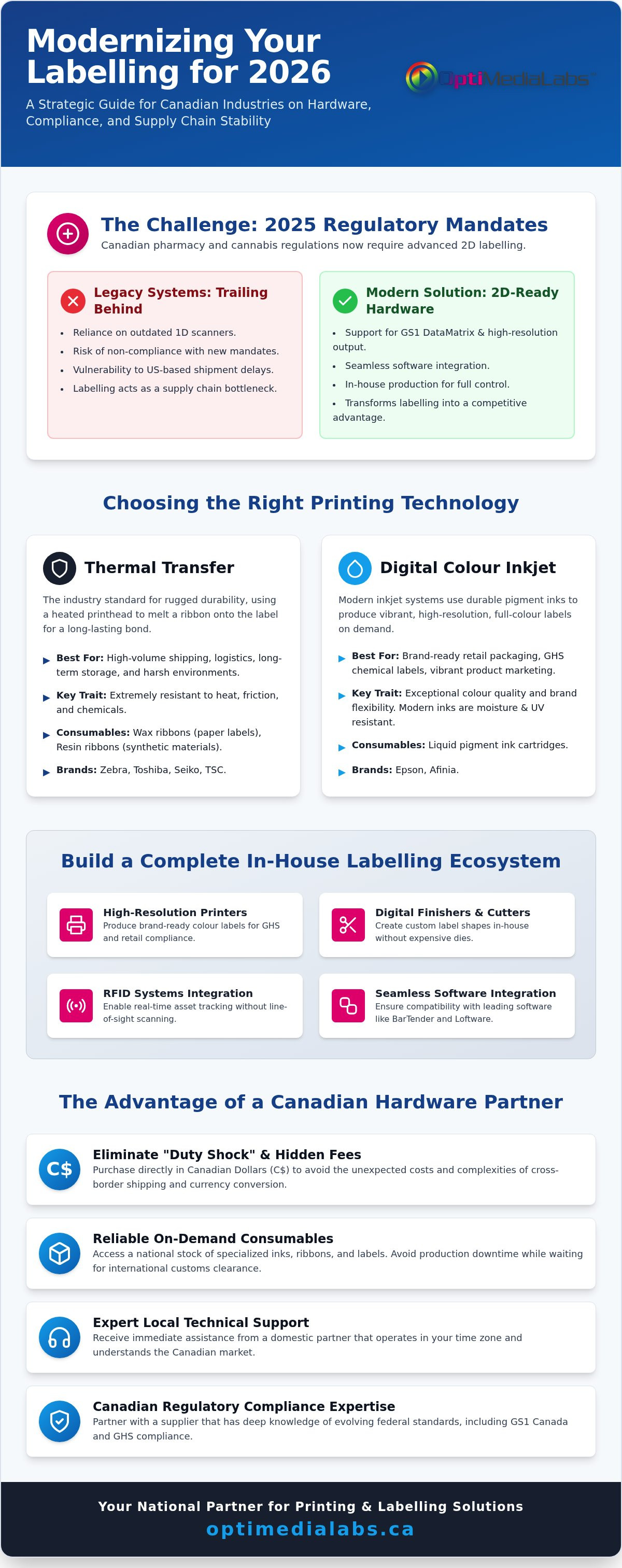
At OptiMediaLabs Canada, we understand that downtime isn't just an inconvenience; it's a direct hit to your bottom line. You need a national distributor that provides on-demand printing solutions and compatible ink and ribbons without the international friction. This guide promises to simplify your 2026 procurement process by identifying the best hardware and consumables for your specific industry. We will preview the latest GS1 DataMatrix requirements, discuss crucial software integrations, and demonstrate how to maintain GHS compliance through high-speed colour labelling. Discover how to transform your labelling from a bottleneck into a competitive advantage.
Key Takeaways
- Navigate the transition from basic thermal printing to high-resolution colour systems and RFID-enabled hardware for 2026 compliance.
- Identify whether thermal transfer or inkjet technology better suits your application, from durable shipping labels to vibrant retail packaging.
- Choose a barcode hardware supplier Canada that ensures hardware compatibility with leading labelling software like BarTender and Loftware.
- Reduce overhead by implementing in-house label finishing and digital cutters to create custom shapes without the need for traditional dies.
- Prioritize long-term reliability by sourcing from a national partner that stocks on-demand consumables, including specialized inks and ribbons.
What is Barcode Hardware? Defining the Modern Canadian Ecosystem
Modern barcode hardware is a sophisticated network of equipment designed to capture, process, and output critical data. It's no longer just about a simple handheld scanner. The current Canadian ecosystem integrates high-speed colour label printers, RFID systems, and advanced digital finishers to automate the entire supply chain. A Barcode serves as the digital handshake between your physical product and your warehouse management system. By moving toward in-house production, Canadian firms are regaining control over their timelines and reducing the risks associated with third-party print shops.
The Core Categories of Barcode Equipment
Industrial Barcode Printers remain the reliable workhorses for high-volume shipping. Brands like Zebra, Toshiba, and Seiko lead this category with durable thermal transfer technology. However, the market is shifting toward more versatile solutions. Afinia printers and Epson systems allow businesses to produce brand-ready, high-resolution colour packaging on-demand. This transition is essential for meeting GHS chemical labelling standards and GS1 DataMatrix requirements.
With the 2025 deadlines for the Canadian pharmacy and cannabis sectors already in effect, your hardware must support 2D scanning and high-resolution output. Digital finishers, including Afinia label cutters & finishers, complement these printers by allowing for custom label shapes without the expensive lead times of traditional die-cutting. RFID systems add another layer of efficiency, providing real-time tracking for complex logistics without requiring line-of-sight scanning.
Why a National Supplier Matters in 2026
Choosing a dedicated barcode hardware supplier Canada offers distinct financial and operational advantages. You eliminate "duty shock" by purchasing in Canadian Dollars (C$) and avoiding the hidden costs of cross-border shipping. Technical support is another critical factor. A domestic partner understands specific Canadian manufacturing regulations and can provide immediate assistance without time zone delays. This local expertise ensures your hardware stays compliant with evolving federal standards.
Access to consumables is the most vital link in your production chain. When you work with a national distributor, your ink cartridges and thermal transfer ribbons are stocked within the country. This proximity ensures that a sudden spike in demand doesn't lead to a week of downtime while waiting for a customs clearance. Reliability in 2026 is built on a stable, local supply of both hardware and the materials that keep it running. It's about creating a frictionless procurement path that supports long-term growth.
Thermal vs. Inkjet: Choosing the Right Printing Technology
Selecting the correct technology depends entirely on your environment and label requirements. Thermal transfer systems rely on a heated printhead to melt a ribbon onto the label surface. This creates a bond resistant to heat, friction, and chemicals. Conversely, inkjet systems utilize liquid ink cartridges to produce high-resolution, full-colour images. While thermal was once the only choice for industrial settings, modern inkjet pigment inks have largely dispelled the durability myth. They now withstand moisture and UV exposure effectively, making them suitable for retail and industrial use alike.
Thermal Transfer Hardware for Rugged Durability
For logistics and long-term storage, thermal transfer label printers remain the industry standard. The longevity of the print depends on matching the ribbon type to the substrate. Wax ribbons are ideal for standard paper shipping labels, while resin ribbons provide maximum resistance for synthetic materials used in chemical tagging. It's critical to use brand-specific consumables, such as Zebra ribbons or TSC ribbons, to prevent premature printhead wear. These systems are essential for maintaining GS1 Canada standards in high-volume distribution centres where scannability is non-negotiable.
Digital Colour Inkjet for Brand Flexibility
The rise of Epson printers and Afinia printers has transformed the Canadian SME market by allowing for short-run, brand-ready packaging. Instead of ordering thousands of pre-printed labels, businesses can print only what they need, reducing waste and inventory costs. Afinia printers utilize Memjet technology to achieve high-speed, single-pass printing at resolutions up to 1600 dpi. This speed allows for rapid pivoting when product details or regulations change. It gives you the flexibility to update variable data without waiting for an external print shop.
A reliable barcode hardware supplier Canada helps you weigh the total cost of ownership between these technologies. While inkjet hardware often has a higher upfront cost, the ability to eliminate pre-printed stock often results in long-term savings. If you're unsure which technology fits your specific warehouse conditions, speak with a technical specialist to evaluate your label durability needs. Balancing hardware capability with the right ribbons or ink cartridges is the only way to ensure consistent output and operational uptime.
The Strategic Advantage of In-House Label Finishing
Printing a high-resolution label is only the first half of the production cycle. To truly optimize your workflow, you must consider how those labels are cut, laminated, and prepared for application. Traditional methods often require custom metal dies, which carry high upfront costs and long lead times. By investing in digital finishing hardware, your business can produce custom label shapes on-demand without these financial barriers. This flexibility enables "Micro-Branding" and seasonal product runs that would otherwise be cost-prohibitive for smaller batches.
Beyond the Print: Slitting, Lamination, and Cutting
Lamination is a critical step for products exposed to high-moisture or oil-rich environments. It protects the integrity of the ink and ensures that GS1 barcode standards are maintained throughout the product's lifecycle. Digital cutters play a pivotal role here; they use a precision blade to follow any digital outline, creating unique sticker shapes that help products stand out on Canadian retail shelves. For a deeper look at integrating these tools, refer to our Industrial Labeling Solutions Canada reference guide.
Reducing Production Bottlenecks
Relying on external print shops often introduces weeks of delay into your product launch schedule. Owning the entire print-and-cut cycle in-house provides an immediate return on investment by eliminating these bottlenecks. The synergy between an Afinia printer and an automated roll-to-roll finishing system allows for significant labour savings. Automated systems handle the slitting and waste removal, freeing up your team for more complex tasks. Professional-grade Afinia Label Cutters & Finishers provide the reliability needed for continuous industrial output.
Choosing a barcode hardware supplier Canada that offers both printing and finishing solutions ensures that your equipment works in harmony. When your hardware is synchronized, you reduce the risk of tension issues or tracking errors during the finishing process. This integrated approach allows you to regain control over your production timelines and respond faster to market shifts. It's about moving from a reactive supply chain to a proactive, in-house manufacturing model.
Software Integration: The Brains Behind the Hardware
Your barcode printer is only as effective as the software driving its variable data. Without a robust software layer, even the most advanced industrial hardware is just a peripheral. A professional barcode hardware supplier Canada doesn't just sell you a machine; they ensure your labelling environment supports GS1-128 and QR code generation for Canadian retail requirements. As of 2026, the industry is dominated by the "Big Three": BarTender, NiceLabel, and Loftware. These platforms transform raw data from your ERP into compliant, scannable labels.
BarTender vs. NiceLabel: Which Fits Your Workflow?
Choosing between these leaders depends on your specific operational needs. BarTender software remains the gold standard for complex automation and deep database integration. It's built for environments where labels pull data directly from SQL servers or Oracle systems. In contrast, NiceLabel is recognized for its user-friendly interface and seamless cloud-ready features. Since NiceLabel operates under the Loftware umbrella, it offers a scalable path for businesses moving toward subscription-only, cloud-based label management.
Managing Compliance and Variable Data
Software automation is non-negotiable for managing expiry dates, lot numbers, and serializations. In the Canadian market, adhering to GHS compliance for chemical labelling requires precise templates that software provides out of the box. Using these tools reduces human error and ensures every label meets federal safety standards. For detailed setup tips, refer to The Professional Guide to Barcode Labeling Software in Canada.
When selecting your platform, prioritize scalability. It's better to invest in a system that can grow from a single workstation to a multi-site enterprise solution. Modern software often utilizes a SaaS model, which lowers upfront costs while ensuring you're always using the latest version, such as BarTender 12 or NiceLabel 10.5. If you're struggling to map your existing database to your new hardware, request a software compatibility audit from our technical team today.
Selecting Your National Hardware Partner: Why OptiMediaLabs?
Reliability in your supply chain depends on "Consumables Continuity." It's not enough to own a high-performance printer; you must have guaranteed access to the specific inks and ribbons that keep it operational. Many suppliers focus solely on the initial hardware sale, leaving businesses to struggle with international lead times for basic supplies. As a dedicated barcode hardware supplier Canada, OptiMediaLabs Canada maintains a deep inventory of brand-specific consumables within the country. This ensures your production line never stops due to a customs delay or cross-border shipping friction.
Expertise in Colour and Industrial Barcoding
We specialise in high-reliability systems from Afinia, Epson, and Zebra. These brands represent the pinnacle of modern labelling, offering the precision required for GS1 and GHS compliance. We prioritize Afinia printers for their industrial durability and low cost per label. To maintain that quality, we stock genuine Epson ink cartridges and Afinia supplies for every model we distribute. Our commitment is to help Canadian manufacturers scale by providing the tools needed to move from small batches to high-volume output without losing brand consistency.
Ready to Upgrade Your Labelling Infrastructure?
The first step toward optimizing your logistics is a comprehensive hardware audit. We help you identify where shifting to in-house printing can reduce costs and eliminate the significant markups typically found with external print houses. Owning the cycle means you can pivot your marketing or regulatory data in minutes. By choosing a national partner, you gain a long-term supply chain ally for ribbons, blank labels, and technical support familiar with the Canadian landscape.
Ready to refine your procurement strategy? Contact OptiMediaLabs Canada for a personalized hardware consultation to match the right technology to your specific production volume. We'll ensure your 2026 infrastructure is secure, compliant, and cost-effective. Don't let your labelling be the bottleneck in your growth; invest in hardware that works as hard as your warehouse team does.
Future-Proof Your Canadian Labelling Operations
Securing your supply chain in 2026 requires more than just high-performance equipment. It demands a strategic approach to in-house production. By integrating advanced colour printers with digital finishers and compliant software, you regain control over your timelines and brand quality. Choosing the right barcode hardware supplier Canada ensures you avoid the friction of international borders while maintaining a steady flow of essential consumables. National distribution is the key to reducing downtime and staying agile in a competitive market.
OptiMediaLabs is an authorized distributor for industry leaders like Afinia, Epson, and VIPColor. We provide a comprehensive inventory of brand-specific ribbons and ink cartridges to support every system we sell. This stability allows you to focus on growth rather than logistics delays. Request a custom hardware and supply quote from OptiMediaLabs today to streamline your facility. We're ready to help you build a more efficient, compliant, and cost-effective labelling infrastructure.
Frequently Asked Questions
How do I choose between a thermal transfer and a direct thermal printer?
Choose thermal transfer if you need long-term durability or resistance to heat, sunlight, and chemicals. This method uses a ribbon to create a permanent bond on synthetic materials. Direct thermal is better for short-term applications like shipping labels because it doesn't require a ribbon. However, direct thermal labels fade over time when exposed to light. Most industrial environments prefer thermal transfer for its reliability and longevity.
Can I use third-party ink in my Afinia or Epson colour label printer?
You should avoid third-party inks because they often lead to clogged printheads and inconsistent colour matching. Using non-genuine cartridges can also void your manufacturer's warranty. Brand-specific Afinia and Epson ink cartridges are engineered for the high-speed printheads in these machines. Sticking to authentic supplies ensures your hardware maintains peak performance and prevents expensive repairs. It's the most reliable way to protect your investment.
What is the best barcode hardware for GHS-compliant chemical labels?
Pigment-based inkjet printers are the best choice for GHS-compliant labelling because they offer superior chemical and UV resistance. Models like the Epson ColorWorks series or specific Afinia printers are designed to meet BS5609 standards for marine immersion. These systems produce smudge-proof labels that remain legible in harsh industrial conditions. Pairing this hardware with the correct synthetic media is essential for meeting federal safety regulations in the Canadian market.
Is BarTender software compatible with all barcode printer brands in Canada?
BarTender is compatible with virtually every barcode printer brand found through a barcode hardware supplier Canada like OptiMediaLabs. It supports industrial workhorses from Zebra, Toshiba, and Seiko, as well as colour systems from Afinia and Epson. This universal compatibility allows you to manage a mixed fleet of hardware from a single software interface. It simplifies your workflow by ensuring variable data and GS1 standards are applied consistently across all your devices.
Why should I buy barcode hardware from a Canadian supplier instead of the US?
Buying from a barcode hardware supplier Canada allows you to avoid "duty shock" and unpredictable cross-border shipping delays. You'll also benefit from transactions in Canadian Dollars (C$), which eliminates concerns over exchange rate fluctuations. Local suppliers provide faster access to technical support and stock essential consumables in your own time zone. This proximity reduces your lead times and keeps your production lines running without international friction.
Do I need a label finisher if I only print standard rectangular labels?
You don't strictly need a digital finisher if you only print standard rectangular labels on pre-die-cut rolls. However, a finisher becomes valuable if you want to laminate your labels for extra protection or slit wider rolls into multiple narrow ones. Owning a finisher allows you to buy cheaper continuous media and cut it to size in-house. This hardware adds a layer of versatility that pre-cut labels simply cannot provide.
How often should I replace the printhead on my industrial barcode printer?
Most industrial printheads require replacement after printing approximately 1 million to 2 million linear inches. Your actual frequency depends on your print volume, the cleanliness of your environment, and the quality of your ribbons. Using high-quality thermal transfer ribbons reduces friction and extends the life of the heating elements. Regularly cleaning the printhead with isopropyl alcohol is the most effective way to prevent premature failure and maintain crisp output.
What are the benefits of RFID label printers over traditional barcode printers?
RFID label printers provide the benefit of high-speed data capture without requiring a direct line-of-sight for every scan. These systems encode a digital chip inside the label while simultaneously printing a visual barcode. This technology is ideal for high-volume logistics where you need to track entire pallets of goods instantly. It significantly reduces manual scanning time and increases inventory accuracy in complex supply chains. It's a vital tool for modern warehouse automation.