
Blank Inkjet Labels Canada: The 2026 Professional Selection Guide
Why do high-resolution product labels that look perfect in the office often fail the moment they hit a damp warehouse or a cold shipping container? If you have experienced ink smudging on glossy finishes or labels peeling in the Canadian winter, you know that hardware is only half the battle. Finding the right blank inkjet labels Canada requires more than just picking a size; it demands an understanding of the synergy between your ink chemistry and the specialized top-coats of the media.
You likely realize that a "universal" label is a myth when high-quality colour output and durability are non-negotiable. This guide helps you master the technical nuances of inkjet media to ensure your Canadian business achieves professional, durable, and cost-effective in-house production. We will examine the critical differences between dye and pigment ink requirements, detail the materials needed for GHS and food safety compliance, and provide a roadmap for maintaining a reliable national supply chain through 2026. By aligning your media choice with your specific Afinia, Epson, or Primera system, you can eliminate waste and ensure your packaging remains compliant and professional.
Key Takeaways
- Learn why specialized top-coats are essential for high-speed inkjet production and why standard laser media fails to lock in liquid ink.
- Identify the critical differences between dye and pigment ink systems to ensure your media choice protects your printheads and matches your durability needs.
- Master the requirements for GHS BS5609 compliance and "cold chain" durability to keep labels intact in harsh Canadian environments.
- Discover the logistical advantages of sourcing blank inkjet labels Canada from a national distributor to eliminate hidden import fees and currency fluctuations.
- Select the ideal material and finish combinations to elevate your brand's aesthetic while maintaining cost-effective in-house production.
Understanding Blank Inkjet Labels for Professional Production
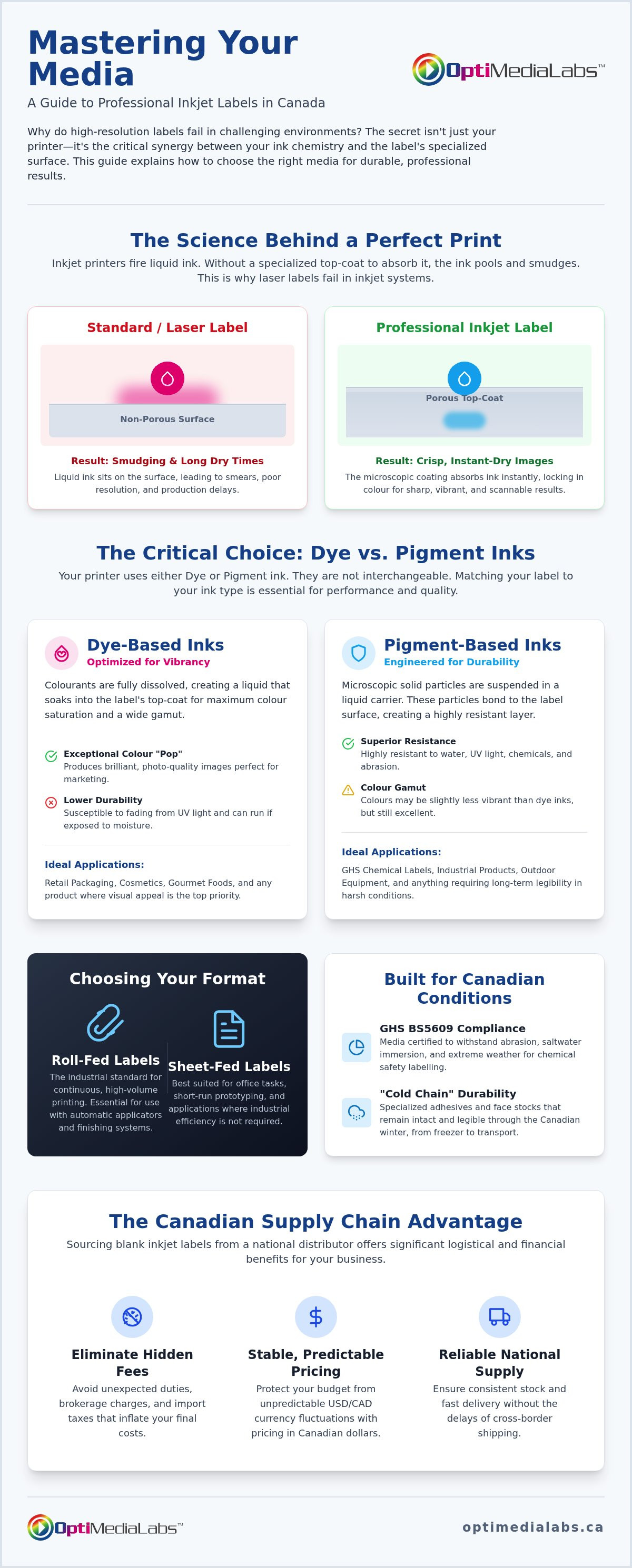
Professional label production starts with the right substrate. High-quality blank inkjet labels Canada are engineered specifically to handle liquid ink. Unlike standard paper, these materials feature a microscopic porous or "swellable" top-coat. This coating is the difference between a crisp, vibrant brand image and a smeared, unprofessional mess. It's the foundation of any reliable in-house printing operation.
Many businesses mistakenly attempt to use laser labels in inkjet systems. Laser printing uses heat to fuse dry toner to the surface. Inkjet printing technology, however, fires millions of liquid droplets. Without a receptive coating, the ink sits on top of the material, leading to smudging and long drying times that stall production. Canadian manufacturers are increasingly moving label production in-house to capture better margins and eliminate minimum order quantities. This shift allows for on-demand adjustments to meet regulatory changes, such as the 2026 Front-of-Package nutrition labelling deadlines, without waiting for external print shops.
The Science of Inkjet-Receptive Coatings
The top-coat acts as a precision sponge. It manages the surface tension of the ink to prevent "feathering," where ink bleeds along the paper fibres. High-resolution 1200 dpi printing, common in color label printers, requires exact dot placement. If the coating is too thin, the ink saturates the backing. If it's too thick, drying times increase significantly. Professional media balances these factors to ensure instant-dry results even during high-speed print runs. This technical synergy protects your brand's visual integrity and ensures your barcodes remain scannable.
Roll vs. Sheet Labels: Choosing Your Format
For industrial manufacturing, roll-fed media is the standard. Rolls allow for continuous printing on systems like Epson or Afinia units. This format is essential when using Afinia label cutters and finishers to create custom shapes or high-volume batches. While sheet labels work for short-run prototyping or basic office tasks, they lack the efficiency required for industrial applicators. You must choose the correct roll size and core diameter to ensure your hardware operates without mechanical strain or frequent downtime.
Dye vs. Pigment Inks: Matching Labels to Your Technology
Choosing the right blank inkjet labels Canada depends entirely on your printer's ink chemistry. Most professional systems, including those from Epson, Afinia, and Primera, utilize either dye-based or pigment-based inks. These two technologies are not interchangeable. Understanding the properties of dye and pigment inks is vital because each requires a specific top-coat to achieve a professional result. If the media and ink don't match, you risk wasted stock and compromised brand integrity.
The chemical difference is straightforward but impactful. Dye inks consist of liquid colourants fully dissolved in a carrier fluid. Pigment inks, conversely, use tiny solid particles suspended in liquid. Because pigment particles are larger, they often sit on the surface of dye-optimized labels rather than being absorbed into the coating. This leads to persistent smudging and extended drying times. While some "universal" labels exist, they often compromise on either saturation or environmental resistance. Testing is mandatory, especially for high-speed Memjet systems where ink volume is high and drying time is measured in milliseconds.
Dye-Based Labels for Vibrant Marketing
If your priority is visual impact, dye-based systems are the standard choice. They provide a wide colour gamut and deep saturation. This makes them ideal for retail packaging, cosmetics, and gourmet food products where a "pop" in colour drives consumer interest. However, dye inks are susceptible to UV fading and moisture over time. To maintain high colour fidelity, use premium Epson ink cartridges paired with glossy, dye-receptive media. These combinations ensure your marketing materials look as intended from the shelf to the customer's home.
Pigment-Based Labels for Durability and Compliance
For industrial and long-term applications, pigment ink is a necessity. These solid particles offer superior resistance to water, sunlight, and chemical exposure. This technology is the backbone of GHS-compliant chemical labelling and industrial parts tracking. Pigment systems like the Afinia L502 are engineered for environments where labels face harsh conditions. Using matte or BOPP materials specifically designed for pigment absorption ensures your data remains legible throughout the product's lifecycle. If you aren't sure which ink type your current hardware uses, it's best to request a media compatibility consultation before placing a bulk order for blank inkjet labels Canada.
Selecting the Right Material and Finish for Your Brand
Material selection for blank inkjet labels Canada involves more than just aesthetics. You must consider the environment the label will inhabit. Canadian logistics often involve the "cold chain" or damp storage conditions. These factors determine whether you need a permanent, removable, or freezer-grade adhesive. Standard adhesives often lose tack in temperatures below 5 degrees Celsius. If your products face refrigeration or winter shipping, specify a freezer-grade adhesive to prevent edge lift. High-speed dispensing operations also require a specific liner choice. PET liners offer superior strength compared to traditional paper liners, preventing web breaks during rapid application on industrial lines.
Paper Media: Matte and High Gloss Options
Matte paper is the preferred choice for industrial applications where readability is the priority. It provides a non-reflective surface that ensures barcodes scan accurately under various lighting conditions. For consumer-facing goods, high gloss paper creates a premium "prime label" look. This finish mimics the quality of traditional flexographic printing at a fraction of the cost for short runs. Utilizing brand-optimized Afinia labels ensures your paper stock matches the tension requirements of your hardware. This compatibility reduces jams and maintains consistent print quality across the entire roll.
Synthetic Media: Polypropylene (BOPP) and Polyester
Synthetic materials are becoming the standard for Canadian industrial sectors due to their extreme durability. Biaxially Oriented Polypropylene, or BOPP, is the most common moisture-resistant substrate. It is ideal for food, beverage, and bath products that encounter water or oils. BOPP ensures your packaging remains compliant with the Consumer Packaging and Labelling Regulations by preventing the ink from running or the material from disintegrating. Polyester (PET) offers even higher resistance to heat and harsh chemicals. While clear inkjet labels provide a modern "no-label" look, they require a printer with a "black mark" sensor to track the layout accurately. Each material has specific top-coat requirements to lock in the ink, so always verify compatibility with your printer's ink type before a full production run.
Industry-Specific Labelling Requirements in Canada
Regulatory compliance in Canada is a moving target that requires more than just high-quality design. Your substrate must physically survive the environment it inhabits to remain legal. Whether you are managing hazardous chemicals or consumer packaged goods, the durability of your media is paramount. High-quality blank inkjet labels Canada provide the necessary technical foundation to meet these rigorous standards while allowing for the agility of in-house production. This is especially critical as businesses adapt to the 2026 Front-of-Package (FOP) nutrition labelling deadlines enforced by the CFIA. Failure to use moisture-resistant or temperature-stable media can lead to non-compliance if the required symbols become illegible during transit.
GHS and Chemical-Resistant Standards
For hazardous products, BS5609 certification is the definitive standard for marine-grade durability. This is a three-part test that evaluates the adhesive, the base material, and the printed ink as a single unit. In the Canadian context, WHMIS alignment with GHS requires that supplier labels remain legible even after exposure to harsh chemicals or saltwater. Pigment ink is non-negotiable for these applications. Dye-based inks will smear or vanish when they encounter solvents or moisture. You must ensure your poly materials are specifically top-coated for pigment absorption to maintain compliance. For a deeper look at these industrial requirements, see our Industrial Labeling Solutions Canada reference guide. If you are unsure about your current material's certification status, contact our technical team for a compliance review.
Food, Beverage, and Cannabis Labelling
The Canadian cannabis and nutraceutical markets present unique physical challenges. Tincture bottles and pre-roll tubes often have small diameters that cause standard labels to "butterfly" or peel at the edges. You need flexible, high-tack synthetic media to ensure these labels stay wrapped. For those in the sector, we recommend reviewing our roundup of the Best Label Printer for Cannabis Products in Canada. Craft beverage producers face similar hurdles with moisture. Bottles moving from cold storage to room temperature generate condensation that can destroy paper-based labels. Using BOPP materials ensures your branding remains crisp and the ink doesn't yellow or bleed over time. This durability is essential for maintaining a professional image in the competitive Canadian retail landscape.
Sourcing Quality Inkjet Labels from a Canadian Distributor
Procuring blank inkjet labels Canada from a national distributor offers immediate financial and operational advantages. Importing media from international suppliers often involves hidden costs that erode the margins gained by in-house production. These include customs duties, brokerage fees, and the instability of currency exchange rates. By sourcing locally, you eliminate these variables and ensure predictable procurement costs. Supply chain continuity is also easier to maintain when stock is held within the country. This prevents production shutdowns caused by border delays or international shipping bottlenecks.
Using brand-authorized media is also a matter of hardware protection. Specialized systems from Afinia, Epson, and Primera are precision instruments. Low-quality, third-party labels can shed dust or have uneven adhesive coatings that damage expensive thermal printheads. OptiMediaLabs, as an authorized distributor, provides media specifically matched to these systems. This synergy ensures your equipment remains under warranty and operates at peak efficiency for years. It's a strategic choice that prioritizes long-term reliability over minor upfront savings.
The Benefits of National Inventory and Support
A domestic partner provides more than just a product; they offer technical reassurance. National shipping coverage ensures faster transit times to all provinces and territories, from British Columbia to Newfoundland. This speed is vital for high-volume manufacturers who cannot afford long lead times. You also gain access to technical expertise regarding your specific hardware. Whether you are troubleshooting an Afinia finisher or optimizing an Epson print profile, having a local specialist who understands the Canadian industrial landscape is invaluable. For more detailed procurement strategies, refer to our Professional Label Printer Distributor in Canada guide.
Optimizing Your Labelling Supply Chain
High-volume manufacturers should utilize bulk purchasing strategies to maximize efficiency. Ordering full pallets of blank inkjet labels Canada reduces the per-unit cost and stabilizes your inventory levels for months. Match your ink and label orders to minimize shipping expenses. Since consumables like Epson ink cartridges and label rolls are often needed simultaneously, consolidated shipments reduce your logistics overhead. This methodical approach ensures your production line never stops due to a lack of supplies. To start building a more resilient production process, you can browse our full range of blank inkjet labels at OptiMediaLabs.
Future-Proof Your In-House Labelling Strategy
Professional label production in 2026 demands a precise alignment between your ink chemistry and media substrate. By mastering the nuances of inkjet-receptive coatings and selecting materials that withstand the Canadian cold chain, you ensure your brand remains both compliant and visually striking. Eliminating the hidden costs of international shipping and currency fluctuations is a critical step toward maintaining healthy margins. High-quality blank inkjet labels Canada provide the foundation for this operational efficiency and long-term reliability.
OptiMediaLabs acts as your dependable partner for high-volume manufacturing needs. As an authorized Afinia and Epson distributor, we offer the technical expertise in industrial labelling required to protect your hardware and your brand reputation. Our national shipping coverage ensures your production line stays active without the risk of international border delays. We focus on providing the stability and precision your business requires to navigate complex regulatory environments with ease.
Shop Professional Blank Inkjet Labels at OptiMediaLabs today to secure your supply chain and refine your production process. Our team is available to assist with your specific technical requirements and help you achieve superior results.
Frequently Asked Questions
Are all blank inkjet labels compatible with Memjet printers?
No, Memjet technology uses high-speed thermal heads that require specific coatings to manage high ink volumes instantly. Using non-Memjet optimized media results in poor drying and significant smudging during production. Always verify the "Memjet compatible" status on the product specification sheet before starting a run. This ensures you protect your hardware and produce scan-ready barcodes that meet industrial standards for clarity and precision.
What is the difference between dye-based and pigment-based inkjet labels?
Dye-based labels are optimized for liquid colourants that penetrate the coating for high vibrancy and deep saturation. Pigment-based labels are designed to anchor solid particles on the surface for extreme durability. Using dye-optimized media with pigment ink causes smearing because the larger particles can't be absorbed. You must match your media to your ink chemistry to achieve the desired balance of visual impact and environmental resistance.
Can I use laser labels in my inkjet label printer?
No, laser labels don't have the necessary absorbent top-coat required to lock in liquid ink. Laser printers use heat to fuse dry toner to a surface, whereas inkjet printers fire liquid droplets. If you use laser media, the ink will bead on the surface and smudge immediately. This can also lead to ink buildup inside your printer, potentially damaging the printhead and voiding your manufacturer warranty.
How do I prevent my inkjet labels from smudging?
Smudging is prevented by matching your ink type to the correct media top-coat. If you use pigment ink on dye-receptive glossy paper, the ink won't dry properly. Ensure you are using high-quality blank inkjet labels Canada specifically rated for your printer's ink system. Check your print settings to ensure the "media type" matches the material loaded, as this regulates the volume of ink deposited during printing.
What are GHS BS5609 certified labels, and do I need them?
BS5609 is a technical standard for labels used on chemical containers in marine environments. You need them if you are shipping hazardous materials that must remain identifiable after 90 days in saltwater. This certification covers the adhesive, the base material, and the printed ink. For Canadian WHMIS compliance, using pigment-based systems with BS5609-certified poly materials ensures your safety data remains legible and compliant under the harshest environmental conditions.
Do you ship blank inkjet labels across all of Canada?
Yes, we provide national shipping coverage across all provinces and territories. Sourcing your blank inkjet labels Canada from a domestic distributor like OptiMediaLabs eliminates the risk of border delays and hidden customs fees. We maintain a consistent inventory of brand-specific media for Afinia, Epson, and Primera systems to ensure your production line remains active. This provides your business with predictable transit times and reliable supply chain continuity throughout the year.
How do I choose between matte and glossy label finishes?
Choose matte finishes for industrial applications where barcode scannability and high readability are the primary goals. Matte surfaces reduce glare and are often more resistant to scratches during handling. Select glossy finishes for consumer-facing products where colour vibrancy and a premium shelf presence are required. Glossy media is ideal for retail packaging and cosmetics, while matte remains the standard for warehouse tracking and hazardous chemical labelling.
Can inkjet labels survive outdoor or high-moisture environments?
Yes, provided you select synthetic media like BOPP or Polyester paired with pigment-based ink. These materials are specifically engineered to resist water, UV exposure, and temperature fluctuations common in the Canadian climate. Paper-based labels will degrade quickly when exposed to moisture or outdoor elements. For outdoor storage or cold-chain logistics, a pigment-ink system on a durable synthetic substrate is the only way to ensure long-term label legibility.