
Blank Inkjet Labels Canada: The 2026 Professional Selection Guide
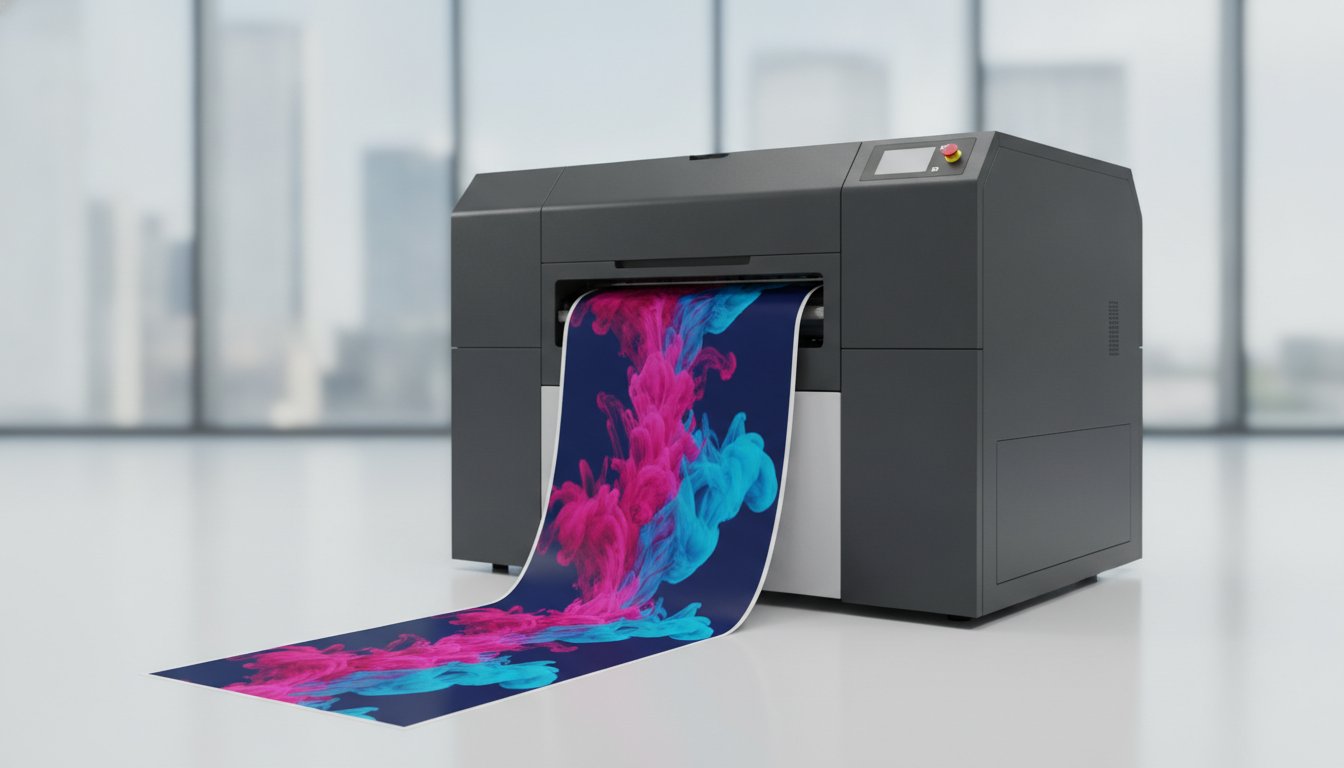
By January 2026, a single material choice could be the difference between a compliant product and a costly regulatory fine. You likely realize that a label is more than just a sticker; it's the face of your brand and a critical data carrier. However, sourcing the right blank inkjet labels Canada businesses need often leads to frustration. Ink smears on premium glossy surfaces, and standard adhesives frequently fail in our cold, moist Canadian environments. These failures don't just look unprofessional. They drive up your cost-per-label and threaten your operational efficiency.
This selection guide simplifies the technical complexity of modern inkjet media. We compare material durability and ink compatibility to ensure your labels stay vibrant and attached. You'll learn how to align your production with the January 1, 2026, Health Canada front-of-package regulations and Quebec's Bill 96 language requirements. We also break down the standards for GHS compliance and industrial-grade stocks. This guide provides a clear path to frictionless procurement for your high-volume printing needs, ensuring your colour vibrance and moisture resistance meet professional standards.
Key Takeaways
- Learn how ink chemistry dictates substrate choice to achieve smudge-free, professional results on every print run.
- Select the correct blank inkjet labels Canada businesses require for specialized environments, from high-moisture cold storage to GHS-compliant industrial settings.
- Stay ahead of 2026 regulatory deadlines by choosing materials that support new Health Canada nutrition symbols and Quebec language requirements.
- Maximize the lifespan of your Afinia, Epson, or Primera printers by using high-quality media designed to protect sensitive printheads.
- Reduce your total cost-per-label by implementing roll-fed finishing and bulk media procurement strategies.
Understanding Blank Inkjet Labels for Professional Canadian Production
Professional production requires more than just paper and glue. Blank inkjet labels are specially coated substrates engineered to absorb liquid ink instantly. This creates a smudge-free result that maintains its integrity from the printer to the retail shelf. Unlike standard office stickers, these materials feature a sophisticated ink-receptive layer. This layer manages the spread of ink droplets to ensure sharp text and high colour vibrance. Understanding the technical specifications of blank inkjet labels Canada businesses use helps prevent production bottlenecks and protects your brand image.
Generic media often fails in professional environments. Low-quality coatings lead to bleeding or pooling. The ink stays wet. This ruins the aesthetic and risks smearing during packaging. Sourcing high-quality types of label materials is essential to protect your equipment. Sub-par coatings can lead to clogged nozzles and inconsistent print quality. This ultimately increases your operational costs through wasted media and ink. A dedicated ink-receptive layer is the technical foundation for any professional-grade label.
Roll vs. Sheet Labels: Which Does Your Business Need?
Efficiency drives the choice between formats. Sheet labels serve well for short-run prototyping or low-volume office tasks. However, Canadian manufacturing has shifted toward roll-fed media for high-speed production. Roll-fed labels allow for automated application and are compatible with industrial-grade printers. When selecting rolls, you must verify the core diameter and total outer diameter. These specifications ensure the media fits securely within your printer's unwind station without causing tension errors. High-volume environments require this stability to maintain a consistent rhythm.
The Importance of Precision Die-Cutting
Precision is a technical requirement, not a luxury. High-speed systems like the Afinia L801 rely on optical sensors to detect the gaps between labels. Inconsistent die-cutting can cause sensor drift. This leads to misaligned prints and wasted material. Clean edges protect your hardware. Poorly cut labels often suffer from adhesive oozing. This sticky residue builds up on the internal components of the printer. It can cause permanent printhead damage and expensive downtime. You can choose between standard pre-die-cut shapes or continuous rolls if you use finishers to create custom sizes.
Dye vs. Pigment Ink: The Technical Foundation of Label Selection
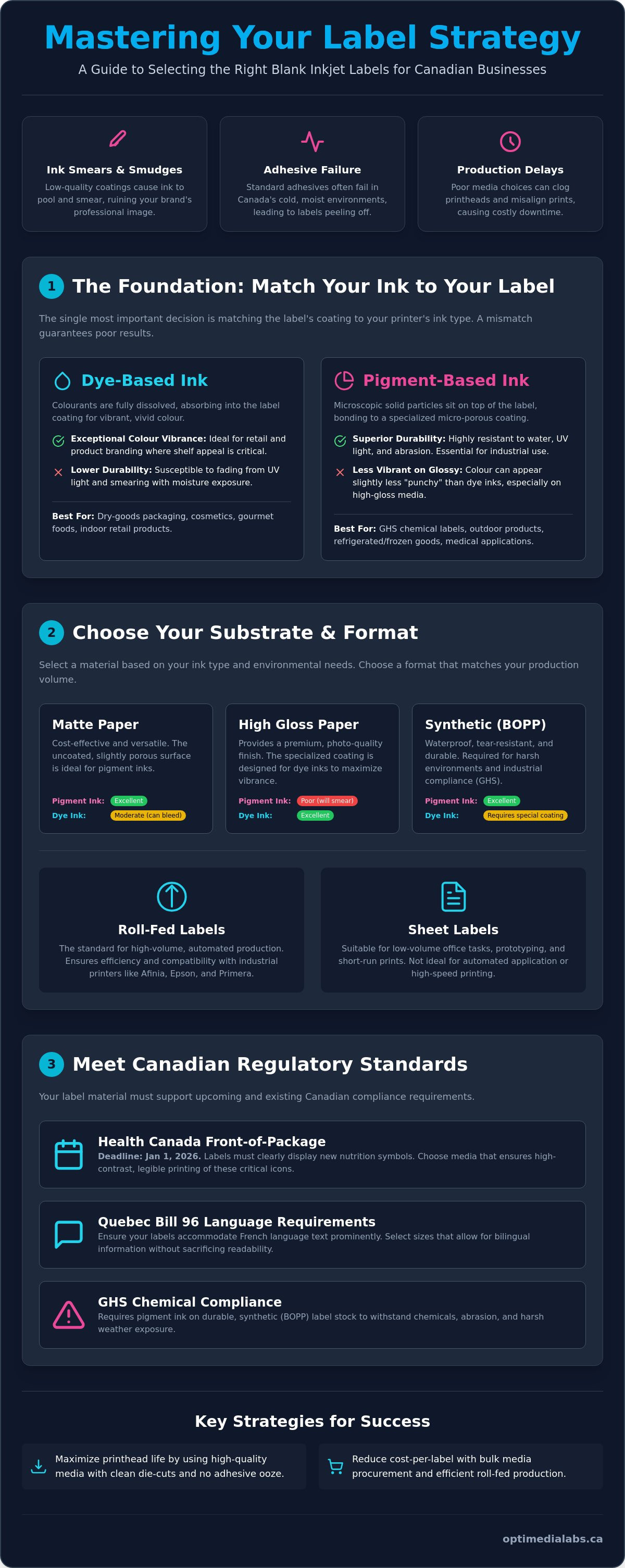
Selecting the right blank inkjet labels Canada requires a firm understanding of ink chemistry. Dye and pigment inks behave differently when they hit the substrate. Dye ink consists of colourants dissolved in a liquid. It penetrates the label coating. Pigment ink uses tiny solid particles suspended in a carrier fluid. These particles sit on the surface. Because of this, pigment ink requires a micro-porous coating. This specialized layer traps the solid particles while allowing the liquid to evaporate. If you use pigment ink on a label designed for dye, the particles have nowhere to go. You'll see pooling, slow drying times, and instant smearing.
Identifying your printer's ink type is the first step toward a professional finish. For instance, the Epson TM-C7500 uses pigment ink for matte industrial applications. In contrast, the TM-C7500G is optimized for gloss finishes. Using the wrong media compromises your printhead and your brand. If you aren't sure which chemistry your system uses, reach out to our technical team for a material compatibility audit. Matching the porosity of the coating to the particle size of your ink ensures a permanent bond.
Dye Ink Labels: Maximizing Colour Vibrance
Dye ink labels excel in retail environments where shelf appeal is the priority. The dissolved colourants allow light to pass through and reflect off the substrate. This creates deep blacks and vivid hues. These inks work best with high gloss paper and clear polyester materials. However, they have specific limitations. Dye ink is susceptible to UV fading and water smearing. It's ideal for dry-goods packaging but isn't suitable for products exposed to harsh sunlight or high moisture. For premium cosmetics or gourmet food, the vibrance of dye ink is unmatched.
Pigment Ink Labels: Prioritizing Industrial Durability
Pigment ink is the standard for durable label materials in Canada. The solid particles provide superior resistance to UV light, chemicals, and water. This durability is essential for meeting Canadian label compliance standards regarding safety and longevity. Pigment inks pair perfectly with synthetic substrates like matte polypropylene. These materials are often BS5609-certified for marine environments. They ensure your data remains legible even under extreme stress. This makes pigment-optimized labels the preferred choice for frozen food, chemical containers, and outdoor equipment.
Material Comparison: Matte Paper, High Gloss, and Synthetic Substrates
The durability of your brand depends on selecting the correct substrate for your specific application. Choosing the right material for blank inkjet labels Canada businesses use involves balancing cost, aesthetics, and environmental resistance. While paper remains the standard for many industries, synthetic materials offer the protection required for high-moisture or industrial environments. Your choice must align with the ink chemistry discussed previously, as a technical comparison of dye and pigment inks shows that coating porosity significantly impacts lightfastness and colour gamut.
Matte paper is the most cost-effective solution for high-volume shipping and dry-goods labelling. It provides a non-reflective surface that ensures barcode scanners work reliably. For retail products requiring more shelf appeal, high gloss paper offers a premium look with high colour vibrance. However, paper has limits. It absorbs moisture and can tear easily. When your product faces oils or water, BOPP (polypropylene) becomes the workhorse synthetic. It resists smudging and remains intact even when saturated. For the most extreme industrial tasks, polyester and vinyl provide the highest level of chemical and heat resistance.
Performance Metrics: Adhesion and Finish
Adhesion is just as critical as the top coating. You must choose between permanent and removable adhesives based on your container material. Permanent adhesives are standard for corrugated boxes and one-way packaging. Removable options are better for glass or reusable plastic where residue-free peeling is required. Finish also plays a role in longevity. Matte finishes hide fingerprints and resist scuffing during transit. Gloss finishes provide a striking look but may show scratches more easily. In the Canadian climate, labels must withstand significant humidity and temperature swings. Synthetic materials with aggressive adhesives perform best in these fluctuating environments.
Specialty Media: Clear, Silver, and Gold
Specific branding needs require specialty media to stand out in a crowded market. Clear labels are perfect for achieving the "no-label look" on glass or high-end plastic containers. They allow the product inside to remain visible while maintaining professional branding. Metallic substrates like silver and gold polyester are frequently used for luxury cosmetics and nutraceuticals. These materials provide a high-end aesthetic that paper cannot replicate. Additionally, inkjet-receptive silver polyester is a durable choice for industrial nameplates and asset tags. It combines the professional appearance of metal with the speed of on-demand inkjet printing.
Industry-Specific Label Compliance and Performance Standards in Canada
Compliance is a critical pillar of professional production. For many sectors, the choice of blank inkjet labels Canada manufacturers utilize must meet strict federal and international standards. Chemical producers realize that GHS (Globally Harmonized System) requirements are non-negotiable for safety and legal reasons. This often necessitates BS5609 certification to ensure labels remain legible after extreme exposure. In the food and beverage industry, the January 1, 2026, deadline for Health Canada front-of-package nutrition symbols requires high-contrast, precise printing on materials that withstand moisture and oils.
The health and beauty sector demands a different level of performance. Labels in this space must resist frequent handling and exposure to alcohols or fatty acids. For cannabis packaging, compliance includes the use of opaque backings to prevent "show-through" and high-resolution printing for small-format regulatory text. Each industry requires a specific combination of specialized coatings and engineered adhesives to ensure long-term stability and regulatory adherence.
The BS5609 Standard for Marine and Chemical Use
A 'Section 3' certified inkjet label has passed rigorous testing for saltwater immersion, UV stability, and abrasion. Achieving this standard requires pigment-based printers like the Epson CW-C6000 series. The solid particles in pigment ink bond with the micro-porous surface of synthetic substrates. This creates a permanent image that survives harsh industrial environments. This level of durability is essential for containers that may be stored outdoors or transported via marine freight where saltwater exposure is a constant risk.
Labeling for the Canadian Cold Chain
Logistics in Canada often involve sub-zero temperatures that cause standard adhesives to fail. This leads to "flagging," where the label edges peel away from the container. Freezer-grade adhesives are formulated to maintain a secure bond in these extreme conditions. For refrigerated products, the material must also resist condensation to prevent wrinkling or slipping. An all-temperature adhesive is a specialized bonding agent designed to apply effectively at room temperature while maintaining its grip in freezing environments. This versatility is vital for Canadian businesses that move products from warm warehouses to refrigerated transport.
To ensure your production meets these technical standards, consult with our compliance specialists for a material certification review.
Optimizing Your Labelling Strategy with OptiMediaLabs Supplies
Success in high-volume production requires a stable supply chain and technical precision. OptiMediaLabs provides the blank inkjet labels Canada businesses rely on for consistent, industrial-grade results. We engineer our media specifically for Afinia, Epson, and Primera systems. This ensures the material interacts correctly with the specific ink chemistry required for your printer. You'll find that brand-specific compatibility isn't just about fit; it's about the chemical bond between the ink and the substrate.
You can significantly reduce your cost-per-label through bulk roll procurement and in-house finishing. Utilizing Afinia Label Cutters & Finishers allows you to print on continuous blank rolls. This strategy eliminates the waste associated with pre-die-cut shapes. It also gives you total control over your finishing process. By bringing this in-house, you realize faster turnaround times and lower per-unit costs for every product you ship.
Ensuring 100% Printer Compatibility
Protecting your hardware is a critical financial priority. Using Epson-certified labels prevents premature printhead wear caused by abrasive or low-quality coatings. We help you match the right ink cartridges to your chosen substrate for optimal drying. This prevents common inkjet media issues like banding, bleeding, and tracking. If your prints don't dry instantly, it's likely a mismatch between the coating and the ink. Our technical team ensures your media and ink work in perfect synergy.
Streamlining Your Supply Chain
Frictionless procurement is essential for maintaining production schedules. Consolidating your hardware, ink, and media with a single Canadian distributor reduces administrative overhead. It ensures all components of your labelling system are technically aligned. This approach minimizes the risk of downtime caused by incompatible supplies or delayed shipments.
We provide reliable lead times through our national Canadian distribution network. This stability is vital for inventory management in high-volume manufacturing environments. We offer custom size availability to meet unique product packaging requirements. Our focus is on providing the technical authority and reliable service your business needs to stay compliant and efficient. Trust a partner that understands the rigorous demands of the Canadian market.
Future-Proof Your Labelling Production for 2026
Achieving professional results requires a precise alignment between your printer's ink chemistry and the substrate's coating. As discussed, the transition to new Health Canada and Quebec labelling regulations makes material selection more critical than ever. Sourcing the high-quality blank inkjet labels Canada businesses require shouldn't be a source of production friction. By choosing media engineered specifically for your Afinia, Epson, or Primera system, you protect your printheads and ensure your brand remains vibrant and compliant.
OptiMediaLabs Canada operates as a national distributor with high-volume stock availability and specialized technical support for industrial applications. We help you navigate the complexities of GHS standards and cold-chain adhesives to find a reliable, long-term solution. Our team is ready to assist you in optimizing your cost-per-label and streamlining your procurement process. Browse our full range of blank inkjet labels for Canadian businesses to realize your production goals. We look forward to supporting your brand's growth with stable, high-performing media solutions.
Frequently Asked Questions
Can I use standard inkjet paper labels in my industrial Afinia or Epson printer?
No, standard office paper labels often lack the specialized top-coating required for high-speed industrial systems. Using non-certified media can lead to poor ink absorption and may damage sensitive printheads due to paper dust or adhesive oozing. Always select media specifically engineered for your printer model to maintain equipment health and professional print quality.
What is the difference between matte and gloss polypropylene (BOPP) labels?
Matte BOPP provides a non-reflective, textured finish that is ideal for barcode scanning and industrial environments. Gloss BOPP offers a smooth, reflective surface that enhances colour vibrance for retail shelf appeal. Both materials provide excellent moisture and oil resistance; however, matte finishes are generally better at hiding fingerprints and resisting scuffs during transit.
Are blank inkjet labels waterproof?
Synthetic blank inkjet labels Canada businesses use, such as polypropylene or polyester, can be waterproof when paired with pigment-based inks. While the substrate itself is plastic, the waterproof rating depends on the ink-receptive coating's ability to lock in the pigment particles. Paper-based labels are never fully waterproof and will degrade if exposed to significant moisture or immersion.
How do I know if my labels are GHS BS5609 compliant?
Compliance requires a specific combination of a certified synthetic substrate and a compatible pigment ink system. You must verify that the material has passed the BS5609 Section 2 adhesive and Section 3 print tests for saltwater immersion and abrasion. Check the technical data sheets for your specific media and printer model to confirm these industrial certifications.
Do I need a specific type of label for pigment-based ink?
Yes, pigment ink requires a micro-porous coating to trap the solid colour particles on the surface. If you use a label optimized for dye ink, the pigment particles won't bond correctly. This results in slow drying times and images that smudge easily. Always match your media's coating to your printer's specific ink chemistry to ensure a permanent bond.
What is the shelf life of blank inkjet labels in a warehouse environment?
Most blank inkjet labels have a shelf life of approximately one year when stored in a climate-controlled environment. To maintain adhesive integrity and coating quality, keep rolls in their original packaging at roughly 20°C and 50% relative humidity. Exposure to extreme temperature swings or high humidity can cause the edges to curl or the adhesive to degrade prematurely.
Can I print on clear labels with a standard inkjet label printer?
Yes, provided the clear labels have a specialized inkjet-receptive coating. Standard clear films without this coating won't absorb liquid ink, leading to immediate smearing. Be aware that most inkjet printers don't print white ink; therefore, any white areas in your design will appear transparent when applied to your container or product.
Why are my inkjet labels smearing after printing?
Smearing typically indicates a mismatch between the ink type and the label coating. This often happens when using pigment ink on gloss paper designed for dye ink or when using generic media that lacks a high-quality receptive layer. Ensure your printer settings match the media type and verify that the ink is fully compatible with the substrate's porosity to achieve instant drying.