
Cannabis Label Printer Canada: 2026 Guide to In-House Compliance
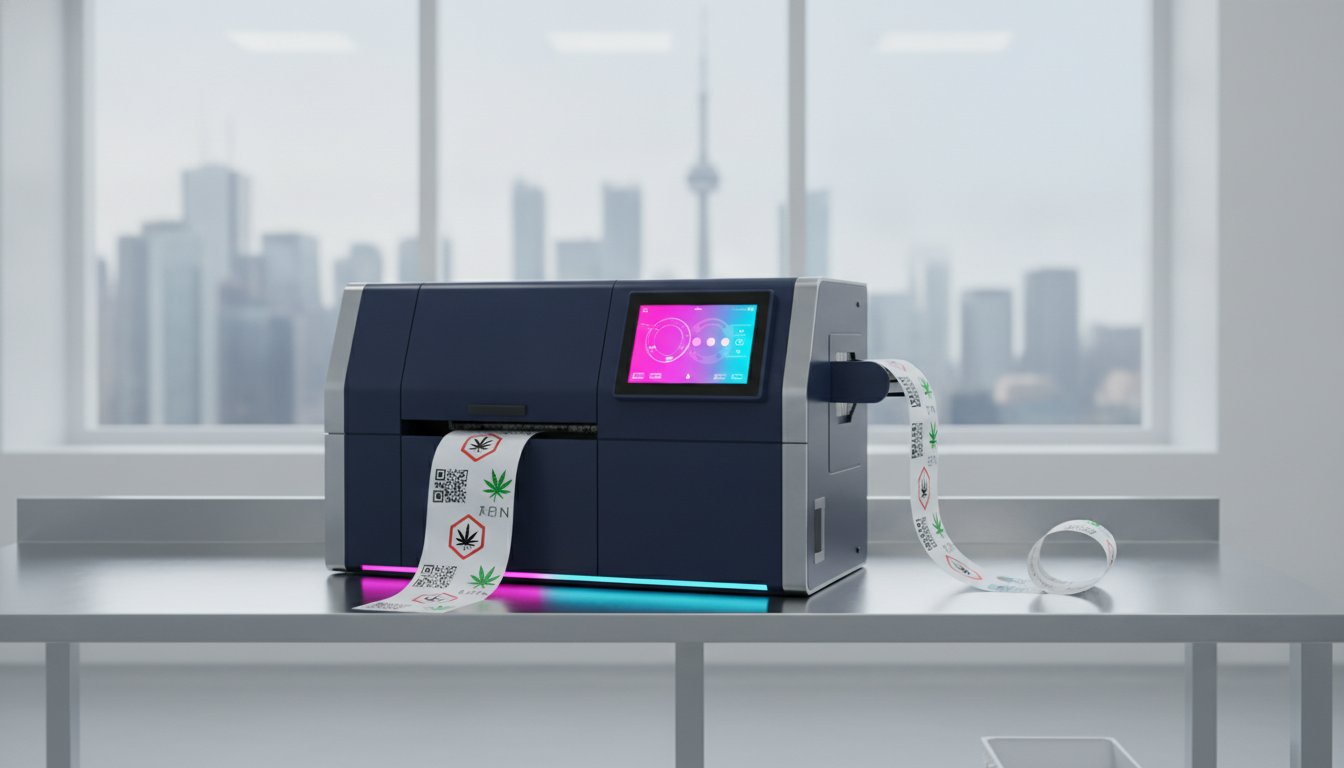
Outsourcing your labels in 2026 is no longer just a cost concern; it's a significant regulatory liability. You likely feel the pressure of managing batch-specific THC percentages and the latest Health Canada font requirements while trying to keep your margins healthy. It's frustrating to scrap thousands of pre-printed labels every time a regulation shifts or a new strain launches.
By integrating a dedicated cannabis label printer Canada into your facility, you gain total authority over your production schedule. This guide shows you how to streamline your packaging with high-resolution, compliant solutions that eliminate lead times and wasted inventory. We'll examine the technical requirements for the 2026 updates, including the shift to non-bold THC displays and the mandatory updated health warning messages. You'll also discover which Afinia or Epson hardware best suits your specific production volume. We will also cover the specialized software, like BarTender or NiceLabel, required to automate your variable data and ensure every standardized red hexagon symbol is placed with precision.
Key Takeaways
- Learn how to navigate 2026 Health Canada updates, including the shift to non-bold font for THC concentrations and the mandatory updated warning messages.
- Discover how a dedicated cannabis label printer Canada eliminates the lead times and wasted inventory costs associated with traditional outsourcing.
- Master the use of variable data printing to automate batch-specific THC and CBD percentages for every unique harvest.
- Select the right media, such as synthetic BOPP or matte paper, to ensure your labels withstand handling while maintaining professional shelf appeal.
- Streamline your operations by transitioning to an in-house labelling strategy supported by an authorized Canadian distributor.
Health Canada Compliance and the Need for On-Demand Printing
Pre-printed label inventory is a significant financial liability for Canadian licensed producers. If you stock thousands of labels and Health Canada updates a single regulation, your entire inventory becomes obsolete overnight. The legal framework for Cannabis in Canada requires strict adherence to packaging standards that shift frequently. Relying on external print houses often results in wasted materials and delayed product launches that hurt your bottom line.
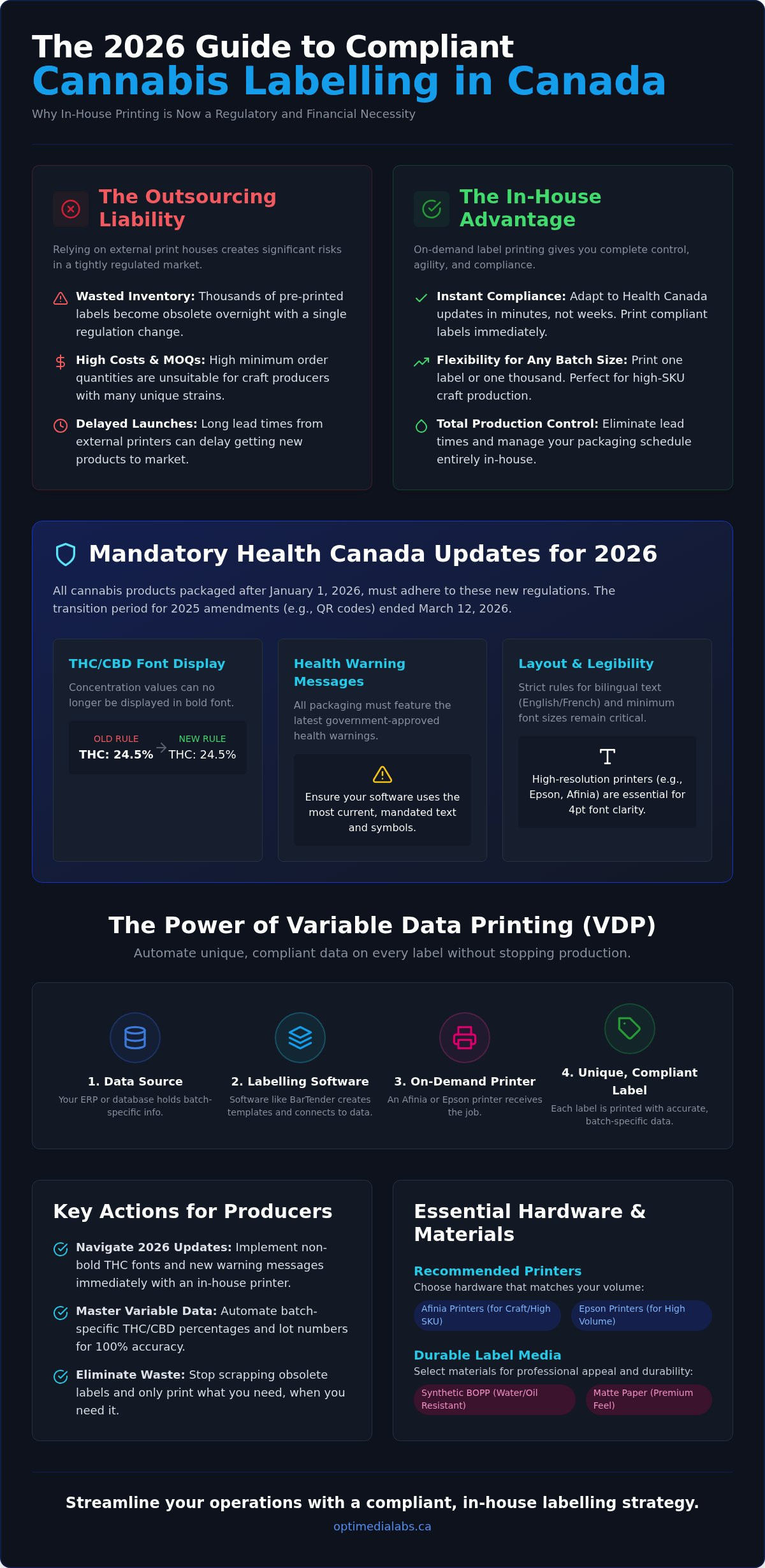
On-demand production is the only way to stay agile in this environment. As of March 12, 2026, the actual THC or CBD concentration on your labels can no longer be displayed in bold font. Additionally, all products packaged after January 1, 2026, must feature updated government-approved health warning messages. A high-quality cannabis label printer Canada allows you to implement these changes in minutes. You don't have to wait for a shipping container of labels or pay rush fees for small batches. In-house printing ensures that every harvest is 100% compliant before it leaves your facility.
The one-year transition period for the March 2025 amendments ended on March 12, 2026. This means rules regarding transparent windows and QR codes are now fully in effect. In-house printing gives you the flexibility to add these features immediately to better compete with the illicit market's shelf appeal. You can adapt your designs to include clear windows or peel-back labels without renegotiating contracts with a third-party printer.
Managing High SKU Counts for Craft Cannabis
Micro-cultivators often face the challenge of managing dozens of different strains with varying THC levels. External print houses usually demand high minimum order quantities (MOQs) that don't align with craft production volumes. By using Afinia printers, you can print exactly what you need for each specific batch. This approach eliminates the cost of unused labels and allows you to test new strains without a massive upfront investment in packaging materials. Scaling your production becomes simpler when labelling overhead doesn't grow with your SKU count.
Bilingual Labelling Requirements in Canada
Every package must feature both English and French text, which creates a crowded layout on small containers. Health Canada mandates specific font sizes and placements for these elements to ensure consumer safety. Maintaining legibility for 4pt font requires the precision of a professional color label printer. High-resolution inkjet technology, like that found in Epson printers, ensures that every mandatory warning and ingredient list is crisp and readable. Investing in a reliable cannabis label printer Canada ensures your facility remains compliant with these complex layout rules while maintaining high throughput. You can organize your layout to accommodate the standardized cannabis symbol and bilingual requirements without compromising your brand's aesthetic.
Variable Data Printing: THC, CBD, and Lot Traceability
Variable data printing (VDP) is the technical engine that makes in-house production viable for Canadian producers. It allows you to change specific information, such as THC percentages or lot numbers, on each individual label without pausing the print run. Every harvest has a unique chemical profile. If you rely on pre-printed labels, you're forced to use generic ranges or manual stickers that look unprofessional. A dedicated cannabis label printer Canada enables you to swap these values on the fly, ensuring your packaging is as accurate as your lab results.
Traceability is a core requirement under the Cannabis Act. Every package must be trackable from seed to sale to ensure consumer safety and facilitate efficient recalls if necessary. Integrating lot numbers and harvest dates directly from your Enterprise Resource Planning (ERP) system ensures that your labels always sync with your physical inventory. When your hardware pulls data directly from your digital records, you eliminate the risk of mismatched batches. This level of automation is essential for maintaining a secure and transparent supply chain.
Software Solutions for Compliant Labelling
Hardware is only half of the equation. You need robust software to manage the flow of information. Using BarTender software Canada simplifies compliance by allowing you to create templates that automatically populate with batch-specific data. Similarly, connecting NiceLabel software to your product database ensures that your staff doesn't have to manually type in percentages for every new run. Manual entry is a major source of compliance errors. Automation keeps your data accurate and your facility protected from regulatory audits. If you're unsure which software package fits your workflow, reach out to our technical team for a consultation.
Dynamic QR Codes and Consumer Engagement
The regulatory updates that came into full effect on March 12, 2026, officially permit the use of QR codes on cannabis packaging. This change is a significant opportunity for brand transparency. You can link a dynamic QR code directly to a Certificate of Analysis (COA). This allows consumers to see the full terpene profile and safety testing results with a quick scan. It also helps you meet Extended Producer Responsibility (EPR) requirements by providing digital recycling instructions without cluttering the physical label. Digital transparency builds trust with consumers who are increasingly wary of the illicit market. You'll realize better brand loyalty by providing the detailed information that modern Canadian consumers demand. Using a high-resolution cannabis label printer Canada ensures these codes are always scannable, even on small concentrate jars or pre-roll tubes.
Comparing the Best Cannabis Label Printers for 2026
Selecting a cannabis label printer Canada requires a strategic balance between throughput speed and output durability. Unlike general retail packaging, cannabis labels must withstand exposure to terpenes, oils, and moisture while maintaining crisp legibility. For most licensed producers, inkjet technology is the preferred choice for branding because it delivers the high-resolution colour required for shelf appeal. Thermal transfer remains a secondary option for high-durability black-and-white lot coding, but it lacks the versatility needed for full-colour compliance symbols. When designing your workflow, consult Health Canada's Packaging and Labelling Guide to ensure your hardware choice supports the mandatory colour specifications for the standardized cannabis symbol.
Industrial presses are necessary for facilities processing thousands of units per day, while desktop units serve micro-cultivators with lower SKU volumes. Colour accuracy is paramount. Dispensary shelves are crowded, and inconsistent branding on your labels suggests a lack of quality control to the consumer. High-performance hardware ensures that your brand colours remain consistent from the first label to the ten-thousandth.
Afinia Color Label Printers for High-Volume Production
The Afinia L801 has become a staple for Canadian LPs due to its Memjet Waterfall technology. It offers incredible print speeds and a significantly lower cost-per-label compared to entry-level cartridges. This makes it the ideal choice for large-scale operations that need to print thousands of strain-specific labels in a single shift. The L801 handles large rolls and high-capacity ink tanks, reducing the frequency of media changes. For a deeper dive into these technical specifications, see our Afinia Color Label Printers Guide.
Epson ColorWorks for Versatility and Compliance
The reliability of Epson printers makes them a top contender for both matte and gloss finishes. Epson's pigment-based inks are exceptionally resistant to smudging and fading, which is critical for products that consumers handle frequently. Many models are GHS compliant, meaning the labels can withstand harsh industrial environments and aggressive adhesives. These setups are particularly effective for medical dispensaries and retail point-of-fill stations where durability and professional appearance are equally important.
Primera Printers for Boutique and Micro-Cultivators
Micro-cultivators often prefer Primera label printers for their compact footprint and entry-level professional quality. These units allow smaller facilities to produce high-resolution labels without a massive initial investment. While they have slower speeds than industrial models, they provide the same level of compliance for bilingual text and health warnings. They're a practical solution for facilities with limited space that still require a reliable cannabis label printer Canada to manage their small-batch harvest rotations.
Essential Consumables and Finishing for Cannabis Products
Choosing the right substrate is as critical as selecting your hardware. While paper labels are cost-effective for dried flower bags, synthetic options like Biaxially Oriented Polypropylene (BOPP) are the standard for high-end extracts and topicals. These materials don't tear or smudge when exposed to moisture or temperature fluctuations. Pigment-based inks are essential for this industry. They offer superior UV and chemical resistance compared to dye-based alternatives. This ensures that your mandatory health warnings and THC data remain legible throughout the product's entire shelf life. The quality of your label printer consumables directly impacts your packaging's longevity and your facility's regulatory standing.
Your choice between matte and gloss finishes should reflect your brand's market position. Matte finishes provide a premium, organic look that many craft producers prefer for dried flower. Gloss finishes make vibrant colours pop and provide a protective layer that resists fingerprints during handling. High-resolution output from a professional cannabis label printer Canada ensures that both finishes look sharp on a retail shelf. Consistency across your SKU library builds consumer trust and reinforces your brand identity in a competitive market.
Durable Labels for Oils, Tinctures, and Concentrates
Tinctures and oils present unique technical challenges. Cannabinoid oils and terpenes act as solvents that can dissolve standard adhesives or smudge inferior inks. You must use specialized adhesives designed for small-diameter containers like 10ml vials or concentrate jars. This prevents "flagging," where the label edge peels away from the curved surface. Proper material selection ensures labels stay centre-aligned and bubble-free during application. This is vital for maintaining a high-quality appearance that satisfies both consumers and retail partners.
In-House Label Finishing and Cutting
In-house production isn't complete without professional finishing. External print houses often limit you to standard rectangles or circles, which can stifle your branding. By using Afinia label cutters, you can create custom shapes that fit unique packaging like pre-roll tins or hexagonal jars. Lamination adds a tactile feel while protecting the print from physical scratches. This process also reduces waste significantly. You only cut the exact dimensions you need for each specific batch. Investing in a professional cannabis label printer Canada along with a digital finisher allows you to realize better margins by bringing the entire production chain under your roof. Contact our specialists today to find the right media for your specific containers.
Implementing Your In-House Labelling Strategy with OptiMediaLabs Canada
Transitioning to an in-house model is the final step in securing your packaging operations against future regulatory volatility. By partnering with OptiMediaLabs Canada, you gain access to a national distribution network that understands the specific demands of the legal market. This shift allows you to move away from the rigid schedules and high minimums of external vendors. You'll gain the ability to produce compliant packaging on demand, which is essential for managing a diverse and expanding SKU library. Having a reliable cannabis label printer Canada in your facility ensures that you never miss a shipping window due to a labelling delay or a sudden change in Health Canada requirements.
Consolidating your procurement through OptiMediaLabs Canada simplifies your administrative burden and improves your operational efficiency. Instead of managing multiple vendors for inks, blank media, and ribbons, you can source everything from one specialized provider. This ensures that every component of your labelling system is designed to work together seamlessly. It also provides a clear path for technical support and supply replenishment. When you consolidate your supply chain, you reduce the risk of stockouts and ensure that your production line remains operational regardless of your harvest volume. This stability is the foundation of a professional, in-house labelling strategy.
Selecting the Right Hardware for Your Growth Phase
Your production volume determines your hardware requirements. A facility scaling from micro-cultivation to industrial-scale output needs a system that can grow alongside it. Future-proofing involves selecting scalable printers that accommodate higher duty cycles without sacrificing print quality. Before finalizing your procurement, consider consulting with a label printer distributor in Canada to review your specific workflow. OptiMediaLabs Canada helps you identify the most efficient hardware for your current output while ensuring your setup remains viable as your strain count increases.
Maintaining Peak Print Performance
Maintaining your equipment is vital for ensuring long-term compliance. You must use genuine Afinia ink and Epson cartridges to protect your printheads from damage. Non-genuine supplies often cause clogs that result in streaky barcodes or illegible health warnings. Perform routine nozzle checks and keep your media clean to prevent debris from affecting print quality. Consistent maintenance ensures that your cannabis label printer Canada continues to produce the high-resolution results your brand requires. Contact OptiMediaLabs Canada to find your perfect cannabis label printer today.
Future-Proof Your Cannabis Packaging Strategy
Securing your facility's operational independence is the final piece of a successful 2026 packaging strategy. Throughout this guide, we have detailed how in-house production protects your margins and ensures your brand remains agile in a strictly regulated market. By integrating professional hardware and automated software, you eliminate the vulnerabilities associated with external print schedules and inventory waste. OptiMediaLabs Canada serves as your dedicated partner in this transition, offering the technical expertise and stable supply chain required for long-term success.
Selecting a high-performance cannabis label printer Canada is a strategic investment in your brand's future. As an authorized Canadian distributor for Afinia and Epson, OptiMediaLabs Canada provides national shipping across Canada and maintains a comprehensive stock of compliant media and genuine inks. This commitment to reliability ensures your facility is always prepared for the next harvest or regulatory update. We are here to support your growth with precision-engineered solutions that meet the highest industry standards. Shop Canada's Best Cannabis Label Printers at OptiMediaLabs Canada and take full command of your packaging workflow today.
Frequently Asked Questions
What is the best cannabis label printer for a micro-cultivator in Canada?
Boutique micro-cultivators often find Primera label printers to be the ideal starting point. These compact units balance a smaller initial investment with the high-resolution output required for Health Canada compliance. They fit easily into facilities with limited space while still producing professional matte or gloss finishes. For those needing higher durability or pigment-based inks, an Epson ColorWorks C4000 is another excellent desktop solution that handles small-batch rotations with ease and reliability.
How do I ensure my labels are Health Canada compliant for 2026?
Compliance in 2026 requires strict adherence to the latest amendments, such as displaying THC and CBD concentrations in a non-bold font. You must also update your health warning messages to the government-approved versions mandated as of January 1, 2026. Using a dedicated cannabis label printer Canada ensures that your standardized cannabis symbol meets specific colour and size requirements. Always cross-reference your layouts with official packaging guides to verify current bilingual text and font size rules.
Can I print THC and CBD percentages on my labels at the time of packaging?
Yes, you can print these values at the time of packaging by using variable data printing technology. This approach allows you to pull batch-specific data directly from your lab results or ERP system into your label template. It eliminates the need for manual stickers or generic THC ranges on your packaging. By automating this process with software like BarTender, you reduce human error and ensure every harvest is labelled with 100% accurate potency information before shipping.
Do I need a special label material for cannabis tinctures and oils?
Tinctures and oils require synthetic substrates like BOPP to prevent label degradation. Cannabinoid oils and terpenes act as solvents that can dissolve standard paper adhesives or smudge dye-based inks. You should also select an aggressive adhesive designed for small-diameter containers to prevent the edges from peeling or flagging. Using pigment-based inks with these synthetic materials ensures your mandatory warnings remain legible even if the container is exposed to oil leaks or frequent handling.
Is it cheaper to print cannabis labels in-house or outsource them?
In-house printing is typically more cost-effective for licensed producers managing multiple strains and frequent regulatory changes. While outsourcing might seem cheaper for massive single-SKU runs, it carries high minimum order quantities and the risk of wasted inventory when rules shift. Printing in-house allows you to produce exactly what you need for each batch. This eliminates rush fees and the financial loss of scrapping obsolete pre-printed stock, ultimately improving your overall margins and operational agility.
Which software is best for Canadian cannabis label design and compliance?
BarTender and NiceLabel are the industry standards for managing complex cannabis labelling requirements. These platforms allow you to create templates that automate the placement of the standardized cannabis symbol and bilingual health warnings. They connect directly to your databases, which simplifies the process of updating variable data like lot numbers and harvest dates. This connectivity is essential for maintaining seed-to-sale traceability and ensuring your facility stays protected during regulatory audits by Health Canada.
What is the difference between matte and gloss labels for cannabis products?
The choice between matte and gloss labels primarily affects your brand's shelf appeal and tactile experience. Matte finishes offer a sophisticated, organic look that is popular for craft dried flower packaging. Gloss finishes make colours appear more vibrant and provide a slight protective barrier against fingerprints and moisture. Both options are available for a cannabis label printer Canada, allowing you to choose the finish that best reflects your brand's market position while maintaining professional quality.
Can I print small fonts clearly on cannabis concentrate containers?
High-resolution inkjet printers produce extremely crisp text even at 4pt font sizes. This is vital for concentrate containers where space is limited but bilingual text and ingredient lists are still mandatory. Modern hardware from Afinia and Epson delivers the precision needed to keep small fonts legible and compliant. Ensure your design software is configured for high-resolution output to maintain the sharp edges required for both text and scannable QR codes on these smaller packaging formats.