
GHS Label Software Canada: The 2026 Guide to Chemical Compliance
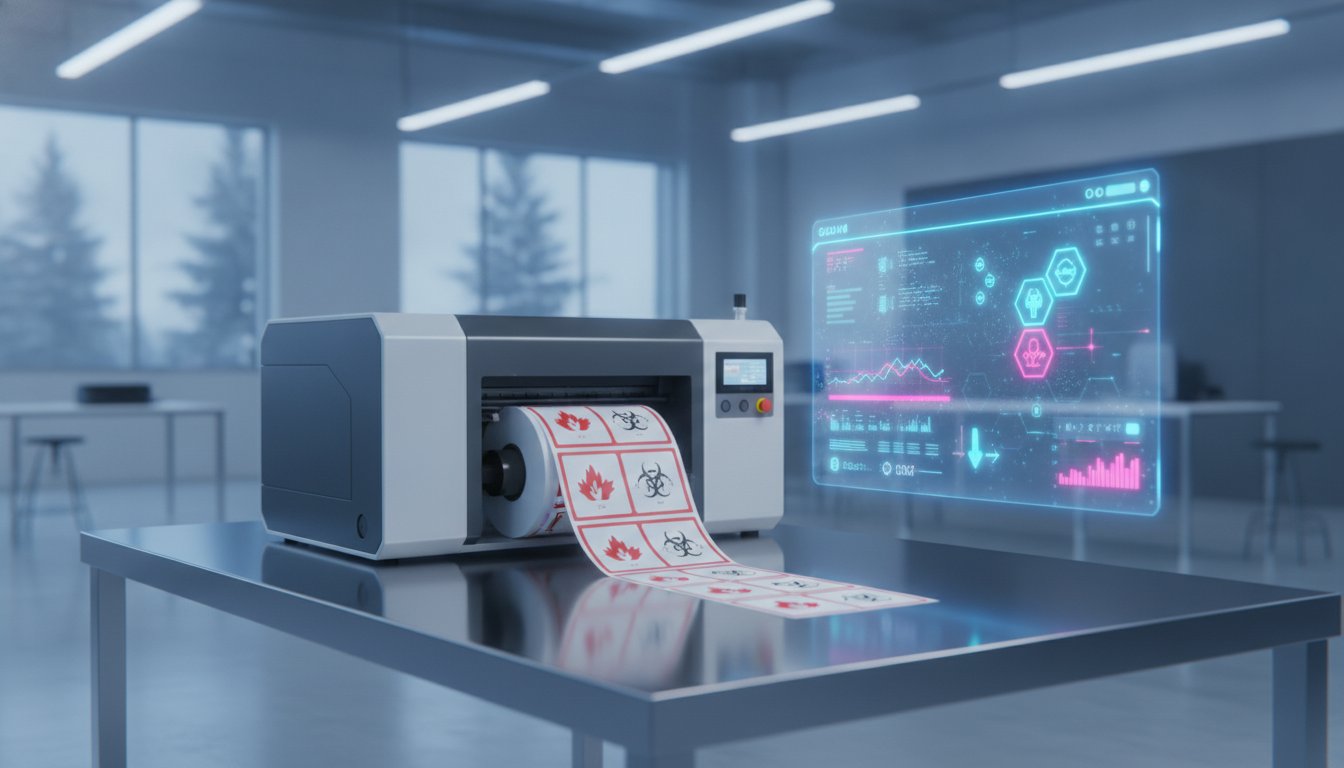
If your chemical labels aren't pulling data directly from a bilingual SDS database, you're likely one manual typo away from a WHMIS violation. The December 15, 2025, deadline for the updated Hazardous Products Regulations has passed, meaning every hazardous product in your facility must now align with the 7th revised edition of the UN GHS. Managing these complex requirements through manual data entry is no longer a viable or safe strategy for Canadian manufacturers.
It's frustrating to juggle English and French translations while trying to sync specific hazard pictograms with your industrial printers. You need a system that works as hard as your production line does. This guide helps you choose the right GHS label software Canada to automate your compliance and secure your operations. We'll break down the latest features in BarTender 12.3 and NiceLabel 10.5, explain how to integrate your software with Afinia or Epson hardware, and provide a clear roadmap for maintaining error-free, bilingual labels throughout 2026.
Key Takeaways
- Understand how current GHS updates integrate with WHMIS to maintain full compliance with the latest Canadian safety regulations.
- Learn to utilize GHS label software Canada to automate bilingual English and French requirements while reducing manual entry errors.
- Compare the features of BarTender and NiceLabel to select the most efficient, database-driven solution for your industrial labelling needs.
- Discover how to establish a secure in-house workflow by pairing professional software with high-performance Afinia or Epson colour printers.
- Identify the critical software tools needed to sync SDS data directly with your printers for real-time compliance and operational speed.
What is GHS Label Software and Why is it Critical in Canada?
GHS label software Canada is a specialized tool designed to automate the production of chemical labels that meet strict safety standards. By using pre-defined templates and database triggers, this software ensures every label matches the latest version of the Globally Harmonized System of Classification and Labelling of Chemicals (GHS). In Canada, these international standards are integrated into the Workplace Hazardous Materials Information System (WHMIS). It's no longer enough to have a static template. You need a dynamic system that responds to changes in chemical formulations and regulatory updates.
Relying on manual design or generic office software often leads to non-compliance. As of 2026, the transition period for the amended Hazardous Products Regulations has concluded. Facilities must now use labels that reflect the 7th revised edition of the UN GHS. Accuracy is non-negotiable. Errors in pictograms or missing hazard statements can result in significant fines and operational shutdowns. Automation through platforms like BarTender software or NiceLabel removes the risk of human error by pulling data directly from your Safety Data Sheets (SDS). This ensures that your physical labels and digital records remain perfectly synchronized.
Essential Elements of a GHS-Compliant Label
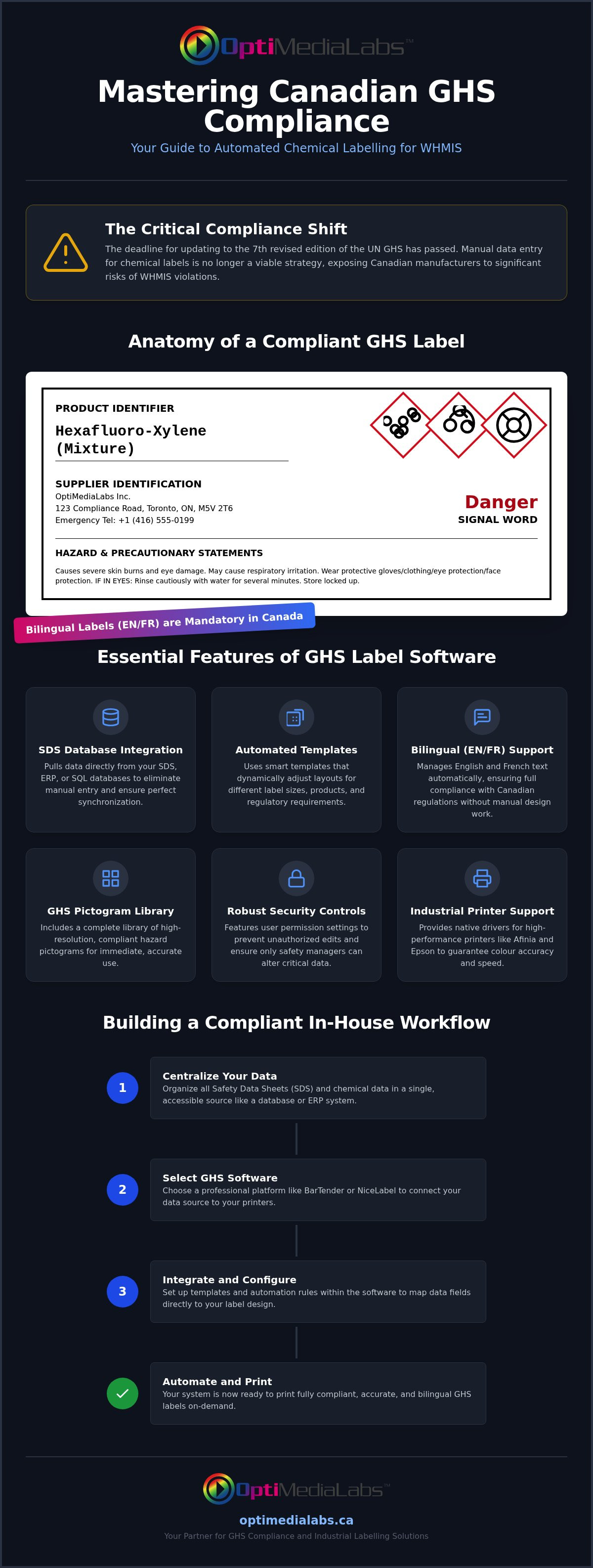
Every compliant label requires specific, standardized components that leave no room for interpretation. You must include the product identifier exactly as it appears on the SDS. The supplier identification must be clear, current, and easy to locate. Signal words such as "Danger" or "Warning" must be used based on the specific classification of the chemical. Standardized hazard pictograms, featuring the mandatory red diamond border, must be printed with high colour clarity to ensure immediate recognition. Manual entry is a liability. Professional software maps these elements to your chemical data automatically, ensuring the correct precautionary statements are always present for every SKU.
Bilingual Requirements for the Canadian Market
Canada's unique regulatory environment mandates that all hazardous product labels are provided in both English and French. This isn't just about a simple translation; it's about technical accuracy and legal safety. Professional GHS label software Canada manages these requirements through multi-language toggles that adjust the layout dynamically. Whether you're printing for a small vial or a large drum, the software ensures both languages fit without compromising font size or pictogram visibility. This automation saves hours of design time and prevents the accidental omission of mandatory French text, which is a common trigger for compliance audits in the Canadian market.
Key Features to Look for in GHS Labelling Software
Selecting the right GHS label software Canada requires looking beyond basic design tools. You need a platform that acts as a bridge between your chemical data and your physical output. High-quality software includes a full library of high-resolution pictograms that meet the latest standards defined by the Canadian Centre for Occupational Health and Safety (CCOHS). Security is equally vital. Professional software offers robust user permission settings to ensure that only authorized safety managers can modify critical hazard statements. This prevents accidental non-compliance or unauthorized edits during high-volume production runs.
Reliable software must also support a wide range of industrial printer drivers. Whether your facility relies on Epson industrial printers or high-speed Afinia models, the software should communicate directly with the hardware to maintain colour accuracy and print speed. If you're unsure which software package supports your specific hardware configuration, you can speak with a technical specialist to verify compatibility. This ensures your labels meet the durability requirements for chemical environments without sacrificing throughput.
Database Integration and Variable Data
The core value of professional GHS label software Canada lies in its ability to connect directly to your existing data sources. Instead of re-typing chemical names and hazard codes, the software pulls this information in real-time from Excel spreadsheets, SQL databases, or Enterprise Resource Planning (ERP) systems. This automation eliminates the risk of human error associated with manual data entry. By linking your SDS management system directly to your labelling interface, you ensure that every printed label reflects the most current safety information on file. Variable data fields further enhance this by automatically populating batch-specific lot numbers and production dates at the moment of print.
Template Flexibility and Scaling
In a Canadian facility, you might need to label a 10ml vial and a 200-litre drum in the same shift. Advanced GHS software uses dynamic scaling to adjust the layout based on the label size. This isn't just about shrinking text; it's about the intelligent resizing of pictograms to ensure they remain legible and meet regulatory minimum size requirements. Centralized template management allows you to update a single master design and have it propagate across all production lines. This consistency protects your brand and ensures that every facility in your national operation follows the same safety protocols, regardless of the container size or product type being packaged.
Comparing the Best GHS Label Software: BarTender vs. NiceLabel vs. Loftware
Choosing the right GHS label software Canada depends on your production volume and database complexity. While basic design tools exist, industrial operations require the stability of proven platforms. Leading industry solutions offer distinct advantages for meeting Canadian WHMIS Label Requirements. Evaluating the total cost of ownership involves looking at licence fees, training time, and the cost of potential non-compliance errors. Canadian businesses must also account for bilingual support. A cheaper software that requires manual French translation for every label will cost more in labour than a premium system with automated language toggles.
BarTender Solutions
BarTender is widely considered the industry standard for complex, database-driven labelling. Its strength lies in its ability to automate printing by pulling data from nearly any source. For those seeking BarTender software Canada, the Professional and Enterprise editions include pre-built GHS sample templates. These templates already feature the correct logic for pictogram placement and hazard statement sequencing. It's the ideal choice for facilities that need to integrate with SQL servers or Oracle databases to manage thousands of chemical SKUs efficiently. The software ensures that your data remains the single source of truth.
NiceLabel and Advanced Labelling Solutions
If your team lacks dedicated IT designers, NiceLabel software Canada offers a more intuitive path to compliance. It uses a Word-like interface that reduces the learning curve for new users. The built-in GHS wizard guides you through the label creation process, ensuring no mandatory elements are missed. For larger organizations, cloud-based labelling solutions provide a centralized platform to manage labels across multiple Canadian provinces. Cloud-based management eliminates the need for local server maintenance. It allows your safety team in Toronto to update a master template that is instantly available to your production line in Vancouver. This centralized control is essential for maintaining brand and regulatory consistency in 2026. Selecting the right GHS label software Canada ensures your facility stays operational and compliant without the need for constant manual oversight.
Building a Compliant In-House GHS Labelling Workflow
Creating a reliable in-house system requires more than just installing a program. It involves a methodical approach to ensure every hazardous product is identified and labelled correctly. Start by auditing your current chemical inventory and verifying that your Safety Data Sheets (SDS) are updated to the 2026 WHMIS standards. Once your data is clean, select GHS label software Canada that matches your operational complexity. If you have a small team, an intuitive interface is key. For high-volume facilities, prioritize software that integrates with your ERP to automate the flow of information.
The next phase involves moving from digital design to physical output. You must pair your software with high-performance industrial labeling solutions Canada to ensure the final product is both legible and durable. Choosing the wrong hardware can lead to smudged pictograms or labels that peel off in cold storage. Finally, select durable media designed to withstand chemical spills and UV exposure. A label is only as compliant as its ability to remain attached and readable throughout the product's lifecycle.
Pairing Software with Hardware
Your software's 'what you see is what you get' (WYSIWYG) editor is only effective if the printer driver can translate those designs accurately. Afinia Color Label Printers are ideal for this task because they excel at producing the sharp, colour-coded GHS pictograms required by law. These machines utilize pigment-based inks, which offer superior resistance to water, oils, and harsh chemicals compared to standard dye-based inks. Using GHS label software Canada in tandem with Afinia hardware ensures that the red borders of your pictograms remain vibrant and distinct, even in industrial environments. If you need help configuring your drivers for a seamless workflow, contact our technical support team for assistance.
Selecting the Right Label Media
Media selection is the final piece of the compliance puzzle. For chemicals shipped by sea or stored in extreme conditions, BS5609 compliance is mandatory. This international standard ensures that the label material and the ink can survive three months of immersion in saltwater. You can find more details on specific material types in our professional guide to label printer consumables. Match your matte or gloss finishes to your container types; for example, matte finishes often provide better legibility under harsh facility lighting, while gloss might be preferred for secondary retail packaging. Selecting the right combination of software, printer, and media creates a secure, long-term solution for your Canadian facility.
Why Partner with OptiMediaLabs for GHS Compliance?
Managing the intersection of chemical safety and industrial printing requires a partner with deep technical roots. OptiMediaLabs Canada serves as a primary distributor for GHS label software Canada, offering a bridge between complex regulations and daily production needs. We don't just sell software; we provide the infrastructure for safe, compliant facilities. Our national coverage ensures that whether you're in Ontario or British Columbia, you have access to the same professional-grade tools and specialized GHS-compliant inks. We've built our reputation on helping Canadian manufacturers simplify their workflows through authorized access to the world's leading labelling brands. You need a stable source for both your digital assets and your physical consumables.
Technical Authority and Reliability
We've spent decades helping businesses organize their labelling systems for maximum efficiency. Our team understands that every minute of downtime on your production line is a cost. That's why we focus on transactional speed and stable technical support. We don't just help you install a program; we ensure your facility realizes the full ROI of an automated system. By syncing your Epson ink cartridges or Afinia ink cartridges with the right software, we eliminate the guesswork. This professional approach creates a secure environment where safety and productivity coexist. We prioritize clarity and customer reassurance in every technical interaction.
Get Started with a GHS Software Consultation
Choosing between BarTender, NiceLabel, and Loftware doesn't have to be a trial-and-error process. We'll help you evaluate your specific database requirements and user skill levels to select the perfect match. Our consultations focus on building a complete package that includes the software, the industrial printers, and the specific Afinia labels or Epson labels needed for your environment. We look at your whole operation to prevent the compatibility issues that often plague fragmented systems. You'll get a streamlined path to compliance that's ready for the demands of 2026. We provide the expertise to ensure your GHS label software Canada implementation is flawless from day one. Contact OptiMediaLabs Canada today to discuss your GHS labelling requirements and secure your facility's future.
Mastering Chemical Compliance with Automated Labelling
Maintaining WHMIS standards in 2026 requires a shift from manual design to database-driven automation. By implementing professional GHS label software Canada, you eliminate the risk of transcription errors and ensure your bilingual requirements are always met. Transitioning to an in-house workflow with BarTender, NiceLabel, or Loftware provides the control needed for real-time updates and accurate inventory management. This approach doesn't just satisfy regulators; it protects your workers and streamlines your entire supply chain.
Success depends on pairing this software with high-performance printers and BS5609-compliant materials. As an authorized distributor with national Canadian support, OptiMediaLabs provides the technical expertise and high-quality hardware needed to secure your production line. We're here to help you navigate the technical specifications of chemical resistance and software integration. Whether you're managing a single site or a national operation, we provide the stability and precision your business requires.
Contact OptiMediaLabs for a Professional GHS Software Consultation and realize a more efficient, compliant future for your facility. Our team is ready to assist you in selecting the right tools for your specific industrial needs today.
Frequently Asked Questions
What are the mandatory elements for a GHS label in Canada?
Every GHS label in Canada must include six core elements: the product identifier, supplier identification, signal words, hazard statements, precautionary statements, and standardized pictograms. These elements must appear in both English and French to satisfy national WHMIS requirements. Using professional GHS label software Canada ensures these components are sized correctly and placed according to regulatory standards. This automation prevents the omission of critical safety information during the design process.
Does GHS software include French language translation for WHMIS compliance?
Professional GHS software facilitates bilingual compliance by allowing you to store English and French text in your database. Platforms like BarTender and NiceLabel use dynamic templates to toggle between languages or display both simultaneously. This feature is essential for Canadian manufacturers who must provide technical safety information in both official languages. It eliminates the need for manual translation on every individual label design, which saves significant administrative time.
Can I use a standard office printer for GHS labels?
Standard office printers are generally unsuitable for GHS labels because they cannot produce the durability required for chemical environments. Office-grade inks often smudge when exposed to moisture or solvents, which leads to non-compliance. Industrial printers, such as those from Afinia or Epson, use specialized pigment inks that bond with synthetic media. This ensures that hazard pictograms remain legible even after heavy handling or accidental spills in the facility.
Is BS5609 certification required for all GHS labels in Canada?
BS5609 certification is only mandatory for hazardous chemicals being transported by sea. This standard ensures the label and ink can survive three months of saltwater immersion. While not required for domestic land-based storage, many Canadian businesses use BS5609-certified materials as a benchmark for durability. It provides peace of mind that labels will remain intact in damp or high-friction environments where standard paper labels would typically fail.
What is the difference between primary and secondary container labels?
Primary container labels are applied by the manufacturer or supplier and must include all six GHS elements. Secondary container labels, also known as workplace labels, are required when a chemical is transferred into a different container for use on-site. These workplace labels have slightly more flexible requirements but must still clearly identify the product and its hazards. Professional GHS label software Canada simplifies the creation of both types using centralized data.
How does GHS software integrate with my existing SDS database?
Professional labelling software integrates with your SDS database through standard database drivers like ODBC. This connection allows the software to pull hazard codes, pictograms, and precautionary text directly from your existing records in real-time. By linking your database to your templates, you ensure that any update made to your SDS is reflected on the next label printed. This synchronization is the most effective way to eliminate manual data entry errors.
Can BarTender and NiceLabel print GHS labels on Afinia printers?
BarTender and NiceLabel are fully compatible with Afinia and Epson industrial printers through dedicated Windows drivers. These drivers allow the software to communicate specific colour profiles and print speeds directly to the hardware. This ensures a "what you see is what you get" experience, where the red borders of pictograms and fine text remain sharp. Pairing authorized software with high-performance hardware creates a stable, long-term solution for in-house GHS production.
Do I need special ink for GHS chemical labels?
Yes, you should use pigment-based inks for all GHS chemical labels to ensure long-term legibility. Unlike dye-based inks, pigment inks are highly resistant to water, UV fading, and chemical solvents. This resistance is critical because a label that smudges or fades is no longer compliant with WHMIS safety regulations. Using genuine Epson or Afinia pigment cartridges ensures your labels meet the durability requirements for industrial and chemical storage environments.