
How to Choose and Implement a Label Printer for Health Products in Canada
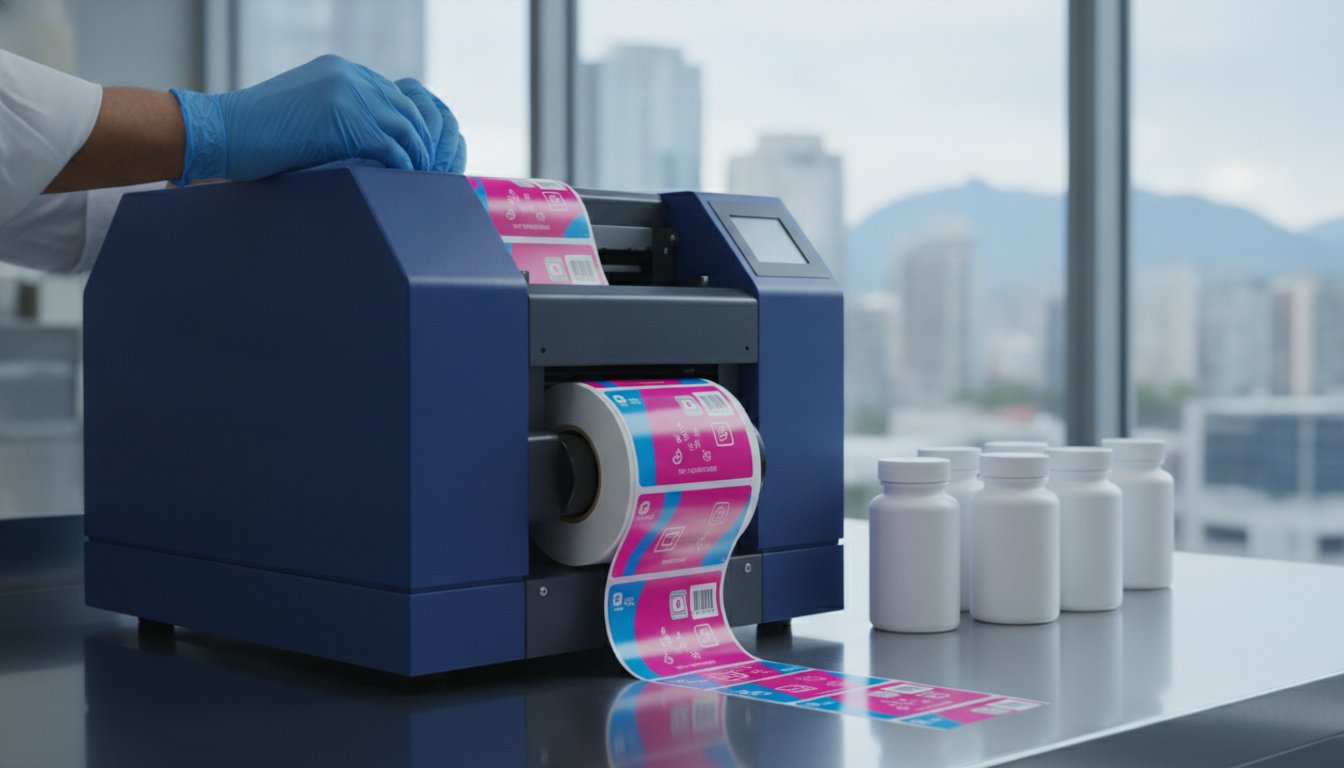
Could a single labelling error cost your business its place on Canadian retail shelves? With the January 1, 2026, deadline for front-of-package nutrition symbols fast approaching, the pressure to maintain a compliant label printer for health products Canada has never been higher. You've likely felt the frustration of outsourcing small batch runs only to receive labels that smudge in moist environments or peel before they reach the consumer. It's a common challenge for growing brands that need to balance technical precision with cost efficiency.
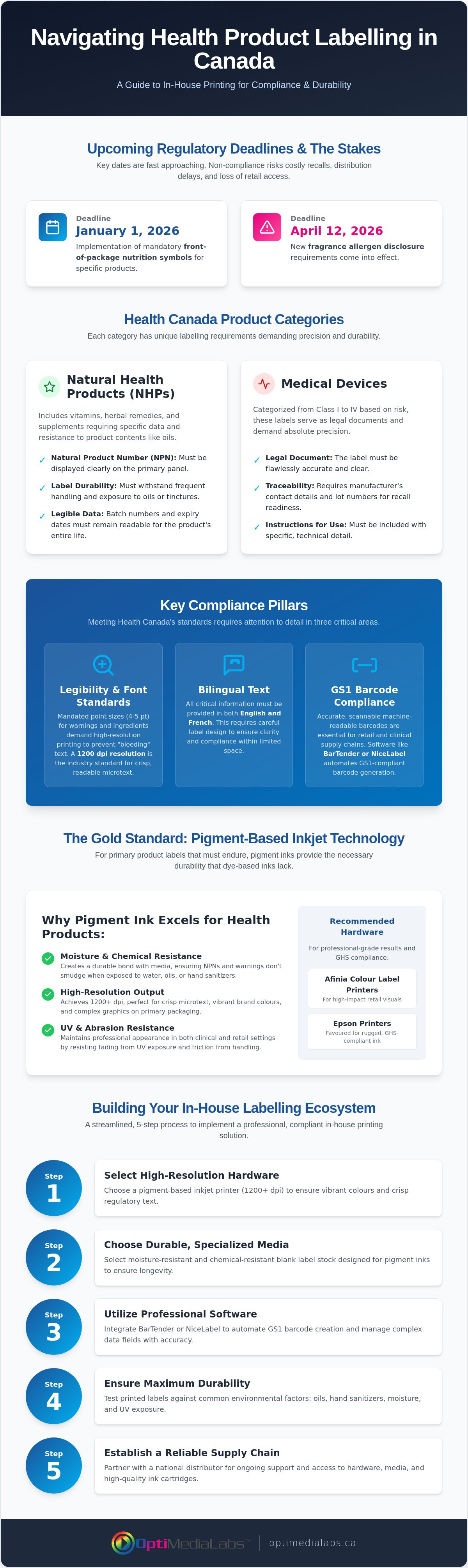
We realize that managing Health Canada's evolving requirements, such as the fragrance allergen disclosures effective as of April 12, 2026, requires more than just a basic office setup. This guide provides a comprehensive roadmap for Canadian health brands to implement professional-grade, in-house printing solutions. You'll learn how to select high-resolution hardware for vibrant colour, choose moisture-resistant media, and utilize specialized software to ensure every barcode and ingredient list meets national standards for accuracy and durability.
Key Takeaways
- Navigate Health Canada regulations, including bilingual text and font size requirements for Natural Health Products and medical devices.
- Evaluate the best label printer for health products Canada by comparing pigment-based inkjet and thermal transfer technologies for moisture resistance.
- Streamline your production with a five-step implementation guide using professional software like BarTender or NiceLabel for GS1 compliance.
- Ensure maximum label durability against oils, sanitizers, and UV exposure to maintain a professional appearance in clinical and retail settings.
- Build a reliable in-house ecosystem with national support for hardware, specialized blank media, and high-quality ink cartridges.
Understanding Health Product Labeling Requirements in Canada
Health Canada enforces strict guidelines to ensure consumer safety and product traceability. Whether you manufacture vitamins or diagnostic equipment, your packaging must communicate critical data without error. Selecting a high-performance label printer for health products Canada is the first step toward avoiding costly recalls or distribution delays. Compliance isn't just about what you print; it's about how clearly and durably that information is presented.
In the Canadian market, health products are broadly categorized into Natural Health Products (NHPs), over-the-counter drugs, and medical devices. Each category has unique requirements for bilingual text, ingredient transparency, and formatting. To maintain access to retail and clinical supply chains, your labels must also feature accurate machine-readable barcode technology. This ensures your products are scanned correctly at every stage of the logistics journey.
Natural Health Products (NHPs) vs. Medical Devices
NHPs include vitamins, herbal remedies, and supplements. These require a specific Natural Product Number (NPN) displayed clearly on the primary panel. Unlike standard consumer goods, NHP labels must withstand frequent handling and potential exposure to the product itself, such as essential oils or tinctures. It's vital that batch numbers and expiry dates remain legible over the entire life of the product.
Medical devices, categorized from Class I to IV based on risk, demand even higher precision. For these products, the label serves as a legal document. It must feature the manufacturer's contact details, lot numbers for recall readiness, and specific instructions for use. Using a dedicated label printer for health products Canada ensures these technical details are reproduced with absolute clarity.
Regulatory Legibility and Font Standards
Small packaging often requires tiny text. Health Canada mandates specific point sizes for safety warnings and ingredient lists to ensure they are readable by all consumers. If your printer lacks resolution, characters can "bleed" together. This makes the text a liability rather than a resource. A professional-grade resolution of 1200 dpi or higher is generally non-negotiable for small-print legibility.
High-resolution inkjet technology ensures that 4-point or 5-point fonts remain crisp and high-contrast. This precision also affects scanning reliability. To manage these complex data requirements, many Canadian brands integrate BarTender software or NiceLabel software. These tools automate the placement of GS1 barcodes and regulatory text, ensuring your in-house production remains efficient and compliant.
Selecting the Best Label Printer Technology for Your Brand
Choosing a reliable label printer for health products Canada involves matching hardware to your specific operational environment. It's not just about speed; it's about ensuring every label remains legible from the laboratory to the retail shelf. Most health brands utilize a combination of inkjet and thermal transfer technologies to meet both branding and logistical needs. Your choice determines how well your packaging stands up to moisture, friction, and chemical exposure.
Pigment-based inkjet technology serves as the gold standard for primary packaging. While dye-based inks offer vibrant colours, they often fail when exposed to moisture, oils, or hand sanitizers. Pigment inks create a durable bond with the label material, providing the chemical resistance required for Natural Health Products (NHPs). This technology ensures your NPN numbers and safety warnings don't smudge during consumer use. Adhering to global standards for healthcare labeling requires this level of precision and durability.
Colour Inkjet Printers for Primary Branding
For high-impact retail visuals, Afinia Color Label Printers deliver professional-grade resolution that handles complex graphics and small regulatory text with ease. These units are designed for brands that need to maintain full control over their inventory without the high costs of outsourcing. If your facility requires compliance with GHS standards or handles volatile chemicals, Epson printers are frequently favoured for their rugged ink formulations. While the initial investment for these units is higher than entry-level models, the lower cost-per-label makes them more economical for ongoing small-batch production.
Thermal Printers for Logistics and Compliance
Secondary labelling, such as shipping and warehouse tracking, relies on thermal transfer label printers. These systems use a heated ribbon to melt an image onto the label, creating a permanent mark. For clinical environments where labels face frequent sterilization or contact with alcohols, a full resin ribbon is essential. It provides the highest level of scratch and solvent resistance. For standard logistics and asset tracking, Zebra printers paired with wax/resin ribbons offer a reliable balance of durability and speed.
Determining the right technology depends on your specific product line and distribution requirements. If you're unsure which setup best supports your compliance goals, speak with our specialists today to find a tailored solution.
How to Implement an In-House Labeling System: A 5-Step Guide
Moving from outsourced printing to an in-house setup requires a methodical approach to ensure regulatory compliance and operational efficiency. First, audit your weekly production volume. If your brand handles small batches of artisanal supplements, an entry-level unit usually suffices. High-volume manufacturers, however, require industrial-grade systems to maintain uptime and lower long-term costs. Determining your capacity early prevents over-investing in hardware you don't need or under-equipping your facility for peak demand. A reliable label printer for health products Canada must be able to scale alongside your business growth.
Software and media selection represent the next two pillars of successful implementation. You need a system that handles variable data, such as lot numbers and expiry dates, without manual data entry for every print job. Simultaneously, your blank media must match your specific container type to avoid peeling or "flagging" on curved surfaces. Finally, establish a calibration and quality assurance (QA) process to verify that every label meets the high standards expected in the Canadian health sector.
Software Integration for Health Compliance
Compliance hinges on data accuracy. Setting up BarTender software allows you to automate expiry dating based on real-time production timestamps, which significantly reduces human error. If your products require complex, multi-region layouts, use NiceLabel to manage bilingual label templates efficiently. These platforms ensure that safety warnings and ingredient lists remain consistent across your entire product line. For a deeper dive into selecting these tools, consult our Professional Guide to Barcode Labeling Software in Canada.
Media Selection: Matching Labels to Containers
The physical label must endure its specific storage environment. Choosing the correct adhesives for small-diameter vials or curved supplement bottles is critical to ensure the label remains attached throughout the product life cycle. For health products stored in refrigeration or cold chains, synthetic materials are vastly superior to standard paper. Afinia labels offer various finishes and adhesive strengths to ensure your label printer for health products Canada produces results that stay put. Calibrate your system for colour accuracy during this stage to maintain brand consistency, then implement a QA step to verify barcode scannability before the products leave your facility.
Ensuring Label Durability in Clinical and Retail Settings
A label's life cycle doesn't end at the printer. In clinical settings, labels encounter aggressive sanitizers and alcohols that can dissolve standard inks. In retail environments, constant exposure to UV light can fade safety warnings and brand colours. Your label printer for health products Canada must produce output that survives these variables to maintain regulatory compliance and consumer trust. Moisture-proof solutions are equally vital for vitamins and supplements often stored in high-humidity bathroom cabinets. These environments test the limits of adhesive and ink bonds every day.
UV resistance is particularly important for products displayed on window-facing retail shelves. Standard dye inks can lose legibility in as little as a few weeks of direct sunlight exposure. Pigment-based systems prevent this degradation, ensuring that essential safety information remains visible for the duration of the product's shelf life. Digital finishing also plays a critical role in this durability ecosystem. By utilizing digital cutters, you can create custom shapes that fit unique bottle contours without the high costs associated with traditional physical dies. This flexibility allows for tighter label application, reducing the risk of edge lifting where moisture or oils could penetrate. For brands looking to extend this professional aesthetic to their retail presence, you can learn more about Musa 24 Hours Printing Services and their specialized die-cut foam board options for clinical and commercial displays.
Matte vs. Gloss: Functional Differences for Health Brands
Choosing between matte and gloss finishes involves more than just aesthetics. Matte finishes are often preferred in clinical settings because they reduce glare, ensuring that medical staff can scan barcodes quickly under harsh overhead lighting. Conversely, gloss finishes are the standard in the premium wellness and cosmetic sectors to highlight vibrant colours and create a high-end feel. For a detailed look at how to achieve these professional results in-house, read our complete 2026 guide to Afinia label cutters & finishers.
Lamination and Protective Coatings
For products subject to frequent handling, such as hand sanitizers or topical oils, an extra layer of protection is necessary. Lamination provides a physical barrier against solvents and abrasion, ensuring the underlying print remains untouched. Integrating Afinia label cutters & finishers into your workflow allows you to apply these protective coatings seamlessly. We recommend performing a 24-hour moisture soak test on any new material combination to verify its performance before full-scale production begins. This simple step confirms that your label printer for health products Canada setup is truly retail and clinical-ready.
If you need assistance selecting the right lamination for your specific product type, contact our technical team for a consultation.
OptiMediaLabs Canada: Canada’s National Distributor for Health Labeling
Success in the health sector requires more than just high-quality hardware; it requires a stable supply chain and technical support that understands the Canadian regulatory environment. OptiMediaLabs Canada serves as a national facilitator, providing health brands from coast to coast with the tools needed for professional in-house production. Whether you are a boutique supplement maker in British Columbia or a large-scale medical device manufacturer in Ontario, we provide a secure path to obtaining a reliable label printer for health products Canada. Our focus is on transactional efficiency and clarity, ensuring you have the resources to maintain compliance without operational friction.
We stock a comprehensive ecosystem of hardware and consumables to minimize downtime. This includes a full range of printers from industry leaders like Afinia and Epson, along with the specialized media required for clinical and retail durability. By sourcing your Epson ink cartridges and blank labels from a single national distributor, you simplify your procurement process. This centralized approach allows your team to focus on production while OptiMediaLabs Canada manages the technical complexities of your labeling inventory.
Why Partner with a Specialized Canadian Distributor?
Sourcing labeling equipment from outside the country often leads to unpredictable cross-border shipping delays and unexpected customs duties. Partnering with a specialized Canadian distributor eliminates these variables. You gain immediate access to brand-specific consumables, such as Afinia ink cartridges, ensuring your printers always operate at peak performance. Our team provides expert advice on industrial standards and Canadian compliance, helping you navigate the technical requirements discussed in previous sections of this guide. OptiMediaLabs Canada helps you avoid the pitfalls of generic hardware by matching your specific product needs to the right technology.
Ongoing Support and Consumables Management
A reliable labeling system depends on the consistent availability of blank labels and thermal ribbons. We help you establish a dependable supply chain that prevents stockouts during critical production runs. Our inventory includes quick-ship options for Zebra ribbons and high-durability inks, ensuring your label printer for health products Canada stays online. We value precision and customer satisfaction, positioning ourselves as a long-term partner in your brand's growth. Our methodical flow of information and support ensures that your labeling process remains frictionless as your business scales. Contact OptiMediaLabs Canada today to find your ideal health product labeling solution.
Future-Proof Your Health Product Labelling
Implementing an in-house labelling system is a strategic move that provides full control over your inventory and compliance. By selecting a high-resolution label printer for health products Canada, you ensure that every Natural Product Number and safety warning remains crisp and legible. Success in this sector requires the right software for GS1 standards, pigment-based inks for chemical resistance, and durable media that withstands clinical environments. These elements work together to protect your brand from regulatory delays and retail rejections.
OptiMediaLabs Canada is a national Canadian distributor and an authorized Afinia and Epson partner. We are specialists in compliance-ready labelling solutions designed to meet the rigorous standards of the health and wellness industry. Our team is ready to help you navigate hardware selection, software integration, and ongoing consumables management with transactional efficiency. Browse our Afinia and Epson Label Printers for Health Products today to secure your production line. Taking control of your labelling process is a practical step toward long-term stability and growth in the Canadian market.
Frequently Asked Questions
Do I need a special printer for Health Canada compliant labels?
You need a printer capable of high-resolution output and specialized ink formulations to meet Health Canada standards. Standard office equipment often fails to produce the crisp 4-point fonts required for safety warnings and ingredient lists. A professional label printer for health products Canada ensures your text remains legible and your barcodes scan correctly every time. This precision prevents distribution delays and keeps your brand compliant with national regulations.
What is the best label material for supplement bottles?
Synthetic materials like Biaxially Oriented Polypropylene (BOPP) or Polyester (PET) are the industry standard for supplement bottles. These materials offer superior resistance to moisture, oils, and friction compared to standard paper. Since supplements are often stored in bathrooms or handled daily, using a durable synthetic prevents the label from peeling or degrading. Pair these materials with a permanent adhesive designed for curved surfaces to ensure long-term stability.
Can I print barcodes and expiry dates at the same time?
Yes, you can automate the printing of barcodes and expiry dates using professional labelling software. Tools like BarTender or NiceLabel allow you to link your printer to a database or use real-time system clocks to generate variable data. This ensures that every batch has an accurate, unique expiry date and a GS1-compliant barcode without manual entry. This automation reduces human error and streamlines your production workflow significantly.
Is inkjet or thermal transfer better for medical products?
Pigment-based inkjet is generally better for primary packaging that requires full-colour branding and high-resolution safety warnings. It provides the vibrant look needed for retail while maintaining chemical resistance. Thermal transfer technology is the preferred choice for secondary logistics and asset tracking. It excels at producing high-speed, durable black-and-white labels for shipping and warehouse environments where colour is not a primary requirement for the application.
How do I ensure my labels don’t smudge if exposed to sanitizers?
Selecting a label printer for health products Canada that utilizes pigment-based ink is the most effective way to prevent smudging. Unlike dye-based inks that sit on the surface, pigment inks penetrate the media to create a chemical-resistant bond. Pairing these inks with synthetic materials ensures your safety warnings remain legible even after contact with aggressive clinical sanitizers or essential oils. This combination is essential for products used in healthcare settings.
What software is recommended for health product labelling in Canada?
BarTender and NiceLabel are the most recommended software platforms for managing Canadian health product labels. These programs provide the flexibility to manage bilingual text requirements and complex formatting mandated by Health Canada. They also support serialization and track-and-trace capabilities, which are vital for medical device manufacturers. Using professional software ensures your labels are consistent across all product lines and ready for rigorous audit processes at any time.
Can I print labels for small vials in-house?
You can print high-quality labels for small vials in-house by using a printer with high-precision registration. Small-format labelling requires extreme accuracy to ensure that text and barcodes wrap perfectly around the container without overlapping or misaligning. High-resolution systems like the Afinia or Epson series are designed to handle these tight tolerances. Ensure you use specialized adhesives that prevent the label from "flagging" or lifting off small-diameter glass or plastic surfaces.
How much does it cost to start printing health labels in-house?
The cost to implement an in-house system depends on your production scale and the durability requirements of your media. Entry-level units are suitable for small startups and artisanal brands, while industrial-grade printers are designed for high-volume manufacturing environments. Consider the long-term savings on minimum order quantities and reduced waste when calculating your return on investment. Speak with a national distributor to find a hardware and software configuration that fits your specific operational budget.