
Label Finish for High Moisture Environments: A 2026 Guide to Durable In-House Labelling
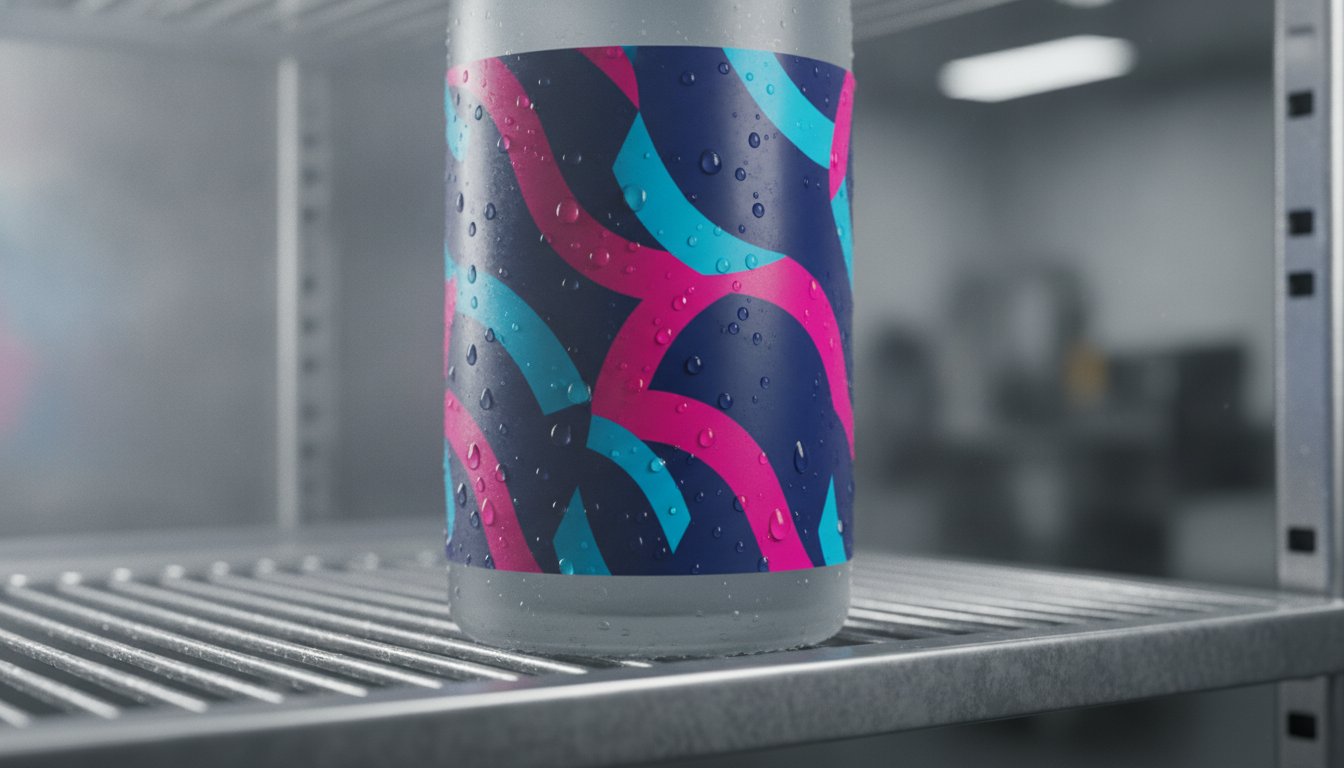
A label that looks professional on the printer but peels away in the freezer is more than a minor annoyance. It's a direct hit to your operational efficiency and brand reputation. You likely realize that standard paper stock simply cannot survive the constant condensation of a Canadian cold storage facility or the high humidity of a food processing plant. Smudged barcodes and lifting edges lead to wasted stock and logistical errors that disrupt your supply chain. Selecting the correct label finish for high moisture environments is the only way to ensure your product identification remains legible and intact.
This 2026 guide will help you navigate the technical requirements for moisture-resistant labelling in industrial settings. You'll learn how to distinguish between the protection offered by varnishes versus laminates and identify the specific hardware needed to bring this durable production in-house. We provide a clear path to choosing materials that balance aesthetic quality with the rugged durability required for the Canadian market. By the end of this article, you'll have the knowledge to optimize your in-house printing setup for maximum reliability.
Key Takeaways
- Identify why synthetic substrates like BOPP are the industry standard for maintaining label integrity in refrigeration and high-humidity scenarios.
- Compare the functional benefits of gloss and matte coatings to ensure your branding remains sharp without sacrificing moisture resistance.
- Select the ideal label finish for high moisture environments by understanding the critical differences between liquid varnishes and physical overlaminates.
- Determine the necessary hardware and ink chemistry, such as pigment-based systems, to prevent smudging and peeling during in-house production.
- Reduce stock waste and operational downtime by matching your finishing process to the specific moisture challenges of your industrial environment.
Defining High-Moisture Environments for Product Labelling
Industrial environments in Canada often present extreme moisture challenges that go beyond simple dampness. Whether it's high humidity in a food processing plant or constant condensation in a beverage bottling facility, these conditions demand a specific label finish for high moisture environments to prevent total failure. Moisture is a persistent threat to label integrity. It doesn't just affect the surface; it penetrates the material and attacks the bond between the label and the container. If a label isn't designed to repel liquid, the ink can bleed, rendering barcodes unreadable and branding unrecognizable.
The success of a label depends heavily on its bond to the surface. This bond relies on Pressure-sensitive adhesives, which must maintain their tack even when exposed to liquid. Standard adhesives often lose their grip when water molecules penetrate the interface between the label and the substrate. You must also distinguish between water-resistant and fully waterproof standards. Water-resistant labels can handle occasional splashes or light dampness. In contrast, fully waterproof labels are engineered for total submersion or prolonged exposure to heavy condensation without degrading. For industrial safety, specifically regarding chemical transport, GHS (Globally Harmonized System) compliance requires labels to remain legible even after months of outdoor exposure or saltwater immersion.
Cold Storage and Condensation Challenges
Moving products from a -20°C freezer to a room-temperature loading dock creates the "thaw effect." As warm air hits the cold surface, a layer of liquid water forms instantly under and over the label. Standard paper labels absorb this moisture, causing the fibres to swell and the material to tear. This is why synthetic materials are mandatory for refrigerated goods. You need aggressive adhesives that can "bite" through a thin film of frost to ensure the label stays put during rapid temperature fluctuations.
Chemical and Solvent Exposure
Industrial settings often combine moisture with aggressive chemicals or cleaning solvents. When water mixes with these substances, it can become even more corrosive to standard inks. A label finish for high moisture environments acts as a physical barrier against these reactive agents. Without this protection, chemicals can dissolve the ink or break down the adhesive layers. For Canadian manufacturers following GHS standards, durability is a legal requirement for workplace safety. A moisture-resistant finish for industrial use is a specialized protective coating or laminate applied to a label to prevent liquid penetration and ensure long-term legibility under harsh conditions.
Selecting Substrates: The Foundation of Moisture Resistance
The choice of substrate determines whether your label survives or disintegrates. While paper is cost-effective for dry goods, it's a liability in wet conditions. Paper fibres act like a sponge, pulling moisture into the label body and causing the material to warp or "flag" at the edges. For any application involving condensation, synthetics are mandatory. These plastic-based films provide a non-porous surface that prevents liquid penetration. However, printing on plastic requires a specialized "inkjet-receptive" topcoat. This coating ensures that ink from your digital printer binds to the surface rather than pooling or smearing. This layer is the critical interface where the ink meets the plastic. Without this chemical bond, even a high-quality label finish for high moisture environments cannot prevent the graphics from failing if the base layer saturates.
BOPP: The Versatile Choice for Canadian Brands
BOPP (Biaxially Oriented Polypropylene) is the primary choice for Canadian beverage and cosmetic brands. It offers excellent clarity and moisture-wicking properties, ensuring that labels on craft beer or chilled food containers remain pristine. Using Afinia labels made from BOPP allows for high-speed, in-house production without sacrificing durability. This material is particularly effective because it resists the oils and liquids typically found in personal care products. It doesn't stretch easily, which maintains the alignment of your barcodes and fine text. When evaluating materials, reviewing FDA water-resistance testing standards can provide a benchmark for how these synthetic substrates perform under controlled stress and prolonged exposure.
Polyester and Vinyl for Industrial Grade Durability
For maximum durability in industrial settings, Polyester (PET) and Vinyl are the superior options. PET offers higher tensile strength and heat resistance compared to polypropylene, making it ideal for chemical drums or outdoor equipment. Vinyl is more conformable, allowing it to wrap around curved or irregular surfaces without lifting. These materials often require thermal transfer printing to achieve permanent results. Utilizing high-performance zebra ribbons ensures that the printed data remains legible even if the label is exposed to solvents or heavy abrasion. These ribbons are engineered to fuse with the synthetic surface, creating a bond that resists smudging. Choosing a label finish for high moisture environments on a PET substrate provides the highest level of protection available for in-house printing. If you're unsure which substrate fits your specific equipment, speak with a technical specialist to review your requirements.
Comparing Label Finishes: Matte vs. Gloss in Wet Conditions
Selecting the right label finish for high moisture environments requires balancing visual appeal with physical durability. While the substrate provides the foundation, the finish is what interacts with the external environment. A gloss finish offers high-impact colour saturation and a reflective quality that makes branding pop. It creates a sleek, polished look that many consumers associate with quality. However, in wet conditions, gloss surfaces are prone to showing water spots and fingerprints. This can detract from the product's appearance once it leaves a refrigerator or cold storage unit. Conversely, a matte finish provides a sophisticated, non-reflective look that effectively hides minor scuffs and surface imperfections. It's important to realize that matte coatings can sometimes absorb oils or grease if they aren't properly top-coated for industrial use. When seeking examples of expertly applied coatings, professional services like Eyeconic Prints showcase how these finishes can be optimized for both aesthetics and functional protection.
Satin and semi-gloss finishes represent a practical middle ground for many Canadian businesses. They offer enough sheen to enhance colours without the high-glare issues of full gloss. When you pair these finishes with high-quality Epson labels, you maintain brand integrity across various environmental stressors. These materials are engineered to accept specific finishes while maintaining the underlying ink chemistry. Understanding the scientific research on moisture's effect on material durability is vital when deciding which finish will protect your graphics over the long term. Moisture doesn't just sit on the surface; it can alter the physical properties of the coating itself.
Aesthetic vs. Functional Performance
Gloss finishes are often the go-to for premium chilled beverages. They mimic the look of glass and suggest a high-end product. In contrast, industrial environments with overhead LED lighting often require matte finishes to reduce glare. This ensures that barcodes remain scannable by handheld devices. Your choice should depend on the final packaging texture. If you're applying labels to a textured plastic bottle, a matte finish often blends more seamlessly than a high-gloss film. It feels more integrated into the packaging rather than like an added sticker.
Scuff and Abrasion Resistance
Moisture can act as a lubricant that increases the risk of scuffing during transit. Certain finishes soften when exposed to prolonged humidity. This makes them more vulnerable to scratches from adjacent packaging or shipping crates. This is why "top-coated" materials are essential for durability. A top-coat adds a microscopic layer of protection that prevents moisture from reaching the ink layer. Gloss finishes typically provide a harder surface that sheds water quickly, whereas matte finishes excel at hiding the physical wear typical of damp shipping conditions.
Protective Layers: Overlaminates and Varnishes
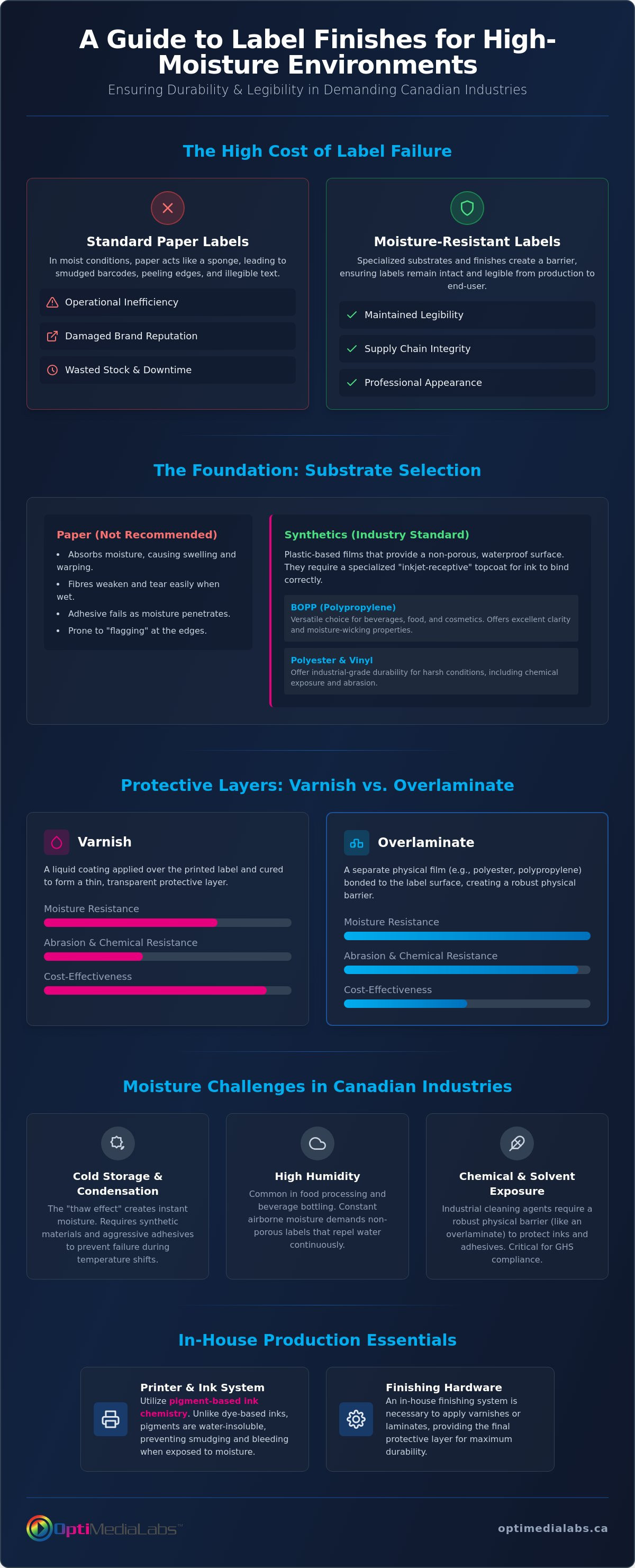
Applying a secondary protective layer is the most effective way to shield your graphics from environmental degradation. While your choice of substrate provides the base, an overlaminate or varnish acts as a dedicated shield. Overlaminates consist of a physical plastic film, usually polyester or polypropylene, that is pressure-applied over the printed surface. This creates a 100% moisture barrier that prevents liquid from ever touching the ink. In contrast, varnishes are liquid coatings applied during the finishing process. While UV or aqueous varnishes offer moderate protection and enhance the label finish for high moisture environments, they don't provide the same structural integrity as a physical film layer. You must choose based on the severity of the moisture exposure.
For barcode-heavy applications, thermal transfer overcoating provides a specialized solution. This process applies a thin, clear resin layer over variable data. It ensures that scuffing or condensation doesn't compromise scannability during the "thaw effect" mentioned earlier. When you compare the cost-per-label, lamination involves higher material expenses due to the cost of the film. However, it often allows you to use more affordable base materials while still achieving a high-performance label finish for high moisture environments. Varnishing is generally more cost-efficient for high-volume runs where the primary goal is surface sheen and light moisture resistance rather than total waterproofing.
When to Choose Lamination
Lamination is the standard for products destined for ice buckets, outdoor storage, or chemical exposure. If your goods face heavy handling or abrasive transit conditions, a physical film is necessary to prevent ink migration. Modern production workflows integrate this step seamlessly using Afinia label cutters & finishers. These machines apply the laminate and die-cut the labels in a single pass, which reduces labour costs and minimizes waste. Beyond protection, lamination adds a noticeable thickness to the label. This provides a "premium feel" that can elevate your brand perception in the eyes of the consumer, making the product feel more substantial and durable.
Varnishing for High-Volume Efficiency
UV varnishing is an excellent choice for businesses prioritizing speed and high-volume throughput. This liquid coating cures instantly under ultraviolet light, creating a hard surface that resists both sunlight and light moisture. It's the preferred method for high-speed production lines where applying a physical film might slow down the output. You can find more details on how these technologies integrate with specific hardware in our Afinia Color Label Printers guide. Varnish maintains a lower profile than laminate. This is often preferred for labels applied to flexible packaging or small-diameter containers where a thick film might cause the edges to lift or "flag" over time.
If you need help determining which protective layer suits your specific environment, contact our technical team for a material evaluation.
Implementing In-House Finishing for Moisture Resistance
In-house production gives you total control over the durability of your packaging. Bringing this process inside your facility eliminates the long lead times of external print houses and allows for immediate adjustments to your label finish for high moisture environments. The hardware you choose must align with your volume and specific moisture challenges. Epson printers are excellent for high-resolution, pigment-based output on a smaller scale. In contrast, Afinia systems offer a more integrated approach for high-volume industrial labels that require immediate finishing.
A successful workflow starts with printing on the synthetic media discussed in section two. Once printed, the roll moves to a digital finisher where lamination and precision cutting occur. Operating these machines in humid Canadian production centres requires attention to environmental control. High humidity can affect the tension of the laminate or the tracking of the cutter. Keep your production area at a stable temperature and humidity level to ensure consistent results. Regular cleaning of the rollers and sensors is also vital. Dust and adhesive residue can build up more quickly in damp air, leading to tracking errors or uneven cuts.
Pigment Ink: The Secret to Waterproof Inkjet Labels
Pigment ink is non-negotiable for water resistance. Unlike dye-based inks, which dissolve when exposed to liquid, pigment ink consists of solid particles suspended in a carrier liquid. These particles bond physically with the topcoat of synthetic media. This creates a smudge-proof result that survives heavy condensation and light solvent exposure. Using genuine Epson ink cartridges ensures that the chemical composition is optimized for these substrates. It's the most reliable way to achieve GHS compliance without outsourcing your production.
Digital Finishing Solutions in Canada
The Afinia DLF series is the industry standard for Canadian brands looking to automate their finishing. These units handle lamination, contour cutting, and waste removal in a single, unattended process. By implementing this hardware, you can achieve a professional label finish for high moisture environments while significantly reducing your cost-per-label. For a deeper dive into specific equipment, consult our Afinia Label Cutters & Finishers Guide. This approach allows you to scale production according to demand without being tied to a third-party printer's schedule. You gain the flexibility to print and finish exactly what you need, when you need it.
Future-Proof Your Industrial Labelling Strategy
Achieving a durable label finish for high moisture environments requires a methodical approach to materials and hardware. You now understand that synthetic substrates and pigment-based inks are non-negotiable for surviving rapid temperature shifts and heavy condensation. Adding a physical overlaminate or a UV varnish provides the final layer of security needed for GHS compliance and brand integrity. Bringing this process in-house ensures your product identification remains professional, and for comprehensive materials and packaging support, OEM Materials & Supplies helps manufacturers maintain efficiency throughout the supply chain.
OptiMediaLabs Canada is an authorized Afinia and Epson distributor specializing in Canadian industrial labelling needs. We maintain a comprehensive local stock of synthetic media and pigment inks to support your production. Our technical experts understand the specific demands of domestic manufacturing and cold storage environments. Find the perfect moisture-resistant label solution at OptiMediaLabs Canada and ensure your labels stand up to the harshest conditions. Your operations will benefit from the stability and precision of a high-performance finishing system.
Frequently Asked Questions
What is the best label finish for products kept in a refrigerator?
A gloss or semi-gloss laminate on a synthetic substrate is the superior choice for refrigerated goods. These finishes provide a non-porous barrier that prevents condensation from soaking into the label material. When you pair this with a synthetic base, the label remains intact and legible even during the rapid temperature shifts that occur when moving products to room temperature.
Can I print waterproof labels on a standard office inkjet printer?
You cannot print truly waterproof labels on a standard office inkjet printer. These devices typically utilize dye-based inks that dissolve and smudge immediately upon contact with moisture. To achieve professional results, you require a specialized printer equipped with pigment-based inks and inkjet-receptive synthetic media designed specifically for wet conditions.
Do I need a laminate if I use pigment-based inks?
A laminate is not strictly mandatory for water resistance when using pigment inks, but it is highly recommended for heavy moisture exposure. While pigment ink is naturally smudge-resistant, a laminate provides a physical shield against abrasion and chemical contact. This extra layer is the most reliable label finish for high moisture environments where products face rough handling or submersion in ice.
What is the difference between BOPP and vinyl for moisture resistance?
BOPP is the industry standard for beverage and food labelling because of its moisture-wicking properties and cost-efficiency. Vinyl offers superior conformability and tensile strength, which makes it better for curved industrial containers or chemical drums. You should choose vinyl when the label must wrap tightly around irregular surfaces without lifting or flagging at the edges.
Is a matte or gloss finish better for preventing water spots?
A matte finish is significantly better at hiding water spots and fingerprints than a gloss finish. Gloss surfaces are highly reflective, which makes dried mineral deposits from condensation very visible to the consumer. If your product is handled frequently in damp conditions, a matte coating maintains a cleaner, more professional appearance over time.
How do I ensure my labels don’t peel off in high-humidity environments?
Ensure your labels don't peel by selecting an aggressive, high-tack adhesive specifically engineered for damp environments. You must apply the labels to a clean, dry surface at room temperature before the product is exposed to humidity. Once the pressure-sensitive bond is established, these specialized adhesives will maintain their grip even in saturated industrial settings.
Are there GHS compliant finishes for chemical labels in Canada?
GHS compliant finishes are available and mandatory for chemical labelling in Canada. These systems typically involve pigment-based inks paired with BS5609-certified synthetic media. These combinations are tested for saltwater immersion and long-term environmental stress to ensure that critical safety data remains legible and the label stays attached during maritime transport or outdoor storage.
Can I apply a laminate finish in-house without industrial equipment?
While you can technically apply sheet-based laminates by hand, you cannot achieve professional or consistent results without digital finishing equipment. Industrial finishers like the Afinia DLF series automate the lamination and cutting process. This ensures a bubble-free label finish for high moisture environments and precise alignment that manual methods simply cannot replicate for commercial production.