
Primera Colour Label Printers: 2026 Canadian Buyer’s Guide
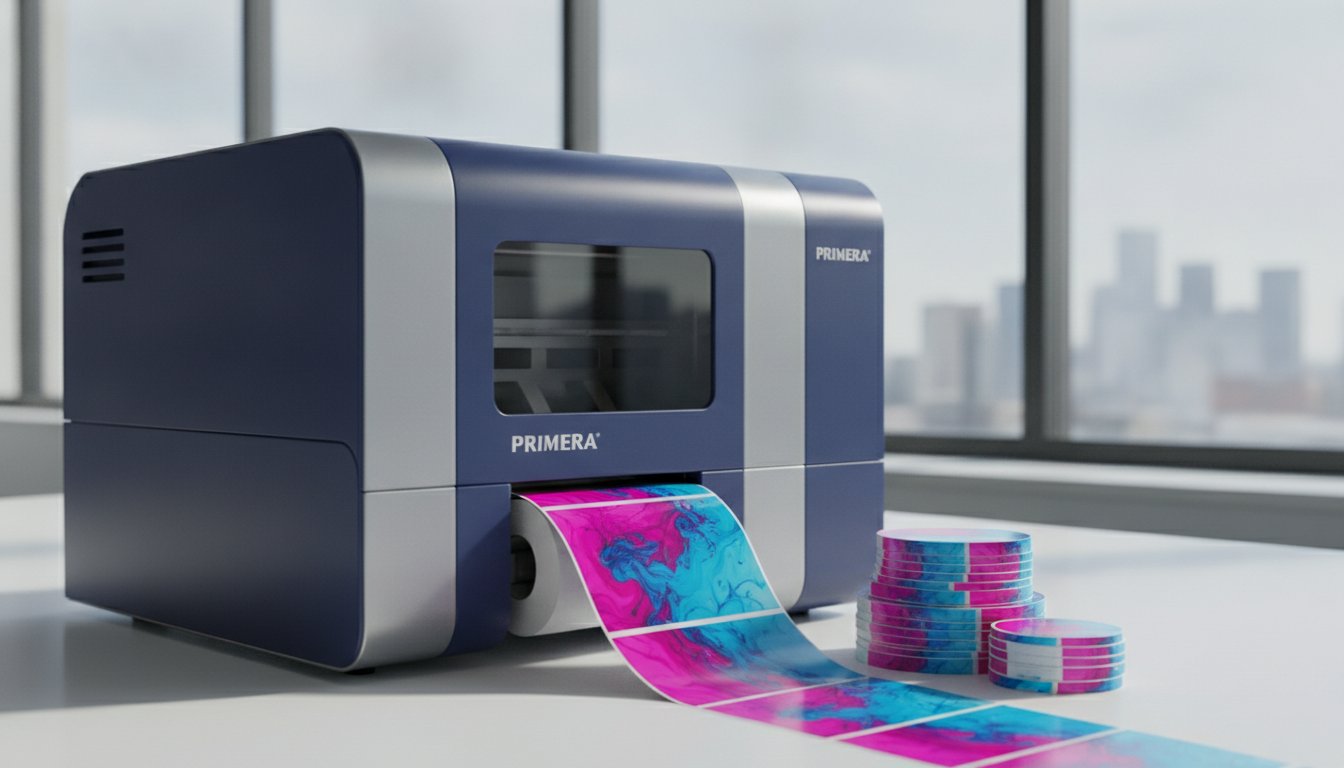
Did you know that digital printing is now the fastest-growing technology in the North American label market, with a projected growth rate of over 4% through 2031? For many Canadian businesses, the shift to in-house production isn't just about speed; it's about maintaining a competitive edge. You've likely dealt with the burden of high outsourcing costs for short runs and the long lead times required by commercial print shops. Integrating primera color label printers into your facility eliminates these bottlenecks. It gives you the power to print high-quality, retail-ready labels exactly when you need them.
This 2026 buyer's guide provides the technical clarity you need to choose the right hardware for your specific production volume. We'll help you navigate the confusion between dye and pigment inks while ensuring your packaging meets the latest Health Canada front-of-package requirements. You'll learn how to select the ideal LX-series model to professionalize your brand and reduce your total cost of ownership. This overview covers everything from material compatibility to the latest software updates, ensuring your in-house printing operation remains both efficient and compliant.
Key Takeaways
- Learn how bringing production in-house eliminates minimum order quantities and significantly reduces lead times for your product launches.
- Compare the technical capabilities of the LX-series models to identify which primera color label printers best suit your specific volume and budget requirements.
- Determine whether dye or pigment ink is better for your application by weighing retail shelf appeal against long-term label durability.
- Master the integration of BarTender software to automate variable data like batch numbers and expiry dates for full regulatory compliance.
- Understand how to calculate the total cost of ownership by evaluating hardware costs alongside ongoing ink and media supplies from a national distributor.
Understanding Primera Color Label Printers: Technology and Benefits
Primera technology utilizes advanced inkjet systems for high-resolution output. This Label printer technology allows Canadian businesses to manufacture "prime" labels in-house, which are the high-impact, full-colour labels found on primary retail packaging. By utilizing primera color label printers, you achieve professional results that match the precision of commercial print houses. These systems are designed for quick setup and low maintenance; this ensures a seamless transition from digital design to physical production. The LX-series offers a versatile range of hardware, from compact desktop units for startups to industrial-grade workhorses for high-volume environments.
Why In-House Labeling Matters for Canadian SMEs
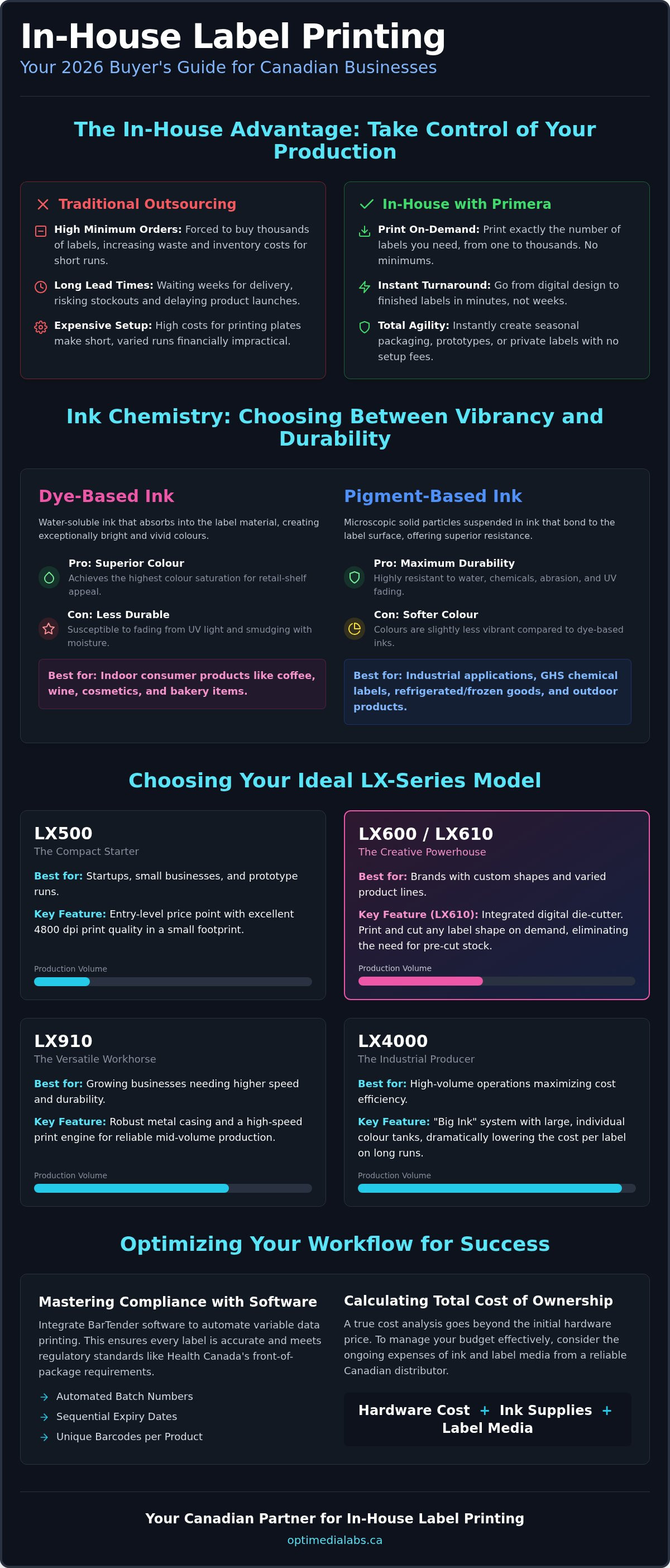
Outsourcing print runs often introduces significant supply chain risks. Commercial print shops typically require high minimum order quantities and long lead times. These delays can lead to stockouts during peak seasons. Bringing production in-house gives you total control over your inventory levels. You can print labels on demand, allowing for instant branding iterations or seasonal product launches without waiting weeks for delivery. Digital printing is much more cost-effective for short runs than traditional flexography. It removes the need for expensive plates and complex setup times. This agility is a vital competitive advantage for local manufacturers needing to adapt to market shifts.
The Mechanics of High-Resolution Inkjet Printing
Quality packaging requires exceptional clarity to compete on the shelf. Most primera color label printers offer a 4800 dpi resolution, ensuring sharp text and deep colour saturation. Selecting the right ink delivery system is crucial for managing your overhead. Entry-level models often use a tri-colour cartridge for ease of use. Higher-volume systems available through OptiMediaLabs Canada utilize individual ink tanks to reduce waste. You can find these systems at primera label printers. Material versatility is another key benefit. These printers support various substrates, including matte paper, high-gloss polyester, and durable synthetics. This ensures your labels remain professional in any condition, from retail refrigerators to industrial storage facilities.
Primera LX-Series Comparison: Choosing Your Ideal Model
Selecting the right hardware requires a clear understanding of your monthly label volume and required durability. The range of primera color label printers begins with the compact LX500, designed for businesses producing small batches. While it's an excellent entry-level choice, professional environments often require the increased speed and ruggedness of the LX910. The transition from desktop units to industrial workhorses involves assessing duty cycles. Models like the LX4000 are built to handle thousands of prints weekly without compromising on mechanical stability or print head longevity. These systems ensure your branding remains consistent across every SKU in your inventory.
The LX610 and LX600: Precision Cutting and Versatility
The LX610 offers a unique value proposition by integrating a digital die-cutter directly into the printing mechanism. This built-in plotter eliminates the need for purchasing pre-die-cut labels in specific sizes. You can print and cut any shape on demand, making it the ideal solution for prototyping new packaging or managing a product line with varied container shapes. This flexibility reduces inventory costs because you only need to stock continuous label rolls. To keep these systems running efficiently, you can explore LX600 and LX610 ink cartridges designed for both dye and pigment applications. It's a practical choice for SMEs that prioritize creative freedom and rapid iteration.
High-Volume Production: The LX910 and LX4000
For operations that demand industrial scaling, the LX910 and LX4000 provide the necessary throughput. The LX910 features a robust metal case and a high-speed print head, positioning it as a versatile mid-range workhorse. However, the LX4000 is the premier choice for maximizing profit margins on long runs. It utilizes a "Big Ink" system with individual tanks for each colour, ensuring you only replace the ink you actually use. Our Canadian warehouse maintains a consistent supply of these high-capacity consumables to support uninterrupted production. You can check LX4000 and LX3000 ink tanks for detailed technical specifications. If you're unsure which duty cycle fits your growth plan, consult with our technical team for a tailored recommendation.
Duty cycles vary across the lineup to match different business needs. The LX500 is perfect for boutique shops, while the LX910 and LX4000 are engineered for reliability in manufacturing settings. Print speeds also scale accordingly, with the industrial models offering significantly faster throughput to meet tight shipping deadlines. Matching your hardware to your projected volume ensures you don't overpay for capacity you don't need or under-equip for a growing market. This strategic alignment between hardware capability and production demand is the most effective way to minimize your total cost of ownership.
Dye vs. Pigment Ink: Selecting the Right Chemistry
Choosing between dye and pigment ink is a critical decision that depends entirely on your product's end-use environment. While many primera color label printers, such as the LX910, offer the flexibility to use either ink type, you must select the chemistry that aligns with your durability requirements. Dye-based inks are known for their exceptional vibrancy and wide colour gamut. They are the standard for high-end retail packaging where visual impact is the primary goal. Conversely, pigment-based inks prioritize longevity and resistance to environmental stressors. Using the wrong ink for your application can lead to premature fading or smudging, which undermines your brand's professional image.
Compatibility extends beyond the ink cartridge itself. You must ensure your blank label stock features the correct inkjet-receptive coating for your chosen ink. Dye inks require a coating that allows the liquid colourant to penetrate the surface for a smooth, high-gloss finish. Pigment inks need a more porous or specialized coating to "lock" the solid particles in place. If you don't match the media to the chemistry, the ink won't dry properly or achieve its intended resistance levels. This technical alignment is the foundation of a reliable in-house printing operation.
Dye-Based Inks for Maximum Colour Brilliance
Dye-based systems are the preferred choice for gourmet food, beverages, and cosmetics. These industries rely on deep blacks and vivid primary colours to capture consumer attention on crowded retail shelves. Because the colourant is fully dissolved in the liquid, it creates a transparent layer that allows light to reflect through the ink, producing a brilliant, photographic quality. It's the ideal solution for indoor, climate-controlled environments. However, dye ink is susceptible to smudging if it's exposed to significant moisture or prolonged UV light. If your product is stored in a dry pantry or a vanity cabinet, dye ink provides the most cost-effective path to premium branding.
Pigment Inks for Industrial and GHS Compliance
Pigment inks are essential for products facing harsh conditions, such as chemicals, nutraceuticals, or outdoor equipment. The solid particles in pigment ink are naturally resistant to water, oils, and UV radiation. This makes them the only viable option for achieving GHS (Globally Harmonized System) compliance in Canada. When paired with synthetic media like matte BOPP or polyester, pigment ink can meet BS5609 standards for marine immersion and extreme abrasion. For a deeper look into compliance standards, consult the Industrial Labeling Solutions Canada: The 2026 Reference Guide. This durability ensures your warning labels and batch numbers remain legible throughout the entire product lifecycle.
Optimizing Your Workflow: Software and Finishing Solutions
Maximizing the utility of primera color label printers requires a structured approach to your production workflow. Hardware alone cannot guarantee efficiency if your software and finishing processes remain manual or disconnected. A professional setup involves four distinct steps: selecting the right design platform, automating variable data, implementing mechanical finishing, and managing colour profiles. These elements work together to ensure your labels are not only visually striking but also compliant with Canadian packaging regulations. By standardizing these steps, you reduce the risk of human error and significantly lower your production costs per unit.
Professional Label Design Software Integration
Professional environments require more than basic graphics tools. BarTender Label Design Software is the gold standard for Canadian manufacturers because of its robust database integration. It allows you to link your label templates directly to your inventory management system. This automation is essential for integrating variable data like batch numbers, serial numbers, and expiry dates without manual entry. For businesses managing multiple production sites, NiceLabel offers cloud-based management that ensures every facility uses the same approved templates. These platforms provide the technical control needed to meet Health Canada's front-of-package labelling requirements accurately.
Beyond the Printer: Finishing and Applicators
The printing process is only half the battle. High-volume production often results in large rolls of labels that require organized handling. Label rewinders are vital for roll-to-roll production, ensuring your output is neatly wound and ready for the next stage. Once printed, manual application often leads to misalignment, bubbles, or wasted stock. Using a Primera label applicator ensures perfect placement on bottles, jars, or boxes every time. This precision is critical for maintaining retail shelf appeal and professional branding. If your workflow involves custom shapes or specialized materials, consult our Afinia Label Cutters & Finishers Guide for a detailed look at automated finishing solutions.
Consistency across different print runs is a common challenge for growing brands. Managing ICC colour profiles within your design software ensures that your brand colours remain identical regardless of when or where they're printed. This level of control prevents the slight shifts in hue that can occur due to changes in humidity or different media batches. When your primera color label printers are calibrated correctly, you maintain the integrity of your visual identity across your entire product line. If you're ready to automate your packaging line and eliminate production bottlenecks, contact our workflow specialists for a technical consultation today.
Procuring Primera Equipment and Consumables in Canada
Establishing a sustainable in-house printing operation requires more than just a hardware investment. While the initial capital expense for primera color label printers is a fixed cost, your long-term profitability depends on managing recurring consumable expenses. Calculating the total cost of ownership (TCO) involves evaluating the price of ink and media over the lifespan of the machine. Systems like the LX4000 utilize high-capacity "Big Ink" tanks that significantly lower the cost per label for high-volume users. Maintaining a lean but reliable inventory of these supplies prevents production stoppages. OptiMediaLabs Canada stocks a full range of LX4000 Big Ink tanks to support continuous manufacturing cycles across the country.
Sourcing Specialized Blank Label Media
Selecting the correct substrate is vital for ensuring your branding remains intact throughout the product lifecycle. The LX-series is compatible with various materials, including paper, BOPP, and specialized synthetic stocks. Choosing between standard die-cut sizes and custom shapes depends on your branding requirements and budget. Standard sizes are cost-effective for high-volume runs; however, custom shapes can provide a unique retail presence that justifies the specialized tooling. For a detailed technical breakdown of material performance, consult our Professional Guide to Label Printer Consumables: Canada. This resource helps you align your media choice with the ink chemistry discussed earlier in this guide.
The OptiMediaLabs Canada Advantage for National Distribution
Relying on a national distributor eliminates the logistical headaches associated with international ordering. Importing consumables from the United States often results in unpredictable customs duties and lengthy border delays. OptiMediaLabs Canada provides a localized supply chain that ensures rapid delivery to every province. This reliability is essential for businesses that operate on tight production schedules and cannot afford downtime. Our team also provides technical guidance on regulatory compliance, ensuring your labels meet current Health Canada and GHS standards. Localized support means you receive expert assistance in your own time zone. If you're ready to secure your supply chain and optimize your margins, contact our experts for a tailored quote today.
Modernize Your Packaging Strategy for 2026
Implementing primera color label printers is a strategic investment in your brand's operational independence. Moving label production in-house allows you to bypass the constraints of commercial lead times and high minimum order quantities. As established in this guide, selecting the appropriate LX-series model and matching it with the correct ink chemistry ensures your packaging meets both aesthetic standards and Canadian regulatory requirements. Automation through specialized software and finishing equipment further optimizes your workflow, allowing for a scalable and cost-effective labelling solution.
OptiMediaLabs Canada serves as an authorized distributor, providing the hardware and consumables necessary to maintain a high-performing production environment. Our team offers specialized expertise in industrial and retail labelling workflows, ensuring your technical setup aligns with your business goals. With national shipping across Canada, we provide a reliable supply chain for all your Primera ink and label needs. Contact OptiMediaLabs Canada for a Professional Labeling Consultation to begin professionalizing your packaging and reducing your production costs today.
Frequently Asked Questions
How much does it cost to print a label on a Primera printer?
The cost per label varies based on the percentage of ink coverage, label dimensions, and the specific ink system used. High-volume primera color label printers like the LX4000 utilize individual ink tanks that significantly lower the per-print cost compared to entry-level models. To get an accurate estimate for your specific artwork, you can use the cost estimator tool included in the printer's driver software.
What is the difference between the Primera LX610 and LX600?
The primary difference is the built-in digital die-cutter found on the LX610. This feature allows you to print and cut custom shapes from continuous roll stock in a single pass. The LX600 is technically similar in print quality but requires pre-die-cut labels on a liner. If your production involves many different shapes or prototype work, the LX610 offers superior flexibility for your workflow.
Do Primera color label printers require a special type of label paper?
Yes, these printers require specialized inkjet-receptive media to ensure the ink dries instantly and doesn't bleed. Standard thermal or laser papers lack the necessary coating to lock the liquid ink particles in place. You should select media specifically certified for use with primera color label printers, choosing between paper, polyester, or BOPP based on your product's durability requirements.
Can I use third-party ink cartridges in my Primera LX-series printer?
Using third-party or refilled cartridges is not recommended for professional applications. Non-genuine inks often lack the precise chemical composition required for high-resolution printheads, leading to clogs or inconsistent colour profiles. Additionally, using third-party consumables can void your manufacturer's warranty and compromise the durability of your labels. Stick to genuine Primera ink to maintain the stability and reliability of your in-house printing system.
How do I achieve GHS compliance with a Primera label printer?
GHS compliance requires a combination of pigment-based ink and BS5609-certified synthetic label stock. This specific pairing ensures that the printed information remains legible even after exposure to harsh chemicals, abrasion, and saltwater immersion. Ensure your printer is equipped with a pigment ink cartridge and that you're using a compatible matte polyester or BOPP material to meet these rigorous Canadian safety standards.
Is it better to use dye or pigment ink for refrigerated food products?
Pigment ink is the superior choice for refrigerated food products because of its natural resistance to moisture and condensation. Dye-based inks provide high vibrancy but can smudge or run when exposed to the damp environments of coolers or freezers. Using pigment ink ensures your branding and expiry dates remain sharp throughout the entire cold chain, protecting your brand's professional appearance from production to the consumer's home.
What software is compatible with Primera color label printers in Canada?
Most professional label design software is compatible with Primera hardware in Canada. BarTender is the industry standard for manufacturing due to its robust database integration and variable data capabilities. NiceLabel is another popular choice for cloud-based management. For basic layout and cutting on the LX610, Primera's PTCreate software provides a straightforward interface for designing custom shapes without requiring advanced graphic design experience.
How often do Primera printheads need to be replaced?
Printhead longevity depends on your specific printer model and maintenance routine. In models like the LX500 and LX910, the printhead is integrated into the ink cartridge, meaning you get a fresh head with every ink change. For industrial models with fixed printheads, life is measured in hundreds of thousands of prints. Regular cleaning and using genuine consumables are the most effective ways to maximize the lifespan of your hardware.