
Professional Color Label Printers: The 2026 Canadian Business Guide
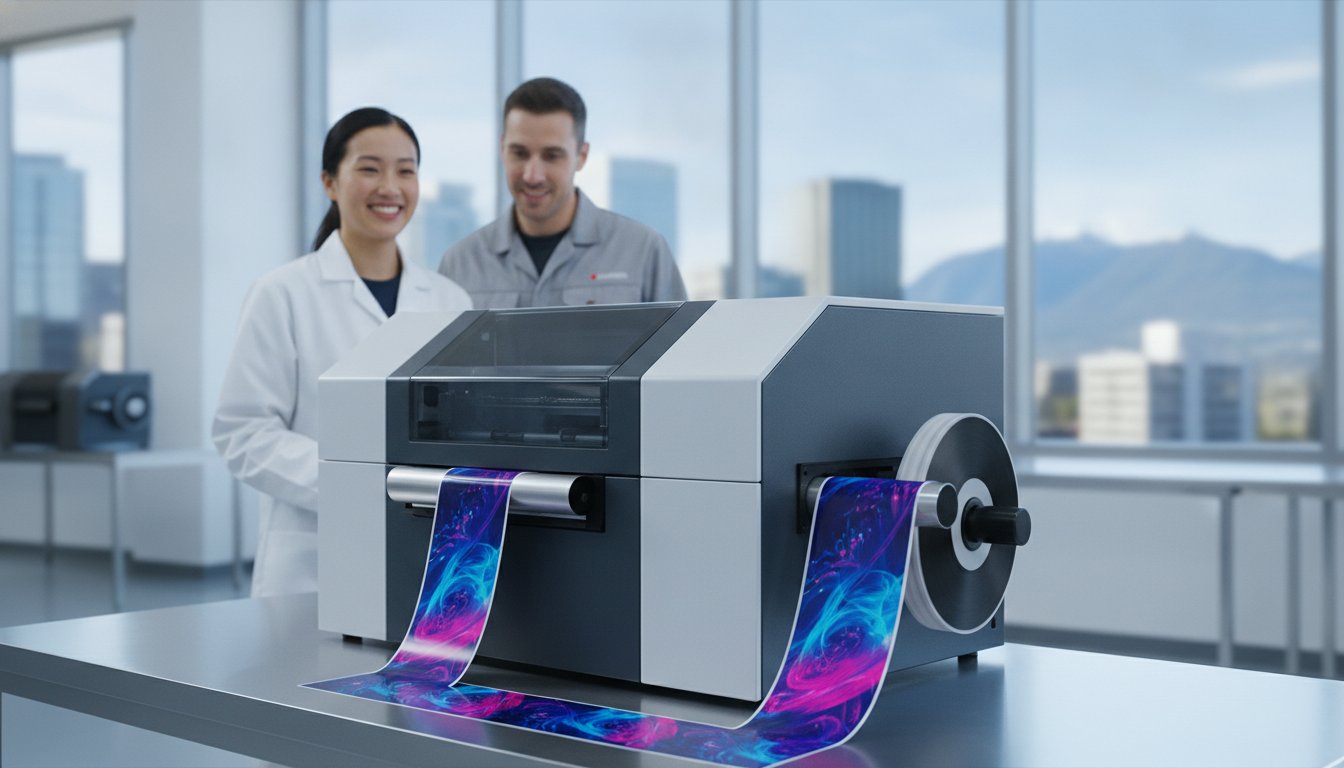
What if your most expensive inventory item isn't the product itself, but the stacks of obsolete pre-printed labels sitting in your warehouse? Many Canadian operations realize that outsourcing short-run printing often leads to inflated costs and rigid lead times that stifle growth. You've likely felt the frustration of waiting weeks for a simple design update or discarding thousands of labels due to a minor regulatory change. It's a common bottleneck that limits your ability to react to market demands quickly.
This guide ensures you master the technical and financial variables of in-house production to choose the perfect color label printers for your facility. We'll help you transition from a reactive model to a proactive one that prioritizes supply chain agility. You'll learn how to evaluate professional-grade hardware from brands like Afinia and Epson while calculating the true reduction in your cost-per-label. We provide a clear roadmap to achieving professional branding on-demand, moving from technical specifications to long-term operational stability. By the end of this guide, you'll have the expertise needed to secure a reliable, high-performance labelling solution that grows with your business.
Key Takeaways
- Distinguish between industrial-grade systems and consumer hardware to ensure equipment longevity during heavy production cycles.
- Compare inkjet and thermal transfer technologies to align print resolution and label durability with your specific operating environment.
- Evaluate leading color label printers from brands like Afinia and Epson to find the best balance between speed and cost-per-print.
- Calculate total cost of ownership by factoring in ink yields and media costs instead of focusing solely on hardware pricing.
- Integrate professional barcode software like BarTender or NiceLabel to automate your labelling workflow and reduce human error.
What is a Professional Color Label Printer?
A professional color label printer is industrial-grade hardware engineered for high-precision, on-demand production. These systems differ significantly from consumer-grade desktop printers. While a standard office printer handles occasional sheets, professional units manage continuous rolls of media at high speeds. They're built for durability in warehouse environments and offer a level of colour consistency that consumer tech can't match. For Canadian manufacturers, these machines represent a shift from waiting on external vendors to controlling their own production schedules.
The core components of these systems include a high-resolution print engine, advanced media handling, and often, integrated finishing options. The print engine determines the speed and resolution, while media handling components like unwinders and rewinders manage large rolls of blank labels. Some systems even include cutters or laminators to produce a finished product in a single pass. This hardware allows for short-to-medium run production without the high setup costs of traditional print houses.
The Evolution of On-Demand Labelling
Digital precision has replaced the rigid constraints of analogue flexography. In the past, companies relied on expensive plates and massive print runs to keep costs down. This created a "minimum order quantity" barrier that penalized smaller brands or those with many SKUs. Modern digital systems from brands like Afinia and Epson eliminate these hurdles. They print directly from digital files, allowing for instant design changes. You can now handle variable data, such as unique serial numbers or seasonal branding, without stopping the line. This flexibility is essential for businesses that need to remain agile in a competitive market.
Primary Business Applications in Canada
Canadian operations across various sectors utilize professional color label printers to solve specific logistical and regulatory challenges. The ability to print exactly what you need, when you need it, transforms how products move to market.
- Food and Beverage: Producers use in-house systems to meet CFIA requirements. They can update nutritional tables or ingredient lists instantly to stay compliant.
- Nutraceuticals and Health: Frequent formula updates and regulatory changes in health products demand agility. Digital printing prevents the waste of obsolete, pre-printed inventory.
- Industrial and Chemical: Durability is the priority here. These printers produce GHS-compliant labels that resist chemicals, moisture, and UV exposure, ensuring safety data remains legible.
Inkjet vs. Thermal Transfer: Choosing the Right Technology
Selecting the right underlying technology for your color label printers depends on the label's destination and required lifespan. Inkjet systems lead the market for primary packaging where high-resolution graphics and vibrant photography are essential. Conversely, thermal transfer remains the industry standard for industrial environments where exposure to chemicals, extreme temperatures, or abrasion is expected. Understanding these distinctions prevents costly hardware investments that fail to meet operational demands.
Inkjet technology is split between dye-based and pigment-based systems. Dye inks offer the widest colour gamut and most brilliant finish, making them perfect for premium retail items. However, pigment inks provide superior resistance to moisture and UV fading. This makes pigment-based color label printers the preferred choice for products stored in damp environments or exposed to sunlight. When speed is the primary constraint, Memjet technology utilizes a stationary print head that spans the entire width of the media. This allows for massive throughput, reaching speeds significantly faster than traditional serial inkjet heads that move back and forth across the web.
When to Choose Inkjet Systems
Opt for inkjet when your brand relies on shelf appeal. These systems excel at producing photographic-quality images on both matte and gloss blank inkjet labels. Brands like Afinia and Epson ColorWorks dominate this category. They allow for precise colour matching and high-density ink coverage. This is the ideal choice for gourmet food, cosmetics, and craft beverages where the label is a direct extension of the brand's quality. Digital inkjet also simplifies variable data printing, making it easy to swap SKU details without changing physical plates.
The Case for Thermal Transfer Ribbons
For secondary labelling or harsh industrial applications, thermal transfer ribbons are indispensable. You must select the correct ribbon type based on the substrate and environment:
- Wax Ribbons: Best for general shipping and paper labels.
- Wax-Resin: Provides smudge resistance for synthetic materials.
- Full Resin: Offers maximum durability against chemicals, heat, and solvents.
These systems are vital for cold storage and outdoor use where standard inkjet labels might fail. If you're unsure which technology fits your specific volume or environment, speak with our technical team to find a solution that balances durability with cost.
Top Brands Compared: Afinia, Epson, and Primera
Selecting among leading color label printers involves balancing upfront capital expenditure with ongoing operational costs. While many brands offer high-resolution output, the distinction lies in their mechanical endurance and ink delivery systems. Canadian businesses typically choose between Afinia for high-volume industrial capacity, Epson for rugged reliability, or Primera for specialized, low-volume needs. Each manufacturer targets a specific production scale, from boutique startups to 24/7 manufacturing facilities.
Afinia: The Industrial Powerhouse
Afinia Label systems are engineered for high-capacity environments where downtime isn't an option. The Afinia L801 and L901 series utilize Memjet technology, which features a stationary print head that allows for speeds up to 12 inches per second. This technology is a game-changer for Canadian manufacturers because it significantly lowers the cost-per-print compared to traditional serial inkjet heads. Large ink tanks mean fewer interruptions and better economies of scale. You can find the full range of Afinia Color Label Printers to suit industrial production lines that require thousands of labels daily.
Epson and Primera: Versatility and Reliability
Epson ColorWorks systems, specifically the C6000 and C6500 series, act as the reliable workhorse for many Canadian warehouses. These units are specifically designed for automation, offering an internal peeler that simplifies "peel-and-present" applications. Because they use pigment-based inks, the labels are inherently durable and resistant to water, smudging, and light. This makes them the primary choice for chemical labelling or products stored in damp environments.
For boutique brands and startups, Primera remains the preferred entry point. The LX-series excels in producing high-quality cosmetic and gourmet food labels where visual impact is paramount. While they may not match the speed of Memjet systems, their ease of use and lower initial investment make them ideal for specialized production runs. Explore our selection of Epson printers and Primera label printers to match your specific output requirements.
VIPColor provides a robust alternative for those seeking Memjet speed with a focus on durability. Their systems bridge the gap between boutique hardware and heavy industrial units. They offer high-speed output and excellent ink efficiency, making them a strong contender for growing operations that require consistent branding across multiple SKUs. By comparing these brands side-by-side, you can identify which technology aligns with your current volume and future growth projections.
Calculating ROI and Total Cost of Ownership (TCO)
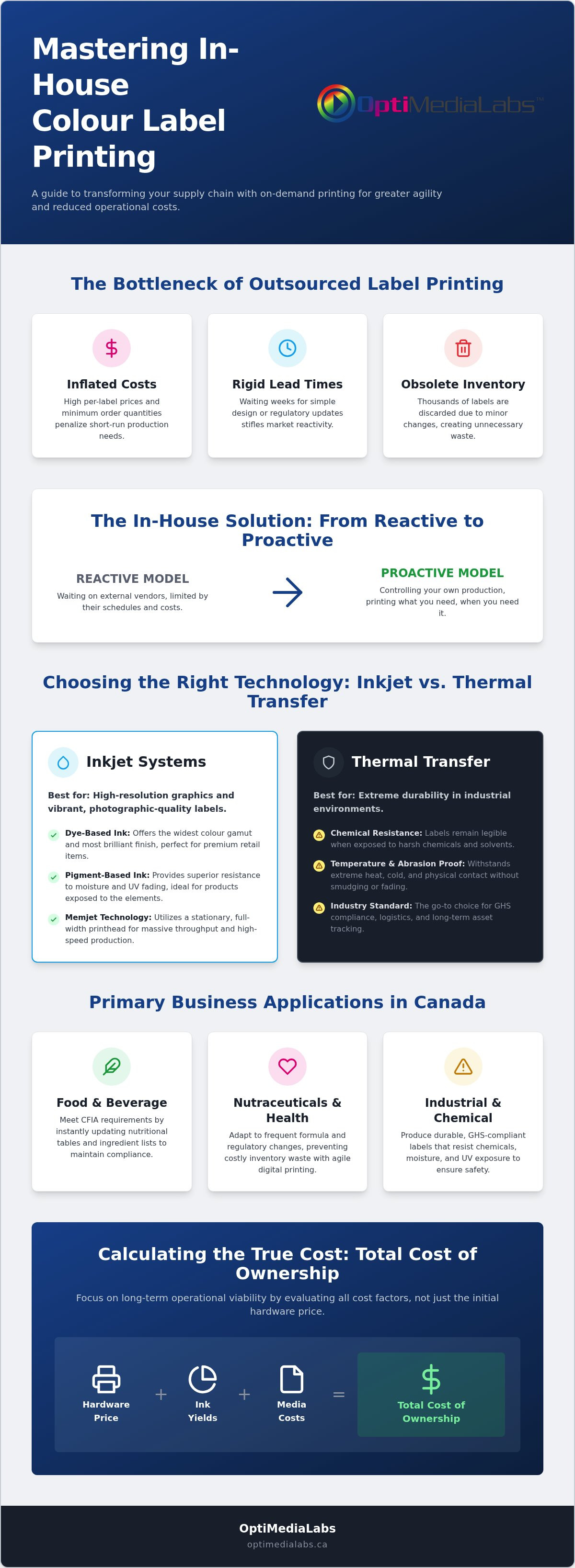
Focusing strictly on the sticker price of color label printers is a common oversight that leads to inflated operating budgets. The initial capital expenditure often represents only a fraction of the total investment over the machine's lifespan. You must evaluate the cost-per-label by analyzing ink consumption, media compatibility, and the frequency of required maintenance. A printer that costs less upfront might utilize smaller ink tanks or less efficient printheads, resulting in a much higher cost per square inch of print.
Ink yield analysis is the most critical step in estimating your TCO. High-capacity systems often use larger, separate tanks for each colour, which reduces waste since you only replace what you use. Conversely, "cheap" entry-level printers frequently rely on tri-colour cartridges where the entire unit is discarded once a single colour runs out. This inefficiency, combined with frequent downtime for cartridge swaps, can quickly erase any initial savings on the hardware itself. Labour savings also play a role; reducing the hours spent managing external print vendors and tracking shipments adds directly to your bottom line.
Managing Consumables for Long-Term Savings
Operational stability relies on a consistent supply of high-quality media and ink. While third-party alternatives might seem tempting, using genuine Afinia ink cartridges ensures your printheads maintain their expected lifespan. Substandard inks can cause clogging or poor adhesion, leading to expensive repairs and production halts. Canadian businesses should maintain an organized inventory of label printer consumables Canada wide to prevent stockouts. Stocking brand-specific blank labels also guarantees that the surface tension and coating are optimized for your specific ink type, ensuring vibrant, smudge-free results.
ROI Comparison: In-House vs. Outsourced
The break-even point for in-house printing usually occurs when a business reaches a consistent volume of short-to-medium runs. Outsourcing small batches often carries high setup fees and minimum order requirements that force you to buy more than you need. By printing on-demand, many operations report reducing label waste by 30% because they no longer discard obsolete inventory. There's also the unquantifiable value of agility. Avoiding a 2-week delay from an external vendor allows you to launch products faster and respond to market trends instantly. If you need help calculating your specific break-even point, request a cost-per-label analysis from our technical specialists today.
Implementing Your Labeling System with OptiMediaLabs
Successful implementation of color label printers requires a holistic approach that extends beyond the hardware itself. You need a system where the printer, media, and software work in unison to produce consistent results. OptiMediaLabs facilitates this by providing the technical expertise to align your hardware choice with your specific industry requirements. Whether you're producing high-gloss retail labels or durable industrial tags, the right setup ensures your production line remains efficient and compliant.
The transition to in-house production is most effective when you realize that hardware is just one component of the workflow. Integrating the correct media handling and data management tools prevents the bottlenecks common in unoptimized systems. We focus on creating a frictionless experience where your team can move from a design concept to a finished label in minutes. This agility is what allows Canadian businesses to reclaim control over their branding and supply chain timelines.
Building a Complete Labelling Workflow
A "Full Stack" labelling approach begins with robust design and data management. Pairing your equipment with professional barcode labeling software Canada wide allows for seamless integration with your existing databases. Programs like BarTender and NiceLabel provide the tools needed to manage complex variable data and ensure GHS compliance. This software layer is vital for maintaining regulatory standards across different provinces and product categories.
Once the labels are printed, finishing becomes the next priority. Integrating Afinia label cutters & finishers allows you to create custom shapes and sizes on-demand. This eliminates the need to stock hundreds of different die-cut blank rolls. You can print on continuous media and let the finisher handle the precision cutting and lamination. This level of automation reduces manual labour and provides a professional, factory-finished look for every SKU in your inventory.
Why OptiMediaLabs is Your Strategic Partner
OptiMediaLabs serves as a national Canadian distributor, ensuring that your supply chain remains resilient. We understand the technical nuances of industrial labeling solutions Canada businesses need to scale effectively. Our role is to act as a dependable expert that provides not just the hardware, but the ongoing consumables required to keep your operation running. We maintain deep stock levels of inks and labels to prevent production halts caused by international shipping delays.
Our team focuses on long-term partnerships rather than simple transactions. We help you navigate the technical specifications of Afinia, Epson, and Primera systems to find the most cost-effective path forward. From the initial consultation to the selection of specialized media, we provide a streamlined path to resource acquisition. To take the next step in your in-house production journey, consult with our experts to find your ideal colour label printer today.
Future-Proof Your Canadian Labelling Strategy
Transitioning to in-house production allows your business to reclaim control over inventory and eliminate the high costs of outsourced short-runs. You've learned to distinguish between vibrant inkjet systems for retail appeal and durable thermal transfer technology for industrial environments. Evaluating the total cost of ownership ensures your investment in color label printers remains profitable over the long term. By prioritizing technology that aligns with your specific volume and environment, you secure a scalable solution that grows with your brand.
As an authorized Canadian distributor for Afinia, Epson, and Primera, OptiMediaLabs provides the hardware and technical expertise needed to streamline your workflow. We support your operation with national shipping on all inks and blank label rolls to ensure your production never stops. Selecting the right system today creates the supply chain agility required for tomorrow's market demands. Browse our full range of Professional Color Label Printers and secure a reliable partner for your facility's growth. We look forward to helping you master your in-house labelling and achieving professional-grade branding on-demand.
Frequently Asked Questions
How much does it cost to print a colour label in-house?
The cost to print a colour label in-house depends on ink coverage and the specific hardware used. Industrial systems with high-capacity ink tanks typically offer a much lower cost-per-print than entry-level desktop models. By printing on-demand, you also eliminate the hidden costs of minimum order quantities and wasted inventory. This shift usually results in a significant reduction in the total cost of your labelling operation over several production cycles.
What is the difference between dye and pigment ink for label printers?
Dye inks provide the most vibrant colours and are ideal for high-end retail packaging where visual impact is the priority. However, pigment inks are the preferred choice for industrial durability. Pigment-based systems offer superior resistance to water, smudging, and UV exposure. This makes them essential for products that face harsh environments or require long-term legibility. Choosing the right ink technology ensures your labels meet the specific demands of your product's lifecycle.
Can I print GHS compliant labels with a standard colour label printer?
Printing GHS compliant labels requires a combination of pigment-based ink and BS5609-certified media. Not every standard system meets these rigorous standards for chemical and saltwater resistance. You must ensure your hardware and consumables are specifically rated for GHS applications to remain compliant with international shipping regulations. OptiMediaLabs stocks the specialized media and industrial printers necessary to meet these safety requirements across Canada. Consult with a technical expert to verify your specific compliance needs.
Which colour label printer is best for high-moisture environments like wine bottles?
Pigment-based color label printers are the most effective solution for high-moisture environments. When labels are exposed to condensation or refrigeration, dye-based inks can run or smudge. Systems from manufacturers like Epson utilize pigment technology that bonds with synthetic media to resist water and ice buckets. This ensures your branding remains crisp and professional from the production line to the consumer's table. High-moisture applications always require a careful pairing of ink and specialized media.
Do I need special software to use an industrial colour label printer?
While you can print from basic design programs, professional barcode software like BarTender or NiceLabel is highly recommended for industrial use. These platforms allow you to manage complex variable data, automate serial numbers, and ensure regulatory compliance with ease. They provide a level of control that standard office software cannot match. Using dedicated labelling software minimizes human error and integrates directly with your existing database for a more efficient, automated production workflow.
What is the lifespan of a professional inkjet printhead?
Printhead lifespan varies significantly between different technologies and manufacturers. Memjet printheads are designed for high-speed throughput and are typically replaced after a set volume of ink is used. In contrast, serial printheads in many Epson systems are engineered to last the entire life of the printer. Maintaining a clean environment and using genuine Afinia or Epson ink cartridges are the best ways to protect this component. Regular maintenance prevents premature failure and ensures consistent print quality.
How do I choose between a 4-inch and 8-inch label printer?
Choose your printer width based on your largest label requirement. A 4-inch printer covers most retail and shipping needs, while an 8-inch model is necessary for large chemical containers or wide-format branding. It's often safer to opt for the wider model if you anticipate adding larger products to your lineup. This flexibility prevents you from needing a second hardware investment as your business scales. Always consider the maximum roll width your production line might eventually require.
Is it difficult to maintain a colour label printer in a warehouse environment?
Maintaining industrial color label printers in a warehouse is straightforward if you follow a regular schedule. These machines are built for rugged use but require a dust-free environment for the best results. Most modern systems include automated maintenance cycles that keep the printheads clear. You should regularly wipe down the media path and ensure that your labels and inks are stored in a cool, dry place. Proper care ensures long-term reliability and minimizes unexpected downtime.