
Professional Label Printers Canada: The 2026 Guide to In-House Production
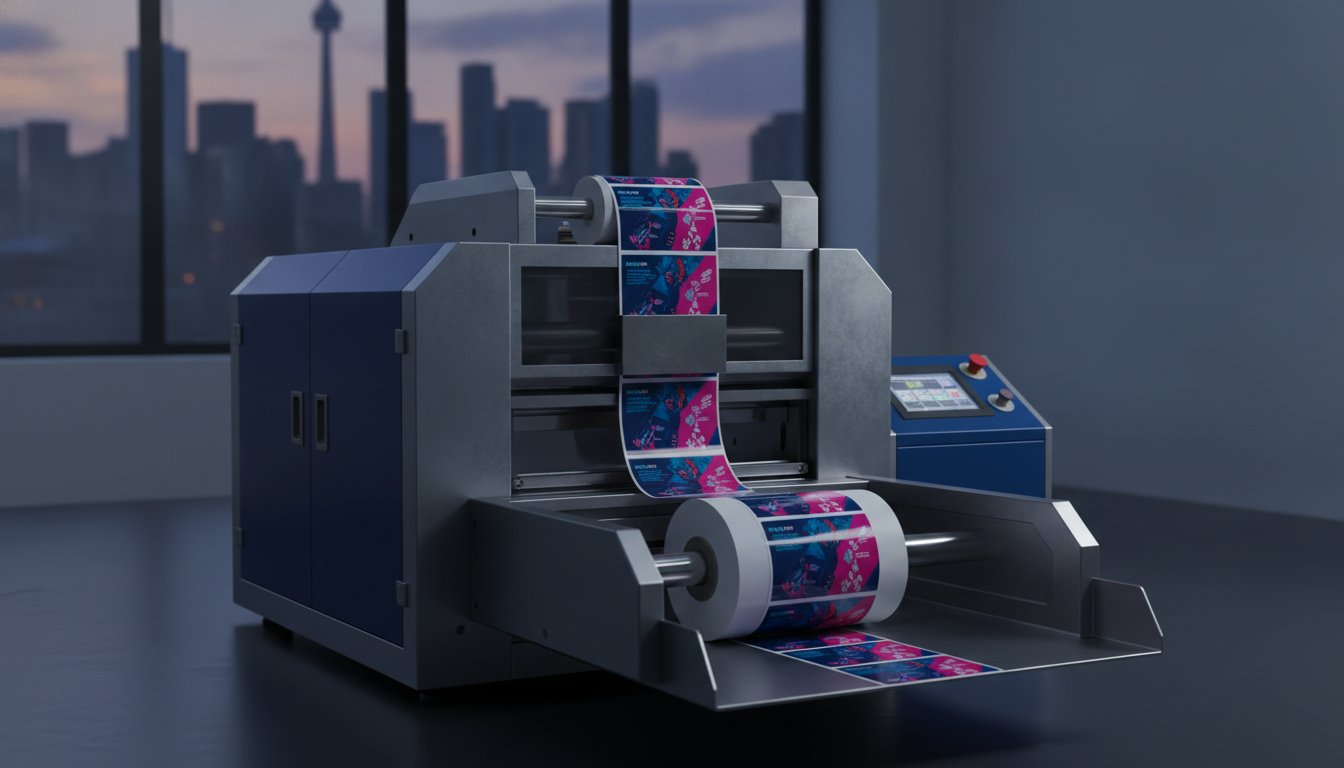
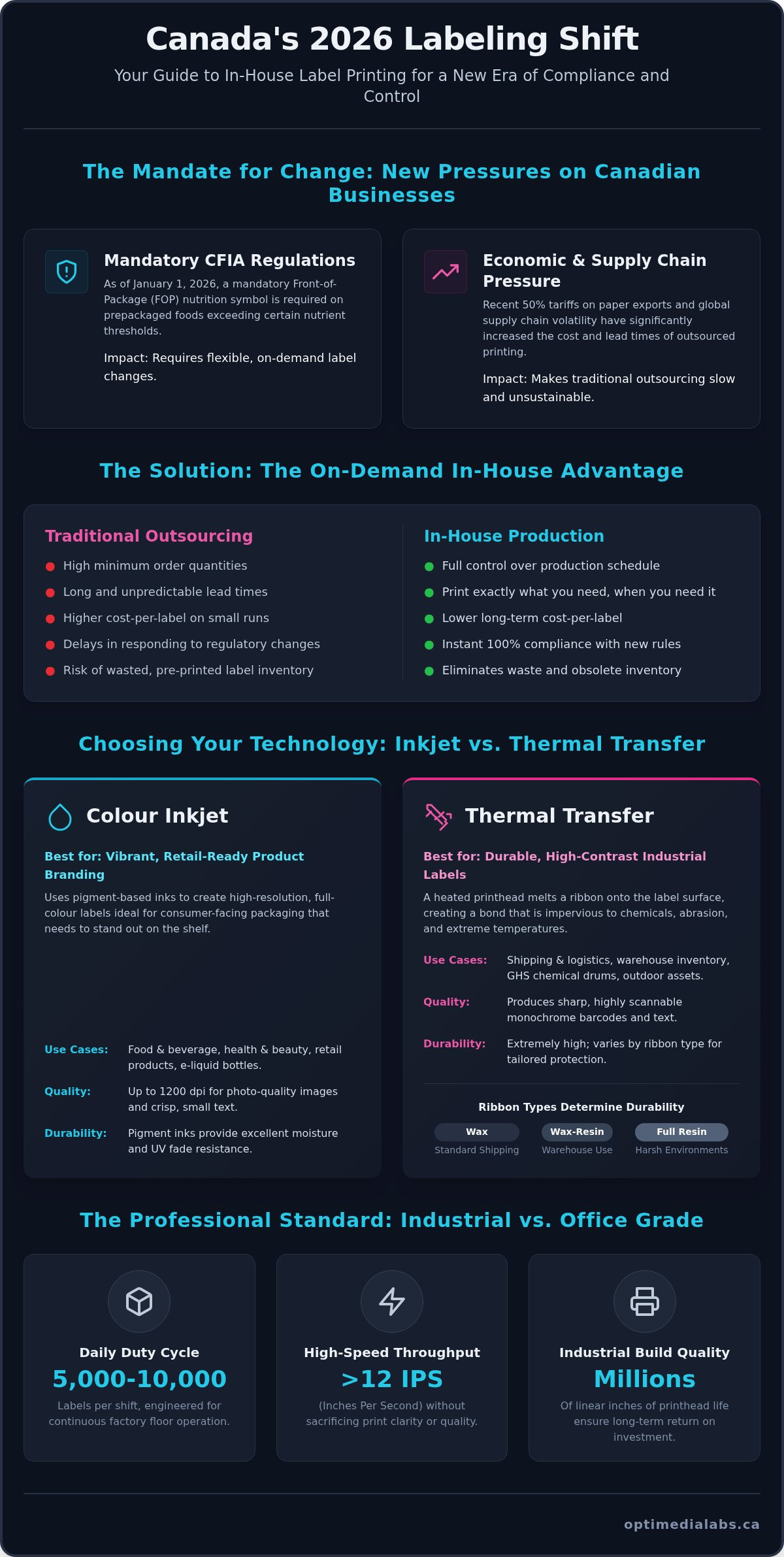
As of January 1, 2026, every prepackaged food product in Canada exceeding specific nutrient thresholds must carry a mandatory front-of-package nutrition symbol. This regulatory shift, combined with the 50% tariffs on paper exports implemented in August 2026, has made traditional outsourcing more expensive and slower than ever. You've likely found that relying on third-party vendors for small runs is no longer sustainable for your margins. To stay ahead, many firms are now sourcing professional label printers Canada wide to bring production directly onto the factory floor.
This guide demonstrates how to select the right industrial technology to reduce costs and gain full control over your production line. We understand that your brand's premium feel shouldn't be sacrificed for speed or compliance. By moving to an on-demand model, you can ensure 100% adherence to GHS and bilingual requirements without the burden of long lead times. We'll examine high-performance hardware from Afinia and Epson, evaluate essential barcode software, and provide a clear roadmap for achieving professional-grade print quality in-house.
Key Takeaways
- Differentiate between high-vibrancy inkjet technology for consumer branding and thermal transfer for durable industrial barcodes.
- Ensure 100% compliance with 2026 CFIA front-of-package regulations and bilingual requirements through flexible, on-demand production.
- Calculate the long-term savings of investing in professional label printers Canada to lower your cost-per-label and regain control over your supply chain.
- Streamline your workflow by integrating digital label finishers that eliminate the need for costly pre-die-cut label inventory.
- Secure your production line by sourcing specialized consumables and technical support from a dedicated national distributor.
What Defines Professional Label Printers for Canadian Businesses?
Professional label printers Canada are specialized production tools, not simple office peripherals. While a desktop label maker might suffice for organizing a file cabinet, industrial printers are engineered for the rigours of a factory floor. These systems are defined by their ability to produce thousands of labels per shift without mechanical fatigue. In 2026, Canadian manufacturers are increasingly moving away from third-party print houses. This shift is driven by new Health Canada front-of-package (FOP) nutrition labelling requirements and recent trade volatility, including the 50% ad valorem tariffs on paper products exported to the U.S. By bringing production in-house, businesses avoid the long lead times and high minimum order quantities associated with outsourcing. A specialized distributor helps manage this transition by aligning your hardware with the correct consumables, ensuring your supply chain remains resilient.
Industrial Duty Cycles vs. Office Use
In a professional setting, high-volume refers to machines capable of printing 5,000 to 10,000 labels daily. Standard office equipment lacks the cooling systems and robust motors required for this pace. Printhead longevity is the most critical metric for long-term ROI. Industrial-grade printheads are designed for millions of linear inches. If you choose a printer with an insufficient duty cycle, your maintenance costs will quickly erode any initial savings. High-speed throughput is equally vital; professional units maintain clear, crisp output even at speeds exceeding 12 inches per second. Choosing a machine that matches your specific volume prevents production bottlenecks.
Print Quality and Brand Perception
Your label is often the first point of contact between your brand and a Canadian consumer. Achieving a 1200 dpi resolution is essential for premium retail packaging, especially when printing small text for ingredient lists or bilingual compliance. Poor resolution can lead to rejected shipments if barcodes fail to scan. Understanding Label printer technology is the first step in selecting a system that can match your brand colours across diverse media types. You can explore our range of professional color label printers to find models that deliver consistent, photo-quality results. Whether you're using matte paper or high-gloss synthetic stocks, the right printer ensures your packaging reflects a premium brand identity.
Comparing Key Technologies: Inkjet vs. Thermal Transfer
Selecting professional label printers Canada requires understanding the distinct advantages of inkjet and thermal technologies. Your choice impacts everything from brand perception to supply chain efficiency. Inkjet systems excel at high-vibrancy, full-colour output, making them the preferred choice for consumer-facing packaging. Thermal transfer remains the industry standard for high-contrast barcodes and shipping labels that must survive harsh handling. For short-term logistics, direct thermal printing offers a ribbon-free alternative. Meanwhile, RFID-enabled units integrate digital tracking directly into your physical labelling workflow, allowing for automated inventory management across the Canadian market.
When to Choose Color Inkjet Printers
If your goal is retail-ready branding, inkjet technology from leaders like Afinia and Epson provides the necessary colour depth. These systems are particularly effective for meeting strict Canadian labeling requirements, which often demand high-resolution graphics for bilingual text and nutrition symbols. Pigment-based inks are essential for professional applications. They offer superior moisture and UV resistance compared to dye-based alternatives. This ensures your labels don't smudge or fade on refrigerated products or in humid environments. To maintain this high standard of durability and colour accuracy, you can shop Epson ink cartridges for professional results.
The Durability of Thermal Transfer
Thermal transfer printing uses a heated printhead to melt a ribbon onto the label surface. This process creates a bond that's virtually impervious to chemicals, extreme temperatures, and abrasion. The level of protection depends on your choice of ribbon. Wax ribbons are cost-effective for standard paper shipping labels. Full resin ribbons provide maximum durability for synthetic labels used in outdoor or industrial storage. Wax-resin hybrids offer a balanced solution for most warehouse applications where smudge resistance is required. To ensure your hardware matches your environment, you can find the right thermal transfer ribbons for your system through our specialized inventory.
Integrating these technologies into a single production line allows for maximum flexibility. You might use inkjet for primary product branding and thermal transfer for secondary case labelling. This hybrid approach ensures you aren't overspending on ink for simple shipping data while maintaining a premium feel for your customer-facing goods. If you're unsure which technology fits your current volume or environmental needs, speak with our technical team for a personalized assessment.
Industry-Specific Labeling Solutions in the Canadian Market
Canadian industries operate under some of the world's strictest labelling standards. Whether you're managing a food processing facility or a chemical plant, professional label printers Canada provide the agility to update designs instantly. In the food and beverage sector, meeting CFIA requirements for bilingual text and nutrition symbols is mandatory. These labels must also withstand moisture and temperature fluctuations. For the chemical industry, GHS compliance is non-negotiable. This requires durable materials and pigment inks that resist fading and chemical exposure, ensuring safety data remains legible throughout the product's lifecycle. Bringing this process in-house allows you to pivot your designs the moment a regulation changes.
Navigating Cannabis and Nutraceutical Regulations
The cannabis industry requires extreme flexibility due to variable strain data. THC and CBD potencies change with every harvest, making pre-printed labels impractical and wasteful. Using in-house systems allows you to print variable data, such as lot numbers and expiry dates, on-demand. This approach eliminates the cost of obsolete stock when regulations or batch results change. High-resolution printing is vital here; small fonts for ingredient lists must remain crisp to stay compliant. For a deeper look at hardware specific to this sector, see our Best Label Printer for Cannabis Products in Canada guide.
Cosmetic Labeling for Premium Brands
Luxury goods and cosmetics demand a sophisticated aesthetic to justify premium price points. Many Canadian brands opt for a "no-label" look by using clear media, which requires precise ink laydown to prevent silvering or visible adhesive. Since these products often contain oils or alcohol, the label material and ink must be chemically resistant to prevent smudging during consumer use. Precision die-cutting is another essential factor for custom-shaped bottles or unique packaging designs. You can find detailed recommendations in our Best Label Printer for Cosmetics Canada: 2026 Guide. Investing in the right technology ensures your packaging maintains its premium feel from the retail shelf to the customer's home.
Small-run flexibility isn't just a convenience; it's a competitive advantage for Canadian businesses. Controlling your own printing allows you to launch seasonal products or limited editions without the typical three-week wait for a third-party printer. This responsiveness is particularly valuable in the health and beauty markets, where consumer trends shift rapidly. By aligning your printer's capabilities with your industry's specific environmental challenges, you protect both your brand reputation and your operational efficiency.
The Essential Role of Finishing and Labeling Software
Afinia Label Cutters and Finishers
Digital finishing allows your team to create custom label shapes on the fly. These systems use digital knives to cut any geometry directly from the roll, which is ideal for unique product bottles or specialized industrial components. Beyond shaping, these units often include lamination capabilities. Adding a laminate layer is the most effective way to ensure industrial durability, protecting your labels from the abrasion and chemical exposure mentioned in previous sections. You can view Afinia label cutters and finishing solutions to understand how these machines complete the production cycle.
Professional Labeling Software Selection
Software acts as the command centre for your Canadian production line. Choosing between industry leaders like BarTender and NiceLabel depends on how you manage your data. These platforms allow for seamless integration with existing ERP or warehouse systems, ensuring that the information on your labels is always current. Variable data automation is particularly crucial for industries requiring batch-specific details, such as expiry dates or lot numbers. This connectivity reduces manual entry errors and speeds up the entire printing process. For a detailed breakdown of these tools, consult our Professional Guide to Barcode Labeling Software in Canada.
Integrating high-performance software with a digital finisher creates a truly on-demand production environment. This setup allows you to go from a digital design to a finished, laminated product in minutes rather than weeks. If you want to see how these components can fit into your facility, contact our technical team for a workflow consultation.
Procurement and Supply Chain: Choosing a Canadian Distributor
National Distribution and Support
Cross-border procurement often introduces hidden costs that erode the ROI of your printing investment. Customs brokerage fees, unpredictable duties, and shipping delays can turn a simple supply restock into a logistics headache. By sourcing your equipment and media within Canada, you eliminate these variables. This proximity is vital for accessing specialized supplies, such as pigment inks required for moisture resistance or specific synthetic stocks for GHS compliance. You can order Afinia ink cartridges for your production line directly from domestic stock to maintain consistent output without the risk of international transit delays.
Future-proofing your infrastructure for 2026 involves more than just buying a machine. It requires a relationship with experts who can guide you through evolving Canadian regulations. As labelling requirements for food, cannabis, and industrial chemicals become more complex, having a partner who can recommend the right barcode software or finishing equipment becomes a competitive advantage. Specialized technical advice ensures that your hardware continues to meet your brand’s premium standards while staying fully compliant with Health Canada and CFIA mandates.
Next Steps for Your Business
Transitioning to in-house production is a methodical process. To ensure you select the system that best fits your volume and industry requirements, follow these steps:
- Perform a cost-per-label analysis: Compare your current third-party invoices against the estimated ink and media costs of an in-house system.
- Request physical print samples: Verify that the colour accuracy and material durability meet your brand's specific standards before committing to hardware.
- Review your software integration: Ensure your chosen labelling platform can communicate with your existing ERP or warehouse management system.
Realizing your in-house printing goals starts with a clear understanding of your current production bottlenecks. If you are ready to gain full control over your labelling workflow and reduce operational overhead, contact our technical team for a detailed assessment of your requirements.
Future-Proof Your Canadian Production Line
Success in 2026 requires aligning the right industrial print technology with compliant software and robust finishing systems. Transitioning to an in-house model isn't just about reducing your cost-per-label; it's about gaining the agility to meet evolving Canadian regulations without third-party delays. By integrating professional label printers Canada wide, your business can ensure 100% adherence to CFIA and GHS standards while maintaining a premium brand feel. This control allows you to pivot designs instantly as market requirements change.
OptiMediaLabs Canada is your partner in this transition. As an authorized Canadian distributor for Afinia, Epson, and Zebra, we provide the hardware and specialized industrial software necessary for a seamless workflow. We also offer national shipping on all inks and consumables to keep your facility running without interruption. Whether you need high-vibrancy product labels or durable industrial barcodes, we have the technical expertise to help you scale your operations efficiently.
Take control of your supply chain and realize your in-house printing goals today.
Frequently Asked Questions
What is the best professional label printer for a small business in Canada?
The best professional label printer for a small business in Canada depends on your specific volume and colour requirements. For those starting with small runs of high-vibrancy product labels, the Epson TM-C4000 or Primera LX600 are reliable entry-level industrial choices. These units offer high-resolution output and a compact footprint suitable for small production spaces. They provide a secure path to in-house production without the massive footprint of a full-scale floor unit.
How much can I save by printing labels in-house versus outsourcing?
You can typically reduce your costs by 50% to 80% on short-run labels by moving production in-house. Outsourcing small batches often incurs high setup fees and minimum order requirements that inflate the price per unit. By using professional label printers Canada wide, you pay only for the ink and media used. This shift allows you to print exactly what you need, which effectively eliminates the waste associated with obsolete pre-printed inventory.
What software do I need to print GHS compliant labels in Canada?
BarTender and NiceLabel are the industry-standard software solutions for printing GHS compliant labels in Canada. These platforms feature built-in templates and symbol libraries specifically designed for WHMIS and international safety standards. They allow you to automate the inclusion of signal words, pictograms, and hazard statements based on your chemical database. This integration ensures that every label meets current Canadian safety regulations while reducing the risk of manual data entry errors.
Can I print waterproof labels with a professional inkjet printer?
You can print highly durable, waterproof labels using a professional inkjet printer equipped with pigment-based inks. When paired with synthetic media like BOPP or polyester, these labels resist smudging and fading even when submerged or exposed to harsh weather. This combination is essential for Canadian food and beverage producers who require labels to stay intact in refrigerated or humid environments. Always verify that your media is specifically rated for your printer's ink type.
What is the difference between a label maker and a professional label printer?
The primary difference lies in the duty cycle, print speed, and cost-per-label efficiency. A standard label maker is designed for occasional office organization and uses expensive proprietary cartridges. In contrast, a professional label printer is built for continuous industrial production and uses high-capacity ink tanks or ribbons. Professional units also offer much higher resolutions, often reaching 1200 dpi, which is necessary for clear bilingual text and retail-quality branding.
How do I choose between matte and gloss finishes for my product labels?
Choose a matte finish for a premium, organic look or when legibility of small text is your top priority. Matte surfaces reduce glare, making them ideal for ingredient lists and barcode scanning under warehouse lighting. A gloss finish is better for high-vibrancy branding where you want colours to pop and look luxurious. Glossy labels also offer a slight advantage in moisture resistance, though both finishes are available in durable synthetic materials for industrial use.
Are Afinia label printers compatible with Canadian voltage and safety standards?
All Afinia label printers sold through authorized Canadian distributors are fully compatible with standard 110V power outlets and meet national safety standards. These units are engineered for the North American market, ensuring they integrate seamlessly into your existing electrical infrastructure. They also feature the necessary certifications for use in Canadian industrial and commercial environments. This compatibility ensures a stable, secure setup that won't require specialized power converters or additional electrical modifications.
Where can I buy specialized ink and blank labels in Canada?
You can purchase specialized ink, ribbons, and blank media from national Canadian distributors like OptiMediaLabs Canada. Sourcing your consumables domestically avoids cross-border shipping delays and unpredictable customs fees that can disrupt your production schedule. We stock a full range of Afinia, Epson, and Primera supplies to ensure your production line remains active. Buying from a specialized partner also gives you access to technical support for matching specific media to your hardware requirements.