
RFID Label Printers Canada: The 2026 Professional Guide to Encoding & Compliance
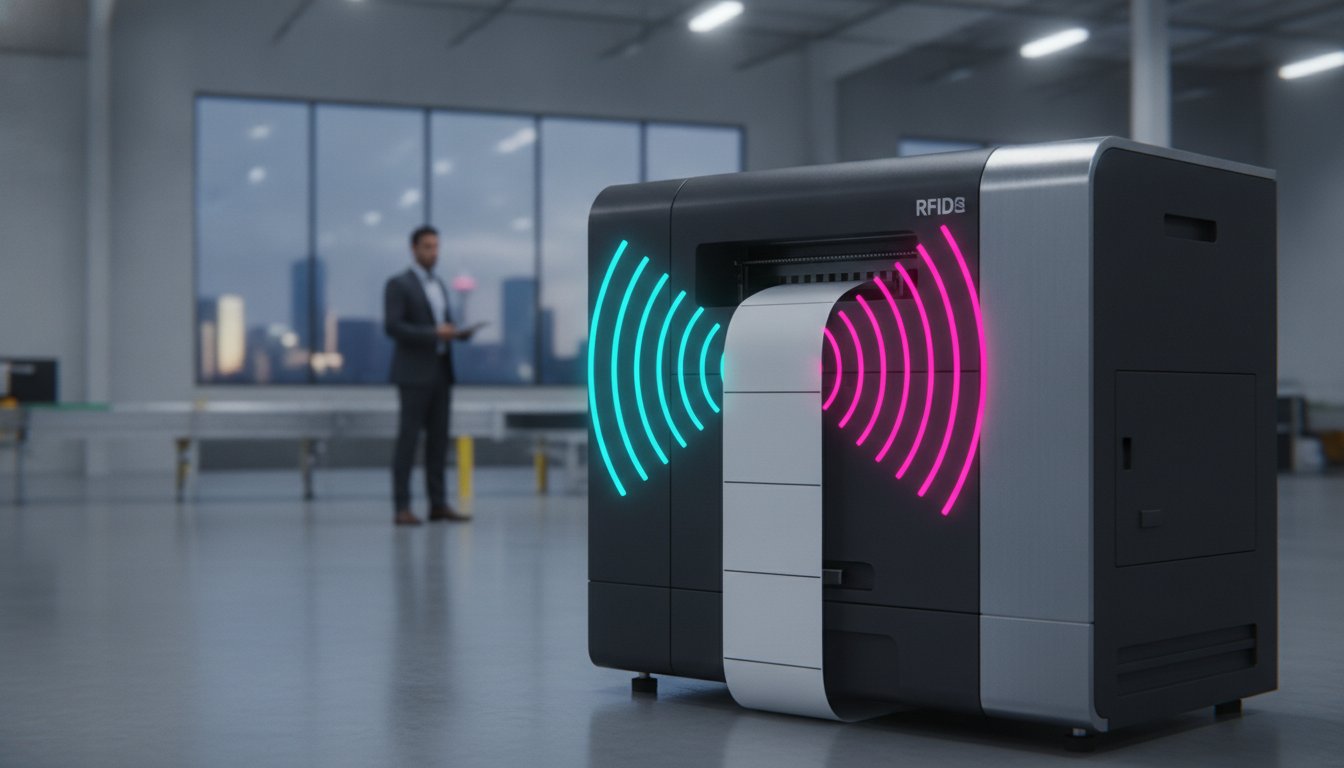
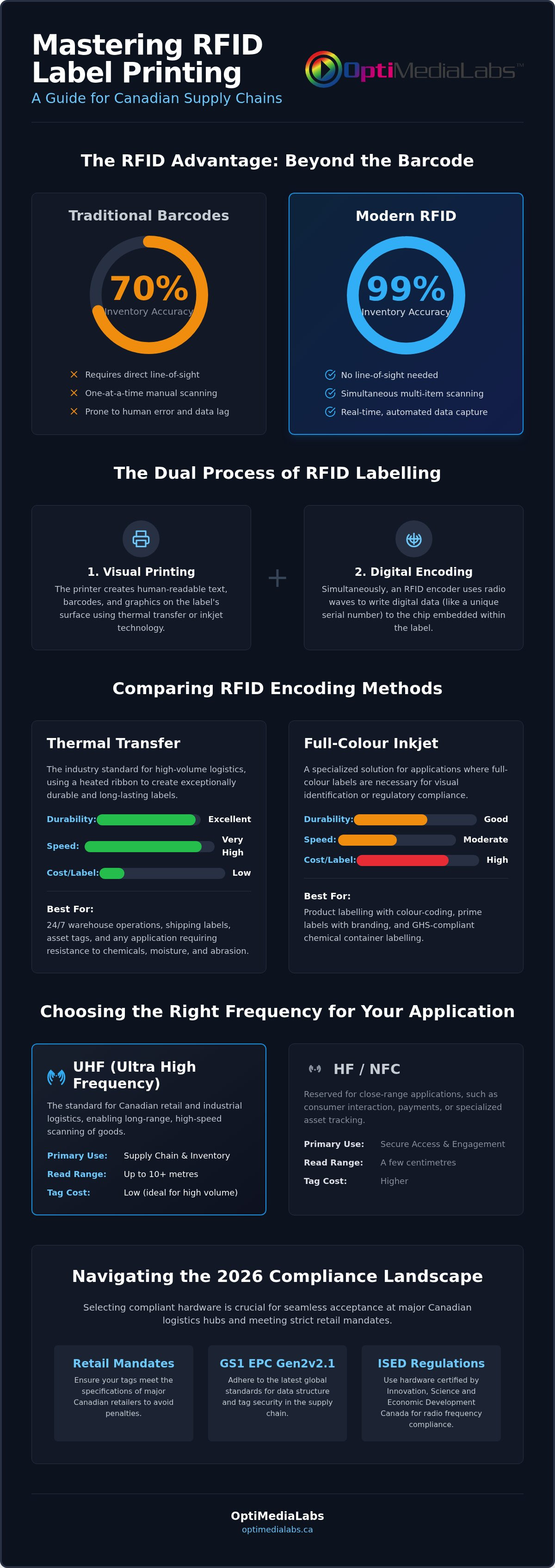
Did you know that moving from barcodes to RFID can increase your inventory accuracy from 70% to 99%? While the productivity gains are clear, the technical transition often feels like a minefield. Many businesses realize that selecting the right RFID label printers Canada offers is the only way to meet strict retail mandates. You shouldn't have to worry about hardware obsolescence or the high cost of tag wastage during failed encodes.
You need a stable, high-speed encoding solution that works every time. This guide helps you master the technical requirements for selecting the hardware your supply chain requires for 2026 and beyond. We'll help you organize your strategy around the latest GS1 EPC Gen2v2.1 standards and updated ISED regulations. By the end of this article, you'll know how to choose hardware that reduces downtime and ensures your labels meet every retail mandate.
Key Takeaways
- Understand the dual process of visual printing and digital data encoding to streamline your logistics operations.
- Compare the industrial durability of thermal transfer against the specialized utility of inkjet RFID for colour-coded or GHS-compliant labelling.
- Learn how to choose between desktop and industrial RFID label printers Canada based on your daily output volume and environmental demands.
- Navigate the 2026 landscape of retail mandates and verification protocols to ensure seamless acceptance at major Canadian logistics hubs.
- Optimize your system performance by sourcing professional-grade hardware and RFID-specific consumables from a dedicated national distributor.
Understanding RFID Labelling Technology in the Canadian Market
Modern logistics in Canada has evolved beyond simple visual scanning. Radio-Frequency Identification (RFID) technology allows for the simultaneous data capture of multiple items without a direct line of sight. This process involves two distinct steps: visual printing of human-readable text and digital data encoding of the internal chip. By combining these steps, companies ensure their labels are both machine-readable and human-verifiable.
The transition from barcode-only systems to RFID-enhanced logistics is driven by the need for 99% inventory accuracy and real-time supply chain visibility. While barcodes require manual scanning of every individual unit, RFID tags respond to radio waves from a distance. Implementing RFID label printers Canada allows businesses to automate these workflows and eliminate much of the manual labour traditionally associated with cycle counts.
A functional system relies on three pillars: professional hardware, specialized inlays, and robust software. Using barcode software like BarTender ensures that your data is mapped correctly to the chip. In-house encoding provides a distinct advantage over pre-encoded tags because you gain full control over variable data. You can encode unique serial numbers or batch codes immediately as orders are processed. This approach eliminates the logistical delay of ordering pre-printed stock and allows for instant corrections if data requirements change.
UHF vs. HF: Choosing the Right Frequency
Ultra High Frequency (UHF) is the standard for Canadian retail and industrial logistics. It utilizes passive tags that draw power from the reader's signal, which keeps the cost per label low for high-volume tagging. High Frequency (HF) or Near Field Communication (NFC) is typically reserved for close-range consumer engagement or specialized asset tracking. In industrial warehouse environments, UHF read ranges can extend up to 10 metres or more, which facilitates the rapid scanning of entire shipping containers without opening them.
The Anatomy of an RFID Label
An RFID label is a complex multilayered product consisting of the face stock, an adhesive layer, and the embedded RFID inlay. The inlay contains a microchip and an antenna. High-quality RFID label printers Canada utilize specialized encoders that communicate with the inlay via radio signals. This process happens without applying physical pressure that could crush the delicate silicon chip. Selecting the correct face stock is vital for performance. Durable synthetics are necessary for outdoor storage, while standard paper is suitable for dry retail environments. You must also consider the application surface, as metal or liquids can interfere with the signal transmission of the tag.
Thermal Transfer vs. Inkjet: Comparing RFID Encoding Methods
Selecting the right technology for RFID label printers Canada depends on your specific operational environment and label requirements. Thermal transfer remains the standard for high-volume logistics due to its speed and physical durability. In contrast, inkjet RFID encoding is gaining traction for applications requiring visual differentiation or strict regulatory compliance like GHS. Choosing between these methods affects your long-term operational costs and the physical resilience of your tags.
Thermal transfer systems use a heated printhead to melt a ribbon onto the label surface. This process creates a permanent bond that resists chemicals, moisture, and extreme temperatures. For large-scale deployments, the cost-per-label is significantly lower than inkjet because ribbons and thermal-grade RFID tags are mass-produced at high volumes. These systems are essential for realizing the benefits of RFID in inventory management by providing permanent data that survives the rigours of a Canadian supply chain.
Industrial Thermal Transfer RFID Printers
Reliability is the primary concern for 24/7 warehouse operations. Zebra printers lead this category by offering rugged construction and advanced "over-the-chip" printing. This technology ensures the printhead doesn't crush the delicate silicon chip within the RFID inlay during the encoding process. By using high-quality resins or wax-resin ribbons, you ensure that your visual barcode and human-readable text remain intact even if the tag is handled frequently. If you're unsure which ribbon matches your tag material, our team can help you select the right consumables for your specific hardware.
Full-Colour Inkjet RFID Solutions
While thermal transfer excels in monochrome logistics, Epson printers with integrated RFID support are revolutionizing retail and chemical sectors. Colour-coded RFID labels improve sorting efficiency by providing instant visual cues for warehouse staff. For instance, a red-bordered label might signify a hazardous material, while the internal RFID chip tracks its precise location. Managing ink consumption on high-gloss RFID media requires precision. These printers utilize pigment-based inks that dry instantly, preventing smudging on the specialized topcoats required for inkjet-receptive RFID tags. This makes inkjet the superior choice for short-run production where visual branding or colour-coded compliance is just as important as the digital data on the chip.
Selecting the Right RFID Printer Class for Your Operation
Choosing between the various RFID label printers Canada offers requires a clear understanding of your daily volume and environmental demands. A mismatch here leads to either unnecessary capital expenditure or frequent hardware failure due to overwork. Your selection should align with your specific throughput needs while ensuring full compliance with GS1 Canada RFID Standards for data integrity across the supply chain.
Volume is the primary metric for categorization. Desktop models are designed for light-duty tasks, while industrial units handle the heavy lifting of continuous manufacturing and distribution. Beyond volume, you must consider the physical footprint and the specific width of the labels you intend to produce. Standard 4-inch widths cover most retail requirements, but 6-inch models are often necessary for pallet-level logistics and international shipping forms.
Desktop RFID Printers: Compact and Efficient
Desktop units are ideal for small businesses or secondary labelling stations that process up to 500 labels per day. These machines offer a smaller footprint, making them suitable for office environments or retail backrooms where space is at a premium. They are generally easier to set up and maintain than their industrial counterparts. If you are looking for entry-level models that don't sacrifice encoding precision, explore our range of RFID printers designed for reliable, low-volume output.
Industrial RFID Printers: Built for the Supply Chain
For operations requiring 5,000 or more labels per day, industrial-grade hardware is mandatory. These printers feature rugged metal frames and high-capacity internal rolls to minimize downtime. A critical feature of this class is advanced encoding verification. If the printer detects a failed encode, it utilizes "bad tag" flagging to physically mark the label as void and automatically re-prints the data on the next tag. This ensures that only functional tags enter your shipping stream. For a deeper look at high-capacity hardware, consult our industrial labelling solutions Canada reference guide.
Mobile RFID printers provide a specialized solution for on-the-spot re-labelling. These handheld or belt-worn units allow warehouse staff to correct encoding errors or apply new tags directly at the pallet without returning to a central station. While they have lower battery life and smaller roll capacities, their ability to reduce footsteps in a large facility significantly boosts labour productivity. Always verify that your mobile units support the same security protocols as your stationary fleet to maintain a secure data environment.
Compliance and Implementation: Meeting Retail Mandates
The 2026 landscape for Canadian retail is defined by strict adherence to GS1 EPC Gen2v2.1 standards. As of July 30, 2026, Innovation, Science and Economic Development Canada (ISED) released RSS-Gen Issue 6, which explicitly brings passive RFID tags under regulatory scope. This means Canadian suppliers must ensure their RFID label printers Canada are configured to meet both retailer-specific mandates and national radio standards. Major logistics hubs now utilize automated verification tunnels that reject any shipment containing unreadable or incorrectly encoded tags.
Implementing a new system requires a methodical approach to avoid operational bottlenecks. Follow this 5-step checklist for a successful rollout:
- Audit Requirements: Define the specific EPC data structure required by your primary retail partners.
- Hardware Selection: Choose printers with integrated verification to flag encoding failures immediately.
- Template Design: Create label layouts using GS1-compliant software to ensure data integrity.
- Pilot Testing: Conduct a test on a single SKU to verify read ranges within your specific warehouse environment.
- Audit Protocols: Establish a routine schedule for calibrating your encoding hardware.
Major Retailer RFID Mandates (Walmart, Amazon, etc.)
Walmart Canada and Canadian Tire have established active mandates for various product categories. These requirements specify exact tag placement and encoding data formats that must be followed to the letter. Failure to comply often results in heavy chargebacks and delayed processing at distribution centres. You must prioritize precise tag placement to ensure readability through dense packaging or near metallic surfaces. Testing your system before full-scale deployment prevents costly re-labelling projects and protects your reputation as a reliable vendor.
The Role of Labelling Software
Professional software bridges the gap between your ERP data and the physical chip. BarTender software is the industry standard due to its robust drivers and native support for nearly all RFID chip types. For organizations requiring a centralized, web-based approach, NiceLabel software offers excellent cloud-based encoding capabilities. These platforms manage the unique serial numbers required for every tag, ensuring that no two items share the same digital identity. If you need help choosing between these platforms for your operation, speak with our technical team today.
Procuring Your RFID System with OptiMediaLabs
Sourcing RFID label printers Canada requires more than just a hardware purchase; it demands a partnership with a distributor that understands the specific nuances of the domestic supply chain. OptiMediaLabs serves as a national technical authority, providing the essential hardware and consumables needed for professional in-house production. By working with a Canadian distributor, you eliminate the complexities of cross-border shipping and ensure that technical support is available within your own time zone. This local presence is vital for maintaining high-speed encoding lines that must meet the strict 2026 standards outlined in previous sections.
A reliable system depends on the synergy between hardware and consumables. We provide brand-specific ink and ribbons designed to work with your specific printer models, ensuring that every visual barcode is as crisp as the digital data on the chip. This precision reduces the risk of failed encodes and retail chargebacks. Our national support structure means you have access to expert guidance for troubleshooting and hardware maintenance, protecting your operational uptime across all Canadian provinces.
Consumables: Ribbons and RFID Labels
Achieving a reliable encode and a durable print requires precise matching of materials. You must carefully align your thermal transfer ribbons with the specific face stock of your RFID tags to prevent smudging or data loss during transport. We stock a comprehensive range of blank RFID media and specialized ribbons compatible with major industrial brands. Utilizing original manufacturer supplies isn't just about print quality; it's a critical requirement for maintaining your hardware warranty and ensuring the maximum lifespan of your thermal printheads.
Our inventory includes specialized consumables for every application:
- Resin Ribbons: Provide maximum chemical and abrasion resistance for industrial environments.
- Wax-Resin Blends: Deliver high-speed performance on paper or synthetic RFID tags.
- Blank RFID Tags: Stocked in various sizes and inlay configurations to meet GS1 standards.
Next Steps for Your Business
Transitioning to a fully compliant RFID system is a significant technical undertaking that requires careful planning. Whether you're outfitting a single secondary station or coordinating bulk procurement for a network of national distribution centres, our team provides the technical insight necessary for a seamless integration. We assist in selecting the specific Zebra, Epson, or Afinia models that align with your daily volume requirements and retail mandates. This strategic approach ensures your investment remains relevant as Canadian logistics standards and ISED regulations continue to evolve. To begin your implementation or upgrade your current fleet, contact the expert team at OptiMediaLabs for a professional technical consultation.
Future-Proof Your Canadian Supply Chain with RFID
Success in the 2026 logistics landscape depends on technical precision and regulatory compliance. You've learned how to distinguish between thermal transfer and inkjet encoding and how to match your printer class to your specific daily output volume. Mastering these selection criteria ensures your labels meet strict retail mandates while minimizing the high cost of tag wastage. Implementing the right RFID label printers Canada professionals recommend is the final step in securing your logistics pipeline against shifting standards and ISED updates.
OptiMediaLabs serves as your technical authority for hardware procurement. We are an authorized distributor of Zebra and Afinia hardware, providing national Canadian shipping and support for all your industrial labelling needs. Our team understands the pressure of meeting compliance deadlines and provides the reliable tools needed to reduce operational downtime. Contact OptiMediaLabs for a Professional RFID Hardware Consultation today to discuss your specific encoding requirements. Let's build a stable and efficient labelling system together.
Frequently Asked Questions
What is the difference between an RFID printer and a standard barcode printer?
An RFID printer contains an internal radio frequency encoder that writes digital data to a microchip while simultaneously printing visual text or barcodes. Standard barcode printers only apply heat or ink to the label surface and lack the hardware to communicate with electronic inlays. This dual capability is essential for RFID label printers Canada businesses use to meet modern supply chain requirements.
Do I need special software to encode RFID labels in Canada?
You require specialized barcode software with native RFID drivers to map data correctly to the Electronic Product Code memory bank. Standard design tools or basic document editors cannot communicate with the printer's internal encoder. Professional platforms like BarTender or NiceLabel ensure that your data structure remains compliant with Canadian retail standards and national ISED radio regulations.
Can I use any thermal label for my RFID printer?
No, you must use specialized RFID labels that contain an embedded inlay consisting of a microchip and antenna. Standard thermal labels lack these electronic components and cannot store digital data. Using the wrong media can lead to encoder errors and will result in labels that are invisible to RFID scanners throughout the logistics chain.
How do I know if my RFID printer is compliant with Walmart Canada requirements?
Compliance is determined by using GS1-compliant UHF Gen2v2.1 tags and following the exact EPC encoding structures mandated in Walmart's vendor guidelines. You must verify that your RFID label printers Canada support the specific frequency ranges and security protocols required by your retail partners. Testing a sample batch through your distributor is the most reliable verification method.
What happens if an RFID tag fails to encode during the printing process?
Industrial printers utilize a process called bad tag flagging to identify and mark failed encodes immediately. The printer will typically print a VOID pattern or series of marks over the face of the failed label to prevent its use. It then automatically attempts to encode the same data on the next available tag to maintain your data sequence.
Are there colour RFID printers available for product labelling?
Yes, full-colour inkjet models from brands like Epson and Afinia support integrated RFID encoding. These machines are ideal for GHS-compliant chemical labelling or retail branding where visual colour-coding is required alongside digital data. They utilize pigment-based inks that dry instantly on specialized inkjet-receptive RFID media to ensure both visual and digital data remain durable.
Is it more cost-effective to print RFID labels in-house or buy them pre-encoded?
In-house production is generally more cost-effective for operations with variable data or high-volume requirements. While pre-encoded tags eliminate initial hardware costs, they introduce logistical delays and higher per-unit prices. Printing in-house allows for immediate label generation and eliminates the risk of stockouts for specific serialized tags during peak production periods.
What is the average lifespan of an industrial RFID label printer?
An industrial RFID label printer typically lasts between five and seven years in a high-volume warehouse environment. This lifespan depends on regular maintenance and the timely replacement of wear parts like printheads and platen rollers. Using original manufacturer consumables and keeping the encoder calibrated will ensure the hardware remains reliable and compliant throughout its service life.