
The Comprehensive Guide to Colour Label Printers for Canadian Businesses (2026)
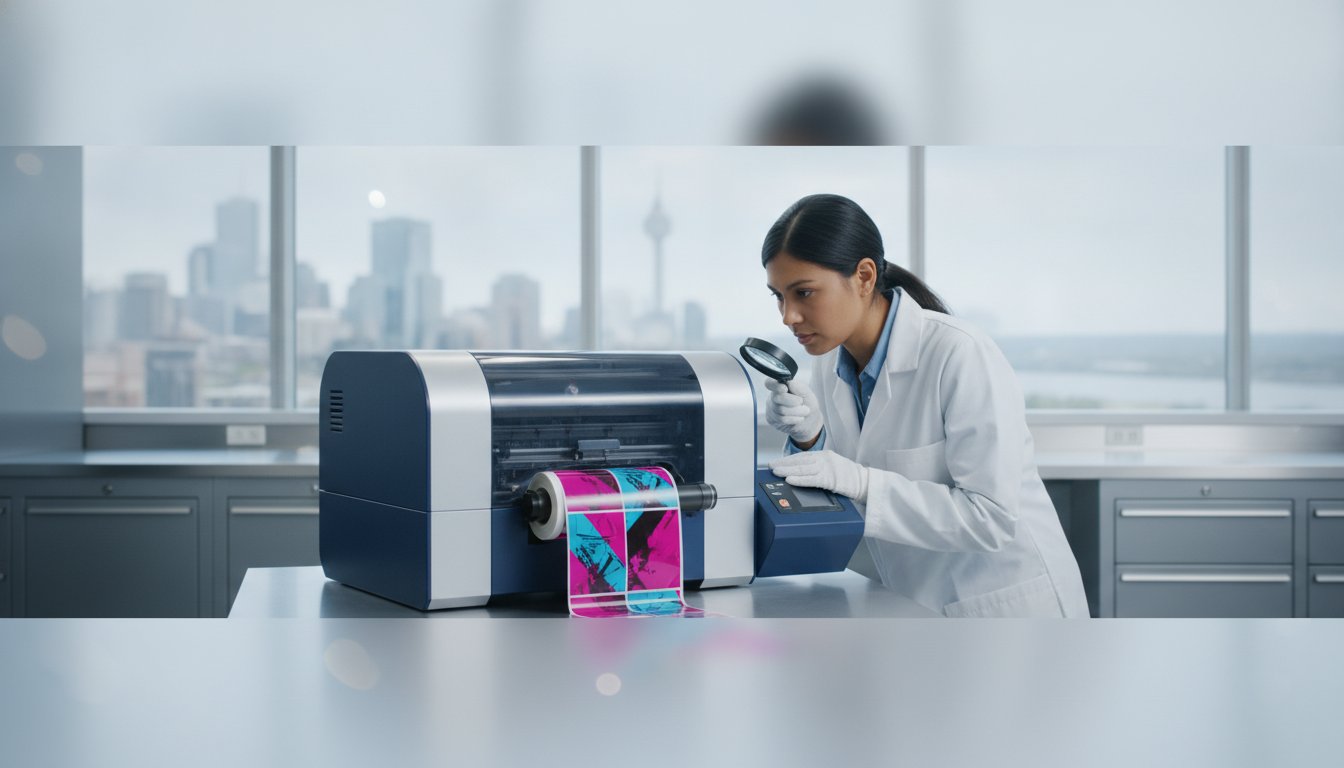
The North American digital label printing market is projected to grow at a rate of 4.32% through 2031, yet many Canadian manufacturers still lose significant revenue to external printing delays. You likely feel the pressure of high minimum order quantities and inconsistent quality that stalls your production line. It's frustrating to wait on a third party while your products sit in the warehouse, especially with new 2026 Health Canada front-of-pack nutrition labelling requirements now in effect. This guide shows you how to select the ideal in-house color label printers to reduce costs, improve branding, and streamline your workflow. We'll explore how modern hardware from brands like Afinia and Epson provides the speed and precision you need for professional, smudge-proof results. You will learn to integrate barcode software seamlessly and ensure every batch meets strict WHMIS 2015 and GHS compliance standards. We'll break down the technical specifications and cost-per-label metrics to help you realize better margins and maintain full control over your production schedule.
Key Takeaways
- Eliminate high minimum order quantities and reduce product launch lead times by transitioning to an in-house production model.
- Understand the performance differences between dye-based and pigment-based inks to ensure labels withstand water, oils, and UV light.
- Compare various color label printers to find the right balance between daily print volume and media width requirements.
- Professionalize your brand aesthetic with Afinia label cutters and finishers that create custom shapes and premium finishes.
- Leverage a national Canadian supply chain for hardware and consumables to ensure your manufacturing workflow remains uninterrupted.
The Strategic Value of In-House Colour Label Printers in 2026
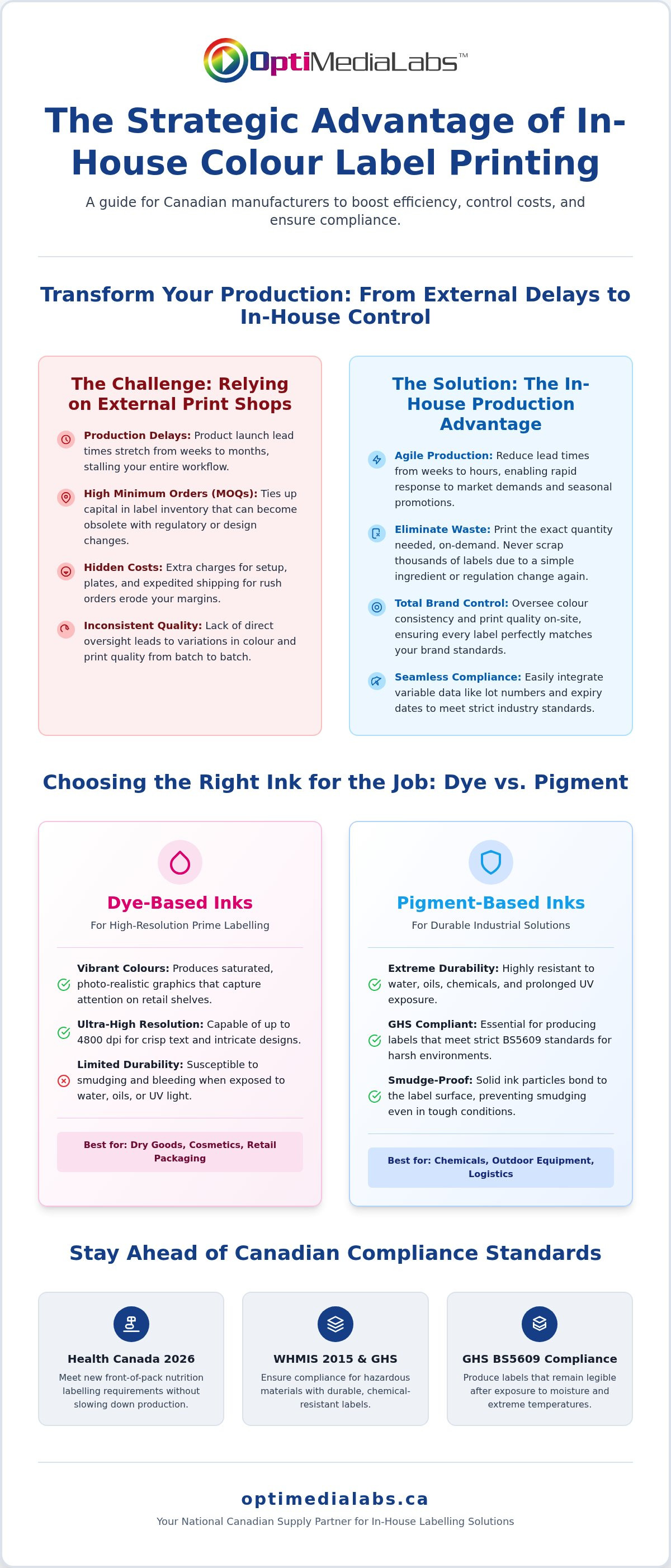
Relying on external print shops often forces Canadian businesses into a cycle of high Minimum Order Quantities (MOQs) and rigid production schedules. This traditional model ties up valuable capital in inventory that may become obsolete before it's even used. By integrating in-house color label printers, you regain total control over your production timeline. Lead times for new product launches or packaging updates shrink from several weeks to just a few hours. This shift enables agile branding, allowing you to pivot for seasonal promotions or private label requests instantly. You maintain strict brand standards because you oversee the colour consistency and print quality on-site, ensuring every batch matches your master design perfectly.
Realizing Better Margins through On-Demand Production
On-demand production fundamentally changes your margin calculations. You eliminate the hidden costs of external sourcing, such as setup fees, plate charges, and expedited shipping for rush orders. Many Canadian manufacturers realize better margins by reducing the waste associated with pre-printed label inventory. When a regulation changes or a product ingredient is updated, you don't have to scrap thousands of dollars in old labels. You simply update your digital file and print the new version. Modern Label printer technologies provide the precision needed for high-resolution retail packaging while keeping the cost-per-print manageable for small to medium batches. This efficiency streamlines your entire supply chain, making your operations more resilient to market shifts.
Meeting Compliance Standards for Industrial Environments
Industrial environments demand durability and precision that standard office equipment cannot provide. In Canada, meeting GHS BS5609 compliance is critical for any business handling chemicals or safety-sensitive materials. Your labels must remain legible after exposure to moisture, chemicals, and extreme temperatures common in Canadian logistics and outdoor storage. Professional color label printers allow you to produce smudge-proof, chemical-resistant labels that adhere to these strict standards. These systems simplify the integration of variable data. Using professional barcode software, you can add lot numbers, serialized barcodes, and real-time expiry dates to your designs. This capability ensures your facility remains compliant with Health Canada's 2026 front-of-pack nutrition labelling requirements and WHMIS 2015 standards without slowing down your production line.
Understanding Print Technologies: Inkjet vs. Thermal Transfer
Selecting the correct printing mechanism is the most critical decision in your labelling strategy. While modern color label printers have bridged the gap between speed and quality, the underlying ink chemistry determines how your product performs in the real world. You generally choose between inkjet, which offers full-colour flexibility, and thermal transfer, which excels in high-speed monochrome durability. Understanding these distinctions helps you avoid costly mistakes like ink smudging or faded barcodes. Your choice should depend on whether you prioritize shelf appeal or industrial resilience.
While in-house systems provide autonomy, certain high-end custom requirements might be better served by external experts. For projects that require advanced decorative finishes or unique transfer methods that go beyond standard inkjet or thermal options, Its All About Prints limited offers specialized custom printing services that can augment your primary labelling strategy.
High-Resolution Prime Labeling for Consumer Goods
Retail and cosmetic brands often prioritize "prime" labels that capture consumer attention. Primera label printers are a staple in this sector due to their impressive 4800 dpi resolution capabilities. This ultra-high resolution allows for photo-realistic graphics that rival commercial press quality. Dye-based inks are typically used here because they offer vibrant, saturated colours that pop on the shelf. The trade-off is durability. Dye-based prints can bleed if they get wet, so they're best suited for dry goods or products with short shelf lives. If your brand relies on a premium aesthetic, the ink finish, whether matte or gloss, directly influences how customers perceive your quality. High-resolution settings often slow down production, so it's vital to balance your required image quality with your daily output targets.
Durable Industrial Solutions for Harsh Conditions
Industrial environments require a more rugged approach. Pigment-based inkjet printers use solid particles suspended in liquid. This creates a print that is highly resistant to water, oils, and prolonged UV exposure. This technology is essential for outdoor equipment or chemical containers that must remain legible for years. For logistics and high-volume shipping where colour isn't the primary focus, thermal transfer label printers remain the gold standard. These systems use a heated printhead to melt a ribbon onto the label surface, providing a permanent bond. Selecting the right ribbon is key to success. Wax ribbons are economical for general shipping, while resin ribbons provide maximum resistance to solvents and abrasion. Most industrial facilities utilize a mix of both technologies to handle different stages of the supply chain. If you need help matching a printer to your specific warehouse conditions, you can consult with our Canadian support team for a technical assessment.
Selecting the Right Industrial Label Printer for Your Environment
Mid-to-high volume manufacturing environments often prioritize speed and throughput to keep up with demanding schedules. Afinia printers are a preferred choice here. Many models utilize Memjet technology, which features a stationary printhead that allows the media to move at high speeds. This is ideal for continuous-feed operations where time is a critical factor. In contrast, Epson printers utilize PrecisionCore technology. This approach focuses on extreme reliability and consistent ink droplet placement. It's a staple for businesses that need 24/7 uptime without frequent nozzle cleaning cycles. Both technologies offer distinct advantages depending on whether your priority is raw speed or long-term hardware stability.
Industry-Specific Hardware Recommendations
Food packaging requires a specific focus on safety and finish quality. If you're labelling prepackaged foods to meet 2026 Health Canada standards, you need printers that support food-safe inks and matte finishes for easy scanning under grocery store lighting. Advanced logistics operations benefit from RFID printers that encode data while simultaneously printing the visual label. This dual-functionality is essential for tracking high-value assets through complex supply chains. For startups with limited workspace, compact desktop solutions provide a professional entry point without the footprint of heavy-duty industrial presses. These smaller units allow you to scale your production as your business grows without a massive upfront capital investment.
Total cost of ownership is often overlooked during the initial research phase. A cheaper printer might have significantly higher ink costs, making it more expensive over a single year of production. You must also consider the physical environment. Industrial settings with high dust levels require printers with rugged internal components to protect sensitive electronics. When evaluating media, remember that some printers only support specific core sizes or roll diameters. If your workflow involves large rolls to minimize changeovers, ensure the hardware can support the weight and tension without requiring expensive external unwinders.
Optimizing Your Workflow with Label Finishers and Consumables
A common mistake in labelling is focusing solely on the printer while ignoring the finishing process. High-quality color label printers produce the image, but the final presentation depends on cutting and protection. If you want your products to stand out on Canadian retail shelves, custom shapes are vital. Using Afinia label cutters & finishers eliminates the need for expensive physical dies. You can switch between different shapes digitally in minutes. This flexibility is perfect for small batches or seasonal promotions where unique packaging drives sales.
Adding a lamination layer further professionalizes your output. Gloss lamination enhances colour vibrancy, while matte finishes reduce glare and improve barcode scannability. To keep your manufacturing line moving, consider automatic unwinder and rewinder systems. These tools manage the tension of your media, reducing the risk of jams and allowing for unattended "roll-to-roll" production. This setup is highly efficient for businesses using automatic label applicators later in the workflow, as it ensures your labels are perfectly wound and ready for high-speed application.
Maintaining Quality with Brand-Specific Consumables
Protecting your hardware investment requires using the correct ink. Third-party inks often lead to clogged nozzles and significant colour shifts that ruin your brand consistency. Sourcing genuine Epson ink cartridges or Afinia supplies from a national Canadian distributor ensures you receive fresh, compatible products. You must also match your blank label stock to your technology. Inkjet systems require a treated surface to lock in liquid ink, whereas thermal systems rely on heat-sensitive materials. Using the wrong media can result in poor adhesion or blurry text.
Thermal Transfer Ribbons for Barcode Reliability
For industrial tracking, barcode legibility is non-negotiable. Your choice of ribbon determines how well your labels survive transit and storage. Wax ribbons are the most economical choice for standard shipping. Resin ribbons offer maximum chemical and heat resistance, which is essential for automotive or laboratory use. Wax-resin hybrids provide a versatile middle ground for general industrial needs. High-performance Zebra ribbons ensure consistent darkness and edge definition, even at high speeds. While many facilities focus on color label printers for retail packaging, thermal transfer remains the backbone of warehouse logistics. If your facility uses near-edge printhead technology, ensure your ribbons are specifically formulated for those high-velocity environments to prevent premature printhead wear.
If you need to streamline your post-print workflow or find the right consumables for your environment, contact our technical team for a custom finishing solution.
Sourcing Your Labeling Infrastructure from OptiMediaLabs Canada
Successfully managing modern labelling requires a hybrid approach where vibrant branding and precise variable data coexist. Many Canadian manufacturers struggle to sync their hardware with their digital workflows. OptiMediaLabs Canada serves as a national distributor that bridges this gap. Our catalog features industry leading color label printers from Afinia, Primera, Epson, and VIPColor. We don't just provide hardware. We offer the technical expertise required to harmonize printers, finishers, and software into a single, efficient production line. This integrated approach ensures your equipment works from day one without the compatibility issues often found when sourcing components from separate vendors.
Professional Software Integration for Seamless Operations
Meeting 2026 Health Canada front-of-pack requirements and WHMIS standards requires a robust digital backbone. Implementing BarTender label design software allows you to automate the population of nutrition facts and hazard symbols, reducing the risk of manual entry errors. For facilities that need to manage multiple print stations from a central location, NiceLabel software is ideal. It provides a controlled environment where templates are locked, ensuring brand consistency across your entire plant. If your operations require global supply chain visibility, leveraging Loftware cloud software enables you to manage labelling assets across different geographic locations. OptiMediaLabs Canada provides dedicated support for these platforms to ensure they communicate perfectly with your color label printers.
Your Long-Term Partner for Labeling Success
Moving from a pilot setup to full scale production requires a dependable partner and a secure supply chain. Our national distribution network ensures fast shipping of hardware and consumables to any province. You can rely on a steady supply of blank inkjet labels specifically engineered for your printer brand. This avoids the production halts caused by stockouts or incompatible media. OptiMediaLabs Canada understands the technical nuances of Canadian manufacturing environments and provides the stability needed for long term growth. Our team is available to help you navigate technical specifications and maintenance schedules, ensuring your infrastructure remains high performing. Choosing the right partner allows you to focus on production rather than troubleshooting hardware. Contact our specialists today to realize a custom labelling solution that fits your specific industrial requirements.
Future-Proof Your Canadian Labelling Strategy
Transitioning to an in-house production model is a strategic investment that enables your business to bypass external delays and high Minimum Order Quantities. By selecting the right color label printers and integrating them with professional finishing equipment, you gain total control over your brand aesthetic and compliance timelines. This infrastructure ensures you can adapt instantly to regulatory shifts without wasting obsolete stock. Success in modern manufacturing depends on technical precision and a secure, national supply chain that supports your growth.
OptiMediaLabs Canada is your authorized Canadian distributor for Afinia, Epson, and Primera. We provide national shipping on all ink cartridges and label media to keep your operations running smoothly. Our team brings specialized expertise in industrial finishing and software integration to every partnership. We don't just sell hardware; we provide the long-term technical support needed to maintain professional standards across your facility. Contact OptiMediaLabs Canada today for a custom colour label printer consultation and take the first step toward a more efficient, cost-effective production workflow.
Frequently Asked Questions
What is the difference between dye and pigment ink for colour label printers?
Dye ink uses dissolved colourants to provide exceptional vibrancy and a wide colour gamut, making it ideal for high-end retail packaging. Pigment ink utilizes solid particles suspended in liquid, which offers superior resistance to moisture, UV light, and chemicals. While dye-based systems excel in photo-realistic finishes, pigment-based color label printers are the standard for industrial durability and GHS compliance.
Is it cheaper to print labels in-house or outsource to a print shop in Canada?
In-house printing is generally more cost-effective for Canadian businesses managing short to medium production runs. You eliminate external setup fees, plate charges, and the financial burden of high Minimum Order Quantities. By producing on-demand, you reduce the waste associated with obsolete inventory and realize better margins by only paying for the exact amount of ink and media consumed.
Which colour label printer is best for GHS BS5609 chemical compliance?
The Epson ColorWorks series and Afinia pigment-based models are specifically designed to meet GHS BS5609 standards. These systems use advanced pigment inks that bond permanently with synthetic media to survive saltwater immersion and extreme abrasion. It is vital to use certified ink and media combinations to ensure your hazardous material labels remain compliant with Canadian and international safety regulations.
Do I need a separate machine to cut my labels into custom shapes?
You require a digital label finisher if you want to create custom shapes from continuous rolls without using pre-die-cut media. Afinia label cutters and finishers allow you to cut any shape digitally, providing total design freedom. This eliminates the need for expensive physical dies and allows you to pivot your packaging for seasonal promotions or private label requests instantly.
What is the expected lifespan of a professional industrial label printer?
A professional industrial label printer typically has a functional lifespan of five to seven years. This duration depends on your daily duty cycle and consistency in maintenance. Using genuine ink cartridges and approved media prevents premature printhead wear. Regularly cleaning the internal components and updating your professional labelling software will help ensure your hardware remains a stable and reliable asset.
Can I use any blank label roll with my Afinia or Epson printer?
No, you must use media specifically engineered for your printer's technology. Inkjet-based color label printers require a specialized top coat to lock in liquid ink and prevent smudging. Additionally, you must verify that the roll core size and outer diameter match your printer's specifications. Using incompatible or low-quality media can lead to poor adhesion and potential mechanical damage to the printhead.
How do I calculate the total cost per label for my business?
To calculate the total cost, add the price of the blank label to the ink cost per print, which is usually estimated by your printer's software. You should also factor in the cost of consumables like maintenance boxes or ribbons and the amortized cost of the hardware. This comprehensive calculation helps you understand your true production expenses and set accurate product pricing.
What software do I need to print barcodes and colour graphics together?
Professional platforms like BarTender or NiceLabel are necessary to manage the integration of high-resolution graphics and variable barcode data. These programs allow you to link your label templates to existing databases, ensuring that every lot number and barcode is accurate. This software is essential for maintaining brand consistency while meeting strict industrial tracking and compliance requirements across your supply chain.