
Thermal Barcode Printer Canada: A 2026 Comparison and Procurement Guide
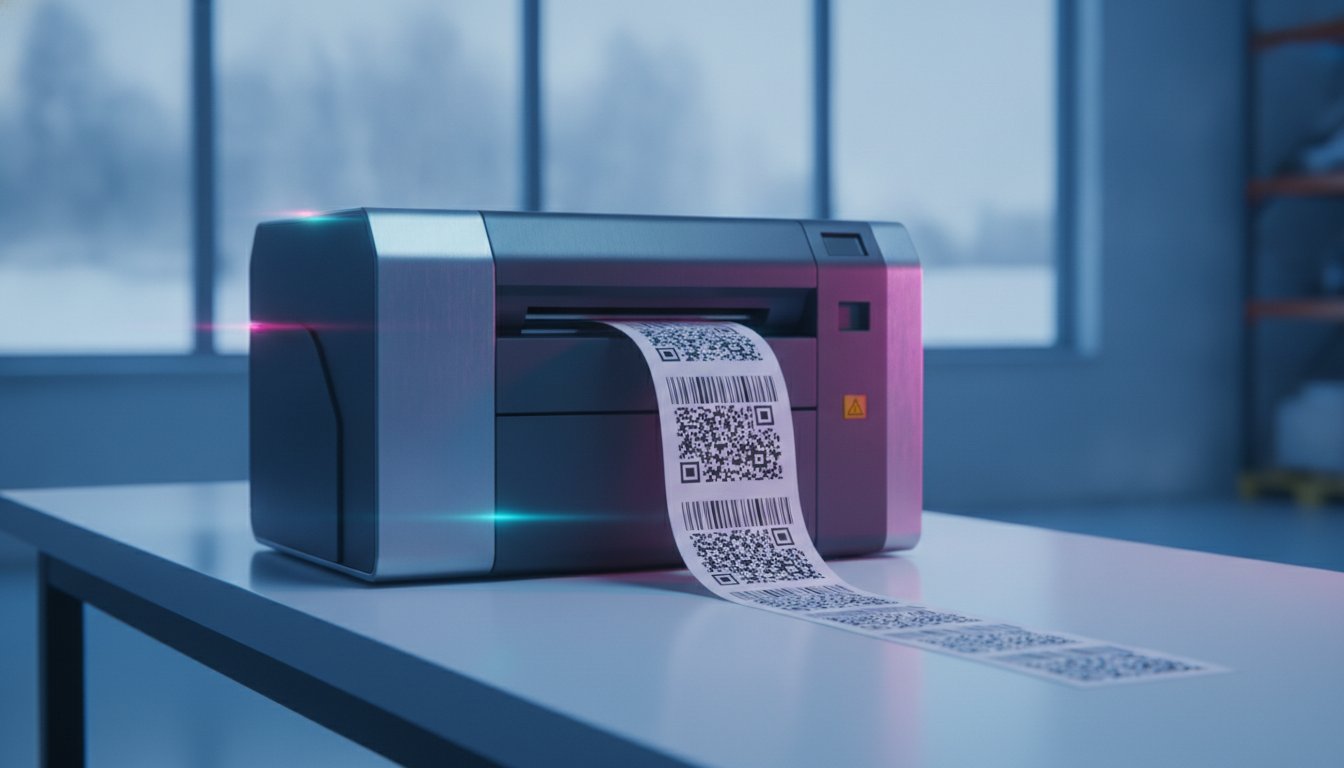
Did you know that the Canadian barcode printer market is projected to grow to over $523 million by 2033, yet many operations still lose thousands to label failure? It's a common frustration to see barcodes fade or peel in cold Canadian warehouse environments, leading to costly manual fallbacks and compliance fines. If you're looking for a high-performance thermal barcode printer Canada businesses can depend on, you likely want more than just a basic machine. You need a system that integrates seamlessly with your existing WMS and produces durable labels that survive the entire supply chain.
We recognize that rising consumable costs and software compatibility hurdles can quickly stall your productivity. This comparison guide helps you evaluate the latest thermal technologies and brands to find the most efficient solution for your operations. We'll examine the move toward 300 DPI standards for 2D barcodes, the impact of new 2026 IEC safety regulations, and how to select the right ribbon chemistry to lower your cost per label while ensuring 100% scan success.
Key Takeaways
- Identify the most cost-effective printing technology by comparing direct thermal for short-term logistics and thermal transfer for long-term asset tracking.
- Determine the correct hardware class for your facility by analyzing duty cycles for desktop and industrial printers to prevent operational downtime.
- Optimize your thermal barcode printer Canada operations by matching specialized ribbon chemistries to label materials for durability in cold warehouse conditions.
- Ensure regulatory compliance and seamless data integration by evaluating professional software platforms like BarTender and NiceLabel.
- Secure a reliable supply chain for consumables and technical support by partnering with a national distributor that ships across Canada.
Direct Thermal vs. Thermal Transfer: Choosing Your Technology
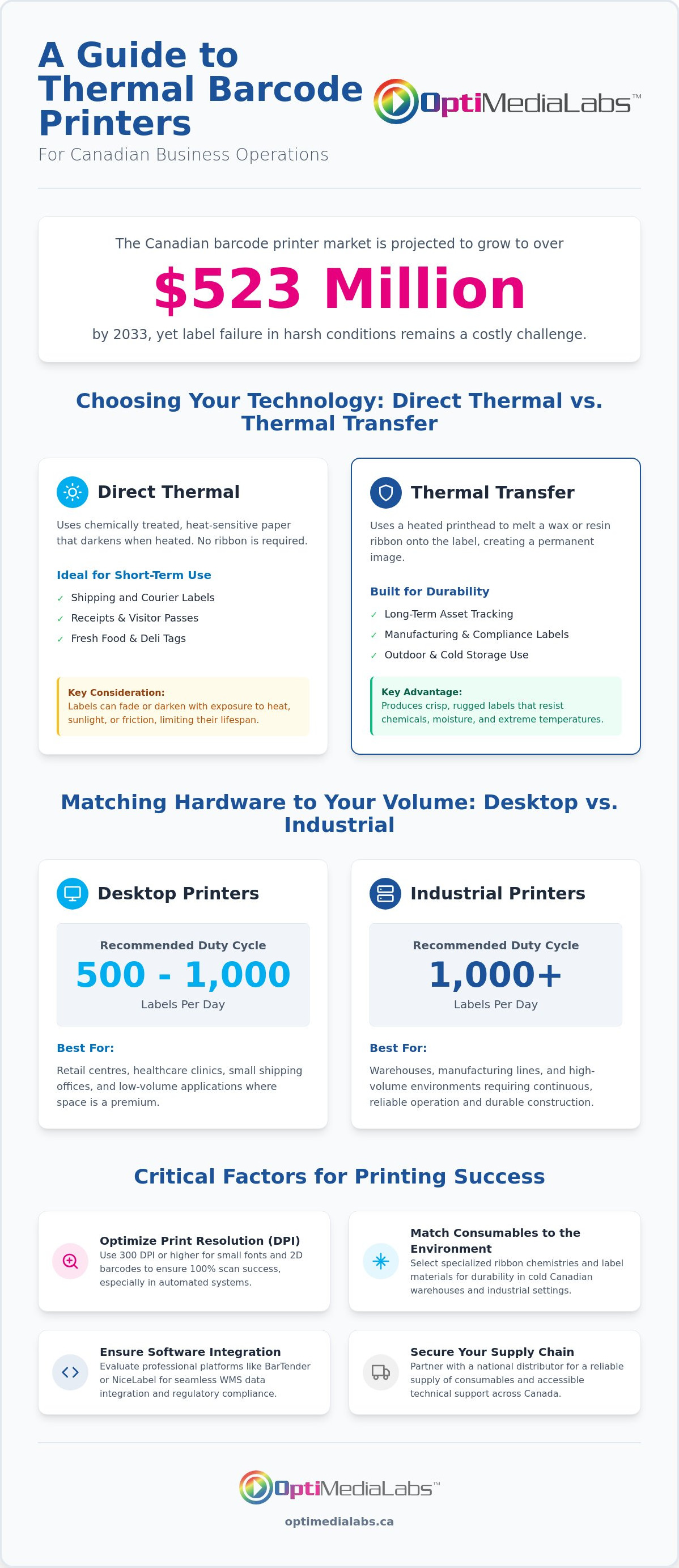
Selecting a thermal barcode printer Canada businesses can rely on starts with understanding the two primary thermal printing technologies. Both methods use heat to create an image, but the mechanics and longevity of the output differ significantly. Your choice directly impacts your total cost of ownership (TCO) and label legibility throughout the supply chain. While some competitors suggest one method is always superior, the reality depends on your specific application and environment.
The decision dictates your long-term operational consistency. Direct thermal is often preferred for its simplicity, while thermal transfer offers unmatched durability. Balancing the cost of ribbons against the price of specialized media is a critical step in your procurement strategy. If your labels only need to last for a few days, paying for ribbon durability is unnecessary. Conversely, using short-term labels for long-term assets leads to scan failures and costly re-labelling projects.
When to Use Direct Thermal Printers
Direct thermal printers utilize chemically treated, heat-sensitive media that darkens as it passes under the printhead. This process is highly efficient for high-turnover applications like courier labels, shipping manifests, and deli tags. Since there's no ribbon involved, you'll reduce mechanical maintenance and simplify your inventory management. It's a "set and forget" solution for fast-paced logistics. However, you must account for environmental sensitivity. Direct thermal labels are prone to fading or darkening when exposed to high heat, friction, or direct sunlight. If your warehouse has high UV exposure or your products sit in hot trailers, these barcodes may fail before they reach the customer.
The Advantages of Thermal Transfer Systems
For operations requiring permanent barcodes, thermal transfer systems are the gold standard. This technology uses a heated printhead to melt a wax or resin ribbon onto the label surface. It creates a crisp, high-contrast image that resists chemicals, moisture, and extreme temperatures. Manufacturing facilities and outdoor storage yards require this level of durability to ensure barcodes remain readable for years. You also gain the ability to print on a wider variety of materials, including durable synthetics like polyester. While you'll need to manage ribbon stock, the result is a rugged label that survives the harshest Canadian winters and industrial cleaning processes without peeling or smudging.
Desktop vs. Industrial: Comparing Performance and Duty Cycles
Choosing the right hardware class is a critical step in securing a thermal barcode printer Canada businesses can rely on for years. The most common mistake in procurement is ignoring duty cycles. A duty cycle represents the recommended daily print volume a machine can handle without mechanical fatigue or printhead overheating. If you deploy a desktop unit in a high-volume warehouse, you will likely face frequent downtime and premature component failure. Conversely, investing in an industrial beast for a small retail office is an unnecessary capital expense. Your goal is to match the hardware's physical build to your facility's output requirements.
As initiatives for Advanced Manufacturing in Canada drive more automation into the supply chain, the demand for precise, high-speed printing has never been higher. Modern systems must balance speed, measured in inches per second (IPS), with resolution, measured in dots per inch (DPI). While 203 DPI is standard for most shipping labels, 300 DPI or higher is essential for small-font barcodes and 2D DataMatrix codes. This ensures your labels remain scannable even when printed at high speeds on the production line.
Entry-Level Desktop Solutions
Compact desktop printers from brands like Seiko and GoDex are ideal for retail centres, healthcare clinics, and small shipping offices. These units prioritize space-saving designs without sacrificing modern connectivity options like Wi-Fi and Ethernet. While they are cost-effective, they typically have a lower internal media capacity. This means your team will spend more time changing label rolls compared to larger systems. They are perfect for duty cycles of 500 to 1,000 labels per day.
High-Volume Industrial Barcode Hardware
For 24/7 manufacturing floors and large distribution hubs, Zebra and Toshiba provide the rugged reliability needed for heavy-duty use. These machines feature reinforced steel frames and large internal compartments that house full-sized ribbon rolls. Many models also include internal rewinders, which automatically peel and take up the label backing as you print. If your operations require thousands of durable labels every shift, you should explore these industrial-grade options to ensure consistent performance under pressure. If you are unsure which duty cycle matches your facility's needs, speak with our technical team for a tailored recommendation based on your specific volume requirements.
Optimizing Consumables for the Canadian Environment
Operating a thermal barcode printer Canada wide involves unique environmental hurdles that standard office equipment never faces. Unheated warehouses in the Prairies or humid loading docks in the Maritimes demand more than just basic supplies. If your label adhesive fails to realize a secure bond at -20°C, your entire logistics chain breaks. Beyond adhesion, the chemistry of your ribbons and labels determines whether your barcodes remain legible after months of abrasion and temperature fluctuations. Matching these consumables to your specific Canadian facility is the most effective way to prevent scan failures and reduce long-term costs.
Using the correct ribbon chemistry also protects your hardware investment. When you use a high-quality ribbon matched to your media, the printhead requires less heat to transfer the image. This prevents premature "burn out" of the printhead, a component that often costs hundreds of dollars to replace. For those utilizing modern Toshiba systems, the "Near Edge" advantage allows for high-speed printing by utilizing specialized ribbons that release ink almost instantly. This technology is a game-changer for high-throughput environments where speed and crispness are equally vital.
Ribbon Types and Application Matching
Selecting the right ribbon is a balance between cost and durability. Wax ribbons are the most economical choice, perfect for standard paper labels used in short-term shipping. However, for labels exposed to moisture or light chemicals, a wax-resin blend is necessary to prevent smudging. Resin ribbons represent the premium tier, essential for synthetic labels that must survive harsh industrial cleaning or outdoor storage. You can explore various widths and formulations through our selection of Zebra ribbons to find the exact match for your hardware and application.
Label Media Selection for Durability
The choice between paper and polypropylene labels often comes down to the final destination of your product. While paper is sufficient for indoor retail, polypropylene is required for items stored in damp or cold environments. Canadian logistics providers must also account for "all-temperature" adhesives that don't lose their tack when the mercury drops. We always recommend testing your specific ribbon and label combination before placing a bulk order. Small variations in surface texture or adhesive chemistry can significantly impact performance in the field. Ensuring your media can withstand the humidity swings of a Canadian summer and the dry cold of winter is a prerequisite for supply chain success.
Software Integration and Barcode Compliance
A high-performance thermal barcode printer Canada deployment isn't just about hardware. The software layer manages the logic, data connectivity, and compliance formatting that make your labels functional. For Canadian manufacturers and retailers, manual data entry is no longer a viable strategy. Modern systems realize automation by pulling variable data directly from Excel spreadsheets or SQL databases. This eliminates human error and ensures that every label matches your ERP or WMS records in real time. Without robust software, even the most expensive printer is just a standalone tool rather than an integrated business solution.
Compliance is the second half of the equation. As of March 31, 2026, Amazon no longer permits resellers to use manufacturer barcodes for pooled inventory. Every unit must now have a unique Amazon Barcode (FNSKU). Major retailers like Walmart have also tightened their legibility standards, requiring the human-readable portion of a barcode to be printed in at least a 10-point Sans Serif font. Your software must be capable of generating GS1-compliant codes while maintaining a 6.4mm "Quiet Zone" on both sides. Failure to meet these specific layout requirements can result in rejected shipments and significant compliance fines.
Professional Label Design Software
BarTender by Seagull Scientific remains the industry standard for facilities handling complex variable data and intricate serialization. It excels in environments where labels change based on specific production runs or batch numbers. Alternatively, NiceLabel offers powerful features for multi-user environments and cloud-based management. This is particularly useful if you're looking to centralize label templates across multiple distribution centres in different provinces. Both platforms support the GS1 Sunrise 2027 initiative, which is driving the shift toward 2D formats like QR codes and DataMatrix.
Ensuring Barcode Scannability and Compliance
Organizing your label layout requires technical precision. To prevent "thermal bleeding" on high-density codes, your software should be configured to work with a printer that supports at least 300 DPI. Software also plays a vital role in meeting GHS standards for chemical safety, ensuring that pictograms and signal words are placed correctly for hazardous material transport. It also manages the unique serialization required for tracking assets through the entire supply chain. If you need assistance selecting the right software package for your specific workflow, contact our software specialists to discuss your integration requirements.
Procurement Strategy: Sourcing Your System in Canada
Choosing a procurement partner is as vital as choosing the hardware itself. For a thermal barcode printer Canada operations can scale with, you need a partner that understands both the technical specifications and the local logistics landscape. Sourcing from a domestic distributor eliminates the risk of cross-border customs delays and unexpected brokerage fees. It also ensures you have a consistent supply of thermal transfer label printers and consumables that are compatible with your specific model. When hardware and software are sourced from a single expert, integration hurdles are cleared before the equipment even reaches your floor.
Evaluating warranty and technical support is a non-negotiable part of your strategy. Professional-grade printers are long-term assets. You need access to specialists who can troubleshoot software handshake issues or recommend a specific ribbon for a new synthetic substrate. Strategic inventory management also becomes simpler when your distributor maintains deep stock levels of consumables across the country. This prevents the "out of stock" scenarios that can halt a manufacturing line or a shipping department during peak seasons. Reliability in the supply chain is the foundation of a successful labelling operation.
National Distribution Benefits
Working with a national distributor like OptiMediaLabs provides reliable shipping across all provinces, from British Columbia to Newfoundland. You gain access to specialized brands like GoDex and Seiko in one centralized location. We focus on providing both the hardware and the high-quality media required for professional reliability. This holistic approach means you aren't just buying a box; you're securing a complete, verified printing system. By keeping your supply chain within Canada, you also support faster turnaround times for critical replacement parts and specialized consumables.
Final Checklist for Your Barcode System
Before finalizing your purchase, run through this technical checklist to ensure your system meets your 2026 operational goals:
- Confirm Duty Cycles: Verify that the hardware can handle your peak daily label volume without overheating or mechanical failure.
- Software Verification: Ensure your chosen barcode software is compatible with your current ERP or WMS.
- Media Testing: Always order a sample roll of labels to test adhesion in your specific warehouse temperature and humidity conditions.
- Connectivity: Check that your facility's Wi-Fi or Ethernet infrastructure supports the printer's communication protocols for seamless data transfer.
By following this procurement guide, you realize a more efficient, resilient, and cost-effective labelling operation. If you're ready to modernize your facility, request a technical consultation with our team to find the ideal hardware and consumable combination for your business.
Future-Proof Your Canadian Labelling Operations
Securing the right thermal barcode printer Canada businesses require means looking beyond the hardware. You've seen how matching your duty cycle to industrial or desktop models prevents mechanical fatigue and costly downtime. You also understand that the synergy between ribbon chemistry and specialized software ensures compliance with evolving GS1 and Amazon FNSKU standards. Selecting a system that withstands the unique humidity and temperature swings of our climate is essential for long-term supply chain success. Every label must survive the journey from the warehouse floor to the final customer.
OptiMediaLabs serves as an authorized Canadian distributor for Zebra, GoDex, and Seiko. We provide national shipping on all hardware and ribbon orders, ensuring your facility remains stocked and operational. Our team offers specialized expertise in industrial labelling software to help you realize full automation and database integration. Don't let outdated equipment or incompatible supplies slow your growth. Browse our complete range of thermal barcode printers and supplies today to find a solution tailored to your facility. We're ready to help you optimize your procurement strategy and improve your operational efficiency.
Frequently Asked Questions
What is the difference between direct thermal and thermal transfer printers?
Direct thermal printing uses heat-sensitive media that darkens when heated, while thermal transfer printing utilizes a heated printhead to melt a ribbon onto the label. Direct thermal is best for short-term shipping labels. Thermal transfer provides the durability required for asset tracking and long-term storage in varied environments.
Do I need a ribbon for my thermal barcode printer?
You only require a ribbon if you're using a thermal transfer printer. Direct thermal printers are ribbon-free and use specialized chemically treated paper. While direct thermal saves on ribbon costs, thermal transfer ribbons protect the printhead from friction and ensure the barcode doesn't fade over time.
Which thermal printer brand is most reliable for industrial use in Canada?
Zebra and Toshiba are the most reliable brands for heavy-duty industrial applications. A high-quality thermal barcode printer Canada businesses deploy in manufacturing must feature a metal frame and high media capacity. These brands offer the rugged construction needed for 24/7 production environments across the country.
Can I use any thermal label with my Zebra or GoDex printer?
Most Zebra and GoDex printers accept standard-sized labels, but you must match the media type to your specific printing technology. Ensure the roll's inner core size and outer diameter fit your hardware specifications. Using verified media prevents adhesive buildup and extends the life of your printhead.
How do I choose between wax and resin ribbons for my barcodes?
Choose wax ribbons for economical paper labelling and resin ribbons for maximum chemical and heat resistance on synthetic materials. Wax-resin blends offer a versatile middle ground for labels that need moderate smudge resistance. Your choice should always align with the final environment of the labelled product.
Is BarTender or NiceLabel better for a Canadian manufacturing business?
BarTender is often preferred for complex serialization and variable data, while NiceLabel excels in cloud-based management for multi-provincial operations. Both platforms ensure your facility meets GS1 and retail compliance standards. Selecting the right one depends on your IT infrastructure and the total number of users.
How long do thermal transfer labels last compared to direct thermal?
Thermal transfer labels can last for years under harsh conditions, whereas direct thermal labels typically last six to nine months. Direct thermal media is sensitive to UV light and heat, which causes the image to fade or the background to darken. Use thermal transfer for any application requiring archival quality.
What resolution (DPI) do I need for my barcode labels?
A resolution of 203 DPI is sufficient for standard shipping labels, but 300 DPI is the 2026 standard for small fonts and 2D barcodes. Higher resolution prevents "thermal bleeding" and ensures that high-density codes remain scannable. For labels with 10-point fonts or smaller, 300 DPI is a technical necessity.