
TR4085plus Thermal Transfer Ribbon: The Canadian Professional’s Guide
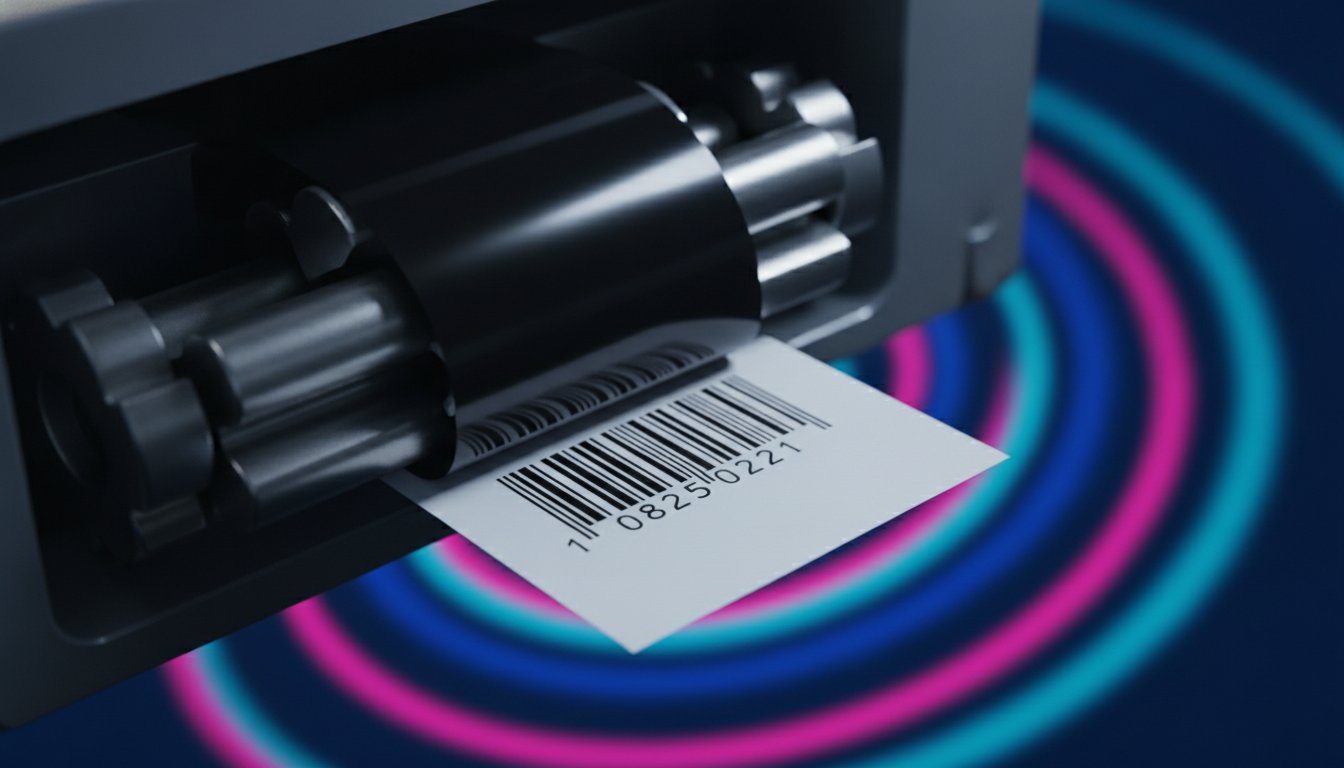
North America currently commands 43 percent of the global thermal printing market, yet high volume does not always guarantee high quality on the production floor. You likely recognize the immediate frustration of a ribbon snapping during a high-speed print run or the costly delays caused by poor barcode scan rates. Choosing the 4085plus resin-enhanced wax ribbon addresses these technical failures, which often stem from low edge definition or static buildup that can permanently damage expensive printheads. It's a common challenge for logistics managers who require total reliability.
This guide explores why this specific ribbon has become the trusted industry standard for Canadian professionals. You will discover how the right configuration delivers high-clarity barcodes while protecting your hardware from premature wear. We will break down the technical specifications and help you identify the best options to reduce downtime and maintain a stable, efficient printing operation across your entire facility.
Key Takeaways
- Understand the technical composition of the 4085plus resin-enhanced wax ribbon and why its carnauba wax concentration is the industry benchmark for printhead protection.
- Learn how proprietary backcoat technology dissipates static and reduces friction to prevent ribbon snapping and hardware damage.
- Identify compatible substrates, from standard coated paper to synthetic materials like polypropylene, to help you streamline label inventory.
- Master the configuration process by matching ribbon widths and core sizes to your printer specifications to minimize mechanical wear.
- Realize the logistical benefits of sourcing consumables from a national Canadian distributor to eliminate customs delays and stabilize your supply chain.
What is the 4085plus Thermal Transfer Ribbon?
The 4085plus is a resin-enhanced wax ribbon engineered for high-performance industrial environments. It has served as the global benchmark for thermal transfer printing since its introduction in 2000. This ribbon is specifically designed for flat-head thermal transfer printers, offering a reliable solution for businesses that prioritize speed and clarity. It functions as the primary consumable for many of the world's leading thermal transfer label printers, providing a balance of affordability and technical precision. In high-volume settings, it acts as a stabilizing component that ensures barcode integrity remains high throughout the manufacturing process.
The Evolution of Wax Ribbon Technology
Standard wax ribbons are often the most economical choice, but they frequently lack the durability required for modern supply chains. Resin-enhanced formulations bridge the gap between basic wax and premium wax-resin products. By incorporating a specific percentage of resin into the ink layer, this ribbon provides superior scratch and smudge resistance compared to traditional wax options. This technological shift allows businesses to maintain high print quality without the higher cost of full wax-resin blends. Consistency is vital for multi-site operations across the country. Whether you are printing in a maritime distribution centre or a western manufacturing hub, using a standardized ribbon ensures uniform results. It eliminates the variability that often plagues cheaper, generic consumables, allowing for a professional output across your entire organization. This standardization simplifies the training process for floor staff and ensures that labels printed at one facility will scan perfectly at any other location in the national network.
Understanding the "Plus" in 4085plus
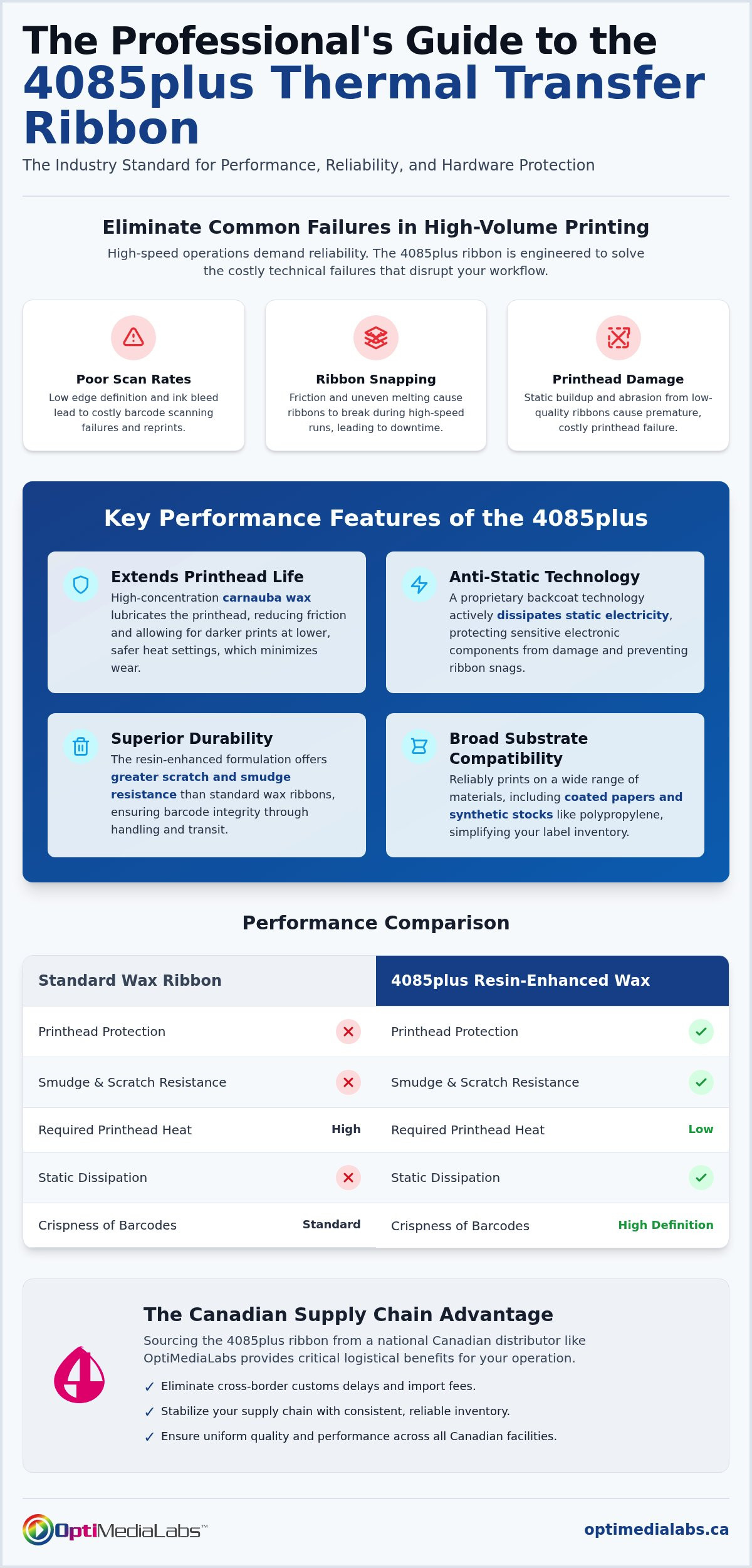
The "plus" designation signifies a measurable leap in performance over standard wax products. It refers to the ribbon's ability to produce high-density images at lower heat settings. This characteristic protects your hardware by reducing the thermal strain on the printhead, extending the life of your equipment. The ink layer is engineered for quick, uniform melting, which allows for crisp edge definition. This precision is essential for 2D barcode scanning, where even minor ink bleed can result in a failed scan. High-speed industrial lines benefit from this stability, as it prevents the ribbon from snapping or melting unevenly during rapid throughput. By using 4085plus, operators realize better scan rates and fewer re-prints, which directly impacts the efficiency of the packaging line. It’s a practical choice for professionals who need to organize complex inventory systems with high-clarity labels. This formulation is particularly effective for high-volume shipping labels that must remain legible after significant handling.
Key Performance Features of TR4085plus Wax Ribbon
The 4085plus is engineered to solve the most common points of failure in industrial labeling. While standard ribbons focus solely on ink transfer, this resin-enhanced wax formulation prioritizes the health of your hardware and the integrity of your data. Reliability in high-speed environments depends on a ribbon's ability to perform under thermal stress without compromising the printhead or the label's legibility.
Carnauba Wax and Printhead Longevity
A high concentration of carnauba wax distinguishes the 4085plus from economical alternatives. This natural wax acts as a high-performance lubricant, creating a smooth interface between the thermal printhead and the label substrate. Lower-cost ribbons often rely on synthetic fillers that increase friction, leading to premature printhead failure and "burn-in" residues. The carnauba content ensures dark, crisp transfers at lower heat settings, which directly extends the operational life of your equipment. By reducing the energy required for a successful transfer, you minimize the thermal expansion and contraction that eventually cracks delicate printhead elements. This efficiency is a practical necessity for businesses looking to protect their long-term hardware investments.
Durability extends beyond the printer. Labels moving through Canadian supply chains face significant abrasion during transit, sorting, and storage. Maintaining GS1 barcode standards requires precise edge definition, which is only possible when the ribbon resists smudging during physical handling. The resin enhancement within the wax provides an extra layer of protection, ensuring barcodes remain scannable even after being subjected to the vibrations of long-haul trucking or warehouse sorting systems. If you need help determining if your current hardware is compatible with these high-performance ribbons, you can speak with our technical team for a detailed assessment.
Static Dissipation and Operational Safety
High-speed printing naturally generates friction, which creates static electricity. Without a specialized backcoat, this static builds up and discharges into the printer's sensitive electronics, often causing motherboard failure or ribbon snapping. The 4085plus features a proprietary backcoat technology designed to dissipate static and reduce drag. This coating allows the ribbon to glide across the printhead, preventing the "stuttering" effect that ruins print quality at high speeds. Static dissipation is a critical safety feature for high-volume Canadian warehouses because it prevents the accumulation of electrical charges that can lead to catastrophic printer failure or ignite fine particulates in the air. Protecting your electronics from these invisible discharges ensures consistent uptime and reduces the need for emergency repairs.
Substrate Compatibility and Industrial Applications
The 4085plus excels because of its broad mechanical adhesion across various surfaces. It handles synthetic films and treated stocks with equal precision, making it a versatile asset for diverse production lines. This adaptability ensures that your printing operations remain consistent even when you switch between different label materials throughout the day. In industrial settings, having a ribbon that bridges the gap between paper and plastic substrates reduces the need for frequent inventory changeovers and simplifies operator training.
Optimal Label Materials for 4085plus
This ribbon is the preferred choice for flood-coated labels where ink needs to bond securely with a pre-printed surface. It provides excellent coverage on semi-gloss and high-gloss paper stocks, which are common in retail and distribution centres. While some operations might evaluate blank inkjet labels in Canada for short-run colour needs, the 4085plus remains the dominant choice for high-volume thermal transfer applications due to its cost-per-label efficiency and high-speed performance. It maintains high opacity even on dark or heavily patterned backgrounds, ensuring that scanners can distinguish the barcode from the substrate.
Substrate Compatibility and Industrial Applications are often dictated by the physical demands of the national supply chain. For synthetic substrates like polypropylene or polyethylene, this resin-enhanced wax provides enough durability to prevent smudging without requiring the extreme heat settings of a full resin ribbon. It bridges the gap for labels that need more protection than basic wax but don't face harsh chemical exposure, allowing for a more economical consumables budget. This versatility is particularly useful for outdoor storage where labels might be exposed to moisture and varying humidity levels during transit.
Canadian Industry Use Cases
In logistics, labels often travel thousands of kilometres through varying environments. The 4085plus ensures that barcodes remain readable from the point of origin to the final national distribution hub. Food and beverage producers rely on its smudge resistance in refrigerated environments where condensation can often degrade lower-quality wax. It maintains its integrity on frozen food packaging, ensuring that vital tracking information isn't lost during the cold chain process. This reliability is essential for maintaining food safety and traceability across wide geographic regions.
Pharmaceutical packaging requires extremely small fonts for dosage instructions and lot numbers. The high edge definition of this ribbon ensures these characters stay sharp and legible to the naked eye and scanners alike. It also supports GHS compliance for chemical labelling in industrial settings. While full resin is often mandatory for extreme chemical baths, the 4085plus provides sufficient resistance for secondary chemical labels and safety data sheets. This versatility allows businesses to standardize their ribbon inventory across multiple departments, simplifying procurement for high-volume facilities nationwide.
Selecting the Correct 4085plus Configuration
Selecting the right 4085plus configuration is as critical as the ribbon quality itself. You must match the physical specifications of your hardware to avoid operational delays and mechanical frustration. Procurement managers often overlook the technical variables of roll winding and core dimensions, but these factors determine whether a ribbon will function in your specific printer model. Standardizing your ribbon configurations across your facility can simplify inventory management and reduce the risk of operator error during high-speed production runs.
Printer Hardware Compatibility
Identify your printer's ribbon path before placing an order. Thermal transfer ribbons are manufactured in two primary formats: Coated Side Out (CSO) and Coated Side In (CSI). Most Zebra label printers utilize the CSO format, where the ink faces away from the core. Conversely, other industrial brands like Sato or certain Toshiba models may require CSI ribbons. Using the incorrect winding will cause the ink to transfer directly onto the printhead rather than the label substrate. This mistake leads to immediate downtime and necessitates a thorough cleaning of the printhead to remove the melted residue.
Core size is another essential factor for compatibility. Industrial-grade printers typically use a 1 inch (25.4mm) core to accommodate larger roll diameters. If you are operating smaller desktop units, you will likely require a 0.5 inch (12.7mm) core. You should also verify the maximum roll length your printer can support. While many industrial machines easily handle 450-metre rolls, smaller units might be capped at 74 or 300 metres. Ensuring the ribbon fits comfortably within the enclosure prevents the roll from rubbing against the printer casing, which can cause uneven tension and ribbon snapping.
Sizing Guidelines for Efficiency
Ribbon width should always be slightly wider than the label liner. This prevents the edges of the label from making direct contact with the printhead. Without this extra width, the abrasive edges of the paper liner can cause permanent scoring on the printhead surface, leading to "dead pixels" in your barcodes. In the Canadian industrial sector, the 110mm (4.33 inch) width is the most common standard for 4 inch labels. This sizing ensures the printhead is fully protected by the carnauba wax lubricant found in the 4085plus formulation.
Maximizing uptime in high-volume environments often involves sourcing jumbo rolls. These longer rolls reduce the frequency of changeovers, which is a major bottleneck in 24 hour operations. Many modern industrial label printers are designed to handle these high-capacity consumables to maintain continuous throughput. If you are unsure which configuration matches your specific printer model, you should contact our technical support team to confirm the exact specifications for your hardware.
Sourcing 4085plus Ribbons from OptiMediaLabs Canada
OptiMediaLabs Canada serves as a specialized national distributor for DNP 4085plus ribbons, providing a stable supply chain for businesses operating across the country. Sourcing these consumables within the domestic market eliminates the unpredictable delays and additional costs associated with international customs. When you partner with a Canadian supplier, you avoid cross-border duties and ensure that your production line remains active without waiting for shipments held at the border. We specialize in high-volume production consumables, ensuring that large-scale procurement is handled with technical precision and logistical speed.
Our expertise extends beyond the ribbon itself. To achieve the best results, your hardware and media must work in harmony with professional barcode labeling software. By aligning high-quality 4085plus ribbons with the right design tools, you ensure every label meets industry standards for clarity. This integrated approach simplifies your operations. OptiMediaLabs Canada acts as a single vendor for your printers, ribbons, and software needs, creating a frictionless procurement experience that reduces administrative overhead.
National Distribution and Reliability
We maintain a robust inventory of critical thermal transfer supplies to support domestic manufacturers and logistics providers. As an authorized dealer for major industrial hardware brands, we offer a level of technical insight that goes beyond simple distribution. If you manage multi-site operations, we coordinate deliveries to ensure consistency across all your facilities. This reliability is essential for maintaining uptime in fast-paced industrial environments. You don't have to navigate multiple vendors for consumables and hardware. We provide a streamlined path to obtaining all necessary resources. Our technical support team is available to assist with hardware integration, ensuring your ribbons perform perfectly on every printer in your fleet, regardless of its location.
Next Steps for Your Printing Operations
Optimizing your printing environment begins with testing on your specific substrates. You can request a sample to evaluate performance and ensure the ink bonds correctly for your specific application. Our experts are also available to consult on your printer settings, as adjusting darkness and speed can significantly improve printhead life. Once you're ready to secure your supply, you can view our full range of thermal transfer ribbons to find the exact configuration for your industrial hardware. Consulting with a specialist ensures that you select the right wax-resin balance for your specific environmental conditions.
Optimizing Your Canadian Labeling Operations
Standardizing your production facility with the 4085plus resin-enhanced wax ribbon is a practical step toward protecting your hardware and ensuring barcode scan reliability. By matching the correct configuration to your specific industrial printers, you reduce the risk of mechanical wear and costly downtime. This ribbon provides the necessary durability for the diverse Canadian supply chain while maintaining the high edge definition required for strict compliance standards. It's an efficient way to stabilize your labeling costs without sacrificing print quality.
As a national Canadian distributor and an authorized partner for major industrial brands like Zebra and Toshiba, OptiMediaLabs provides specialized support tailored to your production needs. We help you navigate complex technical specifications to ensure your consumables and hardware work in perfect harmony across every department. Whether you are managing a single site or a national network of warehouses, our team is available to facilitate your procurement process.
Take the next step in refining your printing workflow. Contact our technical team today to request a sample for testing or to discuss your high-volume procurement requirements. We look forward to supporting your long-term operational success and ensuring your facility remains at peak performance.
Frequently Asked Questions
Is the 4085plus ribbon compatible with Zebra printers?
Yes, it's highly compatible. Zebra printers typically use Coated Side Out (CSO) ribbons on 1 inch cores. The 4085plus is available in this configuration, making it a standard choice for Zebra's industrial models. It provides the dark, crisp barcodes required for national logistics. Always verify your specific model's roll length capacity, such as 300m or 450m, before ordering to ensure a proper fit within the printer enclosure.
What is the difference between TR4085plus and a standard resin ribbon?
This ribbon is a resin-enhanced wax formulation, not a full resin product. Standard resin ribbons are designed for extreme chemical and heat resistance on synthetic stocks. In contrast, the resin-enhanced wax offers better durability than pure wax but at a lower price point than full resin. It excels on paper substrates and some synthetics where harsh chemical exposure isn't a primary concern during cross-country transport.
Can I use 4085plus for GHS compliant chemical labels?
You can use it for certain GHS applications, but with specific limitations. It provides sufficient smudge and scratch resistance for secondary chemical labels and safety data sheets. However, if the labels face direct immersion in aggressive solvents or extreme outdoor weathering, a full resin ribbon is usually required. This ribbon is a practical, cost-effective solution for GHS labels that remain in controlled industrial or warehouse environments across Canada.
How do I know if I need ink-in or ink-out 4085plus ribbons?
Check your printer's technical manual or perform a simple tape test to identify the required winding. Apply a piece of adhesive tape to the outer layer of the ribbon roll. If the ink pulls off, you need a Coated Side Out (CSO) or "ink-out" ribbon. Most Zebra and Datamax printers use CSO. If the ink is on the inner side, it's Coated Side In (CSI) for Sato and Toshiba models.
Does the 4085plus ribbon work on synthetic labels like polypropylene?
The 4085plus performs well on many synthetic labels, including polypropylene and polyethylene. While standard wax ribbons often fail to bond with these non-porous surfaces, the resin enhancement provides the necessary adhesion. This makes it a versatile choice for Canadian businesses that need a single ribbon type for both high-quality paper labels and more durable synthetic packaging used in refrigerated or moist environments where standard wax would smudge.
What happens if I use a ribbon that is narrower than my label?
Using a narrow ribbon exposes the edges of your label liner to the printhead. This direct contact causes abrasive wear and friction, which leads to permanent physical damage or "dead pixels" on the printhead surface. To prevent this hardware failure, always select a ribbon width that is slightly wider than the label liner. This ensures the carnauba wax lubricant protects the entire width of the expensive thermal hardware.
Why is my 4085plus ribbon snapping during high-speed printing?
Ribbon snapping is usually caused by excessive printhead heat or improper tension settings. If the darkness setting is too high, the ribbon can melt and tear. Ensure your printer is configured for the lower energy requirements of this resin-enhanced wax. Additionally, verify that your printer's back-feed or take-up tension isn't too tight. The proprietary backcoat is designed to reduce this friction and prevent snapping during high-speed runs.
How does the backcoat on the 4085plus protect my printhead?
The proprietary backcoat acts as a thermal barrier and lubricant between the printhead and the ribbon film. It is specifically engineered to dissipate static electricity, which prevents electrical discharges from damaging sensitive electronic components. By reducing friction and drag, the backcoat allows the ribbon to glide smoothly across the printhead. This protection minimizes mechanical wear and prevents the buildup of residues that can cause poor print quality over time.