
Waterproof Inkjet Labels: The Professional Guide to Durable In-House Printing
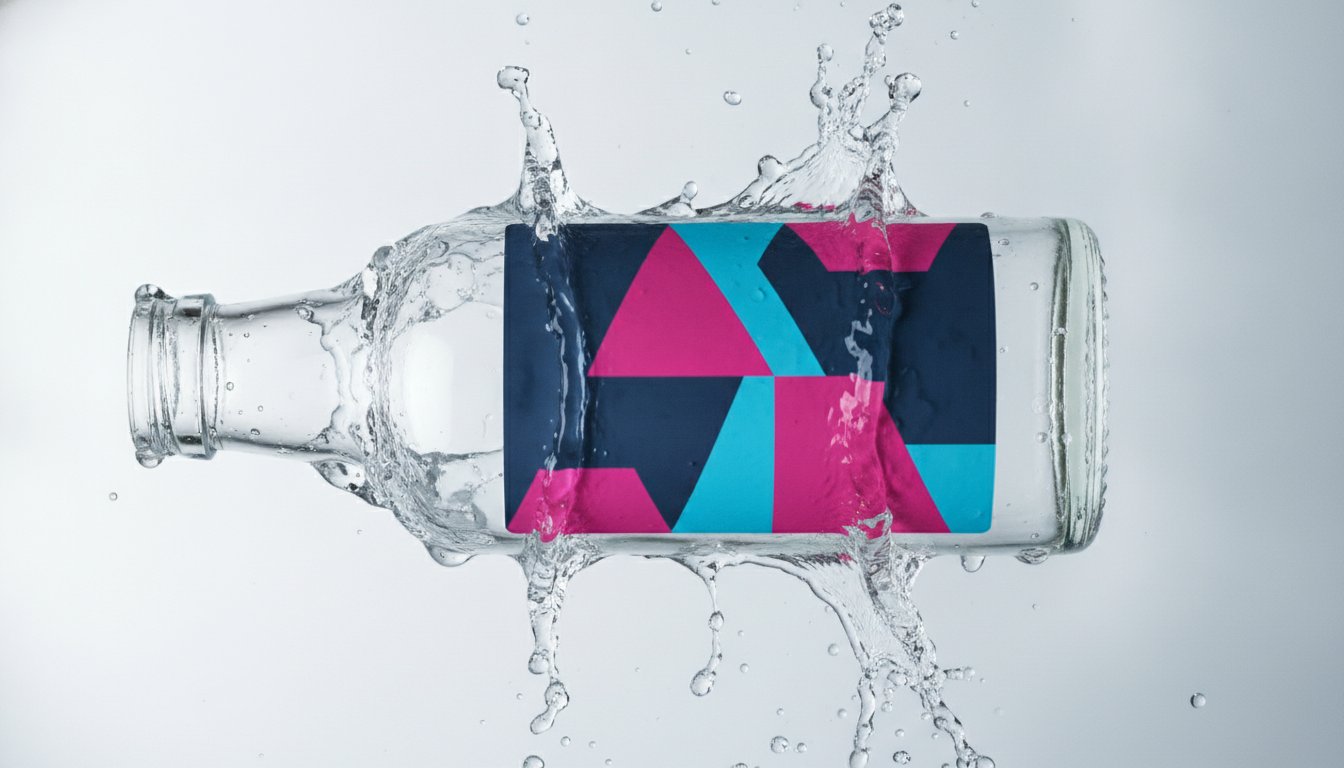
Can your product branding survive a 48-hour submersion in an ice bucket without the ink running or the adhesive peeling away? Most Canadian producers realize that standard paper labels fail the moment they encounter moisture or high-humidity storage centres. It's frustrating to see a professional design smudge under wet hands or watch a label slide off a chilled bottle before it even reaches the customer. You need a solution that maintains its integrity from the production line to the final point of use.
This professional guide helps you master the technical requirements for waterproof inkjet labels to ensure your branding remains pristine in even the harshest environments. We'll show you how to find the perfect label-ink combination that survives total submersion and reduces waste by choosing the right material the first time. We will examine the critical partnership between pigment-based inks and synthetic substrates like BOPP and polyester to help you achieve industrial-grade durability for your in-house printing operations. By understanding these technical specifications, you can maintain professional branding throughout your product's entire lifecycle.
Key Takeaways
- Identify the technical differences between water-resistant and truly waterproof media to ensure your branding survives total submersion.
- Learn why pigment-based inks are the industry standard for producing professional waterproof inkjet labels that won't smudge or run.
- Compare the durability profiles of BOPP, vinyl, and polyester to select the most cost-effective material for your specific product environment.
- Discover how to maintain regulatory compliance and aesthetic quality for goods stored in high-humidity centres or refrigerated displays.
- Evaluate professional hardware solutions from Afinia and Epson to scale your in-house printing from basic sheets to high-speed rolls.
Defining Waterproof Inkjet Labels: Technical Standards and Expectations
Achieving professional results with waterproof inkjet labels requires more than just high-quality ink. It demands a specific chemical interaction between the printer's output and the label's surface. Most standard labels rely on simple absorption, but waterproof media uses a specialized waterfast top-coating. This coating acts as a microscopic trap, locking pigment particles into a layer that resists moisture migration. While thermal transfer was once the only choice for durable industrial labels, modern inkjet systems now provide comparable moisture resistance with the added benefit of high-resolution, full-colour branding.
Testing these labels involves more than a quick splash. Professional-grade materials must survive condensation cycles in cold storage and prolonged submersion in ice buckets. If your product sits in a refrigerated display or a bathroom vanity, the label must maintain its structural integrity and visual clarity. It shouldn't bleed or lift at the edges even after 48 hours of saturation. Understanding these benchmarks helps you select media that protects your brand's reputation in the hands of the consumer.
Waterproof vs. Weatherproof: What Your Business Needs
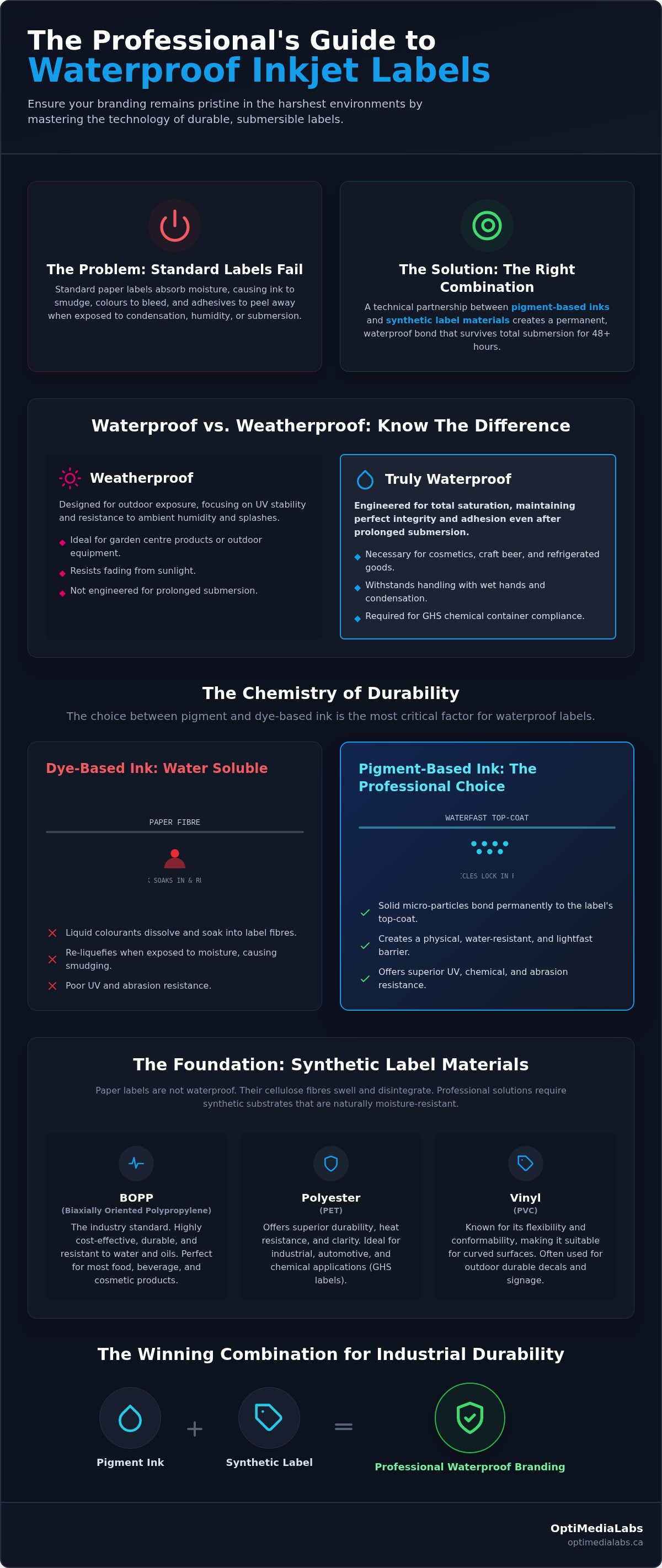
Weatherproof labels are designed for outdoor exposure, focusing on UV stability and resistance to ambient humidity. They're ideal for garden centre products or outdoor equipment. Truly waterproof labels are engineered for total saturation. You need this level of protection for cosmetics, craft beer, or chemical containers that require GHS compliance. Identifying your specific environment helps you avoid choosing a material that fails in the field. If your product will be submerged or handled with wet hands, waterproof is the only reliable standard.
The Role of Synthetic Substrates
Paper labels can't be truly waterproof. Even with a heavy varnish, the underlying cellulose fibres eventually absorb moisture and swell. This leads to flagging, where the adhesive fails at the edges and the label peels away. Professional solutions rely on synthetic substrates like BOPP (Biaxially Oriented Polypropylene) or Polyester. These materials are naturally moisture-resistant and provide the necessary stability for long-term exposure. When you utilize Afinia labels or Epson labels, these synthetics use advanced top-coats to ensure permanent ink adhesion. This partnership between the substrate and the coating ensures that your branding remains legible and professional regardless of the environment.
The Chemistry of Durability: Pigment Ink vs. Dye Ink
Understanding the molecular difference between ink types is vital for long-term branding success. Dye-based inks use liquid colourants that soak deep into material fibres. While they offer high vibrancy and a wide colour gamut, they remain water-soluble. If moisture touches a dye-based label, the ink re-liquefies and runs. In contrast, pigment ink consists of tiny solid particles suspended in a carrier fluid. These particles sit on top of the label surface and bond with the specialized top-coat found on professional waterproof inkjet labels. This creates a permanent, physical barrier that resists environmental interference.
The "Smudge Test" reveals the practical impact of this chemistry. When a label is printed with pigment ink, the carrier fluid evaporates or is absorbed by the coating, leaving the solid pigment particles locked in place. This results in nearly instantaneous drying times and high abrasion resistance. For Canadian businesses shipping products in varied climates, this durability ensures that labels won't smudge during packing or transit. Pigment-based systems provide the stability required for products that face frequent handling or heavy condensation.
Why Pigment Ink Wins in High-Moisture Environments
Pigment-based systems are the gold standard for industrial and retail durability. Pigment ink uses microscopic solid particles that bond to the surface to create a resilient, lightfast barrier against environmental degradation. This structural advantage provides superior UV resistance, which prevents your branding from fading when exposed to sunlight in shop windows or outdoor displays. It also offers exceptional chemical stability. Whether your labels encounter essential oils, water, or mild solvents, the solid particles remain anchored to the substrate. This prevents the "bleeding" effect often seen with lower-quality desktop printing solutions.
Hardware Compatibility: Matching Ink to Media
Professional hardware is engineered to optimize these chemical reactions. Utilizing Epson ink cartridges with specialized synthetic rolls ensures that the ink and the media work in unison. These cartridges contain precise pigment formulations that match the surface tension of the label's top-coat. Similarly, Afinia ink cartridges are formulated for high-speed output, allowing for rapid production without sacrificing waterproof integrity. Using third-party inks in professional applications is a significant risk. Generic formulations often lack the specific binders needed to anchor the pigment to synthetic media, which can lead to ink flaking or total failure during submersion. If you're unsure which ink set fits your production requirements, consult with our technical experts to ensure total hardware compatibility.
Comparing Waterproof Label Materials: BOPP, Vinyl, and Polyester
Choosing the correct substrate is the final step in securing a professional finish. While pigment ink provides the necessary colour stability, the base material determines how the label handles physical stress. Waterproof inkjet labels are typically available in gloss or matte finishes, each offering different aesthetic and functional benefits. Gloss topcoats often provide a more vibrant, high-contrast look suitable for retail shelves. Matte finishes offer a sophisticated, non-reflective surface that remains legible under harsh industrial lighting. Both options utilize specialized coatings to lock in the ink, but the underlying material must match your product's lifecycle requirements.
BOPP: The Workhorse of the Beverage Industry
Biaxially Oriented Polypropylene (BOPP) is the most cost-effective solution for high-volume waterproof inkjet labels in the retail sector. Its resistance to moisture, oils, and mild solvents makes it ideal for the cosmetics and food sectors. If you produce essential oils or hand lotions, BOPP prevents the label from staining or peeling when exposed to fatty acids. It's also the standard for the beverage industry. These labels survive the condensation cycles common in refrigeration and the total submersion of ice buckets. You can utilize Afinia labels in white or clear formats to achieve specific branding goals. White BOPP provides a clean, opaque background for vibrant graphics, while clear BOPP allows the product's natural colour to show through for a premium "no-label" appearance.
Polyester and Vinyl for Industrial Compliance
Industrial applications often demand resistance to extreme temperatures and aggressive chemicals. Polyester (PET) is a high-performance synthetic that maintains its shape and legibility even in high-heat environments. It's exceptionally durable against scuffing and tearing, which is vital for products moving through national shipping and logistics networks. For Canadian businesses, PET is the primary choice for GHS-compliant chemical labeling. It ensures that safety warnings remain visible even if the container is exposed to its contents. Vinyl offers a similar level of durability but with added flexibility. This makes it the preferred material for curved surfaces or outdoor equipment that faces fluctuating temperatures. Selecting Epson labels for specialized industrial PET media provides the stability required for these demanding environments. By matching the material to the hazard level, you ensure your branding and compliance data stay intact from the warehouse to the end user.
Industry Use Cases: Waterproof Labeling for Canadian Brands
Canadian manufacturers face unique environmental and regulatory challenges that demand high-performance media. From the humid greenhouse conditions of a cannabis facility to the oily environment of a skincare laboratory, waterproof inkjet labels must perform under pressure. These industries require more than just moisture resistance; they need labels that maintain structural integrity when exposed to chemicals, fluctuating temperatures, and frequent handling. Choosing the right combination of ink and substrate ensures that your product remains compliant and visually appealing from the warehouse to the consumer's home.
Cosmetic and Health Product Labeling
For skincare and health brands, oil resistance is just as critical as water resistance. Essential oils, fatty acids, and alcohol-based sanitizers can quickly dissolve standard adhesives or cause ink to migrate if the substrate isn't properly top-coated. Your branding needs to survive daily use in the shower or on a bathroom vanity without peeling or smudging. We've detailed the specific hardware requirements for these applications in our guide on the Best Label Printer for Cosmetics Canada. Additionally, understanding how to choose and implement a label printer for health products in Canada helps you navigate the technical transition to durable in-house production.
Compliance Labeling for Cannabis and Chemicals
Compliance labeling requires permanent legibility to meet strict safety standards. Health Canada regulations for cannabis and GHS standards for hazardous chemicals demand that warning symbols, barcodes, and tracking data remain clear throughout the product's entire lifecycle. Failure to maintain these labels can lead to regulatory fines or safety risks. Our review of the Best Label Printer for Cannabis Products Canada highlights systems designed for these high-stakes environments. BS5609 certification is the benchmark for marine-grade waterproof labels, ensuring they remain adhered and legible even after three months of saltwater submersion. This level of durability is essential for any industrial product shipped via maritime routes or stored in harsh outdoor conditions.
In the food and beverage sector, labels must transition seamlessly from sub-zero freezer storage to the condensation-heavy environment of a dining table. This requires an adhesive that doesn't crystallize at low temperatures and a pigment ink set that won't bleed when touched by wet hands. If you need assistance matching your industry's specific compliance standards with the right hardware and media, contact our technical support team for a professional media consultation.
Implementing an In-House Waterproof Labeling Solution
Transitioning to a professional in-house setup eliminates the constraints of pre-cut sheets. While manual feeding works for prototyping, scaling your production requires high-efficiency roll-to-roll printing. This method ensures consistent tension and alignment, which is vital when applying waterproof inkjet labels to cylindrical containers or high-speed packaging lines. By bringing this process in-house, Canadian manufacturers can reduce lead times from weeks to hours. This allows for a rapid response to market changes or sudden regulatory updates without waiting on external print vendors.
In-house printing also offers a significant cost advantage by eliminating minimum order quantities. You don't have to stock thousands of labels that might become obsolete due to a minor ingredient change or a bilingual text adjustment. Instead, you print exactly what you need. This lean approach reduces waste and ensures your branding always reflects the latest data. When you control the hardware and the media, you guarantee that every label meets your specific durability standards before it leaves the facility.
Choosing Your Professional Hardware
Selecting the right printer depends on your specific volume and ink requirements. The Afinia L502 and L701 offer exceptional versatility for growing brands. The L502, in particular, allows users to swap between pigment and dye ink sets, providing flexibility for both high-durability industrial tasks and vibrant retail packaging. For those prioritizing industrial reliability, the Epson ColorWorks Series is engineered for high-moisture media and heavy-duty cycles. These machines handle synthetic rolls without the jamming or ink-head clogging often seen in consumer-grade equipment. You can find more detailed specifications in our Afinia Color Label Printers Guide to help determine which model fits your facility's footprint.
Finishing and Cutting for a Professional Edge
A label's waterproof integrity often depends on the quality of its edges. Clean-cut edges prevent moisture from seeping into the side of the synthetic substrate, which is a common failure point in lower-quality finishing. Integrating Afinia label cutters and finishers into your workflow allows you to create custom shapes and sizes on demand. This equipment ensures a precise finish that protects the bond between the adhesive and the container. Our Afinia Label Cutters & Finishers Guide explores how these systems organize your output and prepare it for automated application. By pairing the right hardware with high-performance media, you create a stable, secure, and efficient production environment.
Securing Your Brand's Future with Durable Labeling Solutions
Transitioning to professional-grade production ensures your branding remains legible under the toughest conditions. You now understand that true durability is a result of the chemical bond between pigment inks and specialized synthetic substrates. By selecting the correct material, such as BOPP for retail or polyester for industrial compliance, you protect your product's reputation from the warehouse to the consumer's home. Implementing these waterproof inkjet labels within your own facility gives you total control over lead times and quality standards.
OptiMediaLabs Canada is a national distributor of Afinia and Epson hardware. We specialize in industrial-grade labeling consumables and provide expert technical support to help you meet GHS and industrial compliance requirements. Whether you are scaling from sheets to rolls or upgrading your existing hardware, OptiMediaLabs Canada has the specialized media to support your goals. Shop our professional waterproof inkjet labels and printers at OptiMediaLabs Canada to start optimizing your production workflow today. We look forward to helping you build a more resilient and efficient labeling process.
Frequently Asked Questions
Are inkjet labels actually waterproof?
Yes, inkjet labels are actually waterproof when you use pigment-based inks paired with synthetic media like BOPP or polyester. These materials feature a specialized top-coating that locks the ink into place. This prevents bleeding or smudging even during total submersion. While standard paper labels fail in moist environments, professional-grade waterproof inkjet labels maintain their structural integrity and visual clarity through condensation cycles and heavy handling.
What is the best material for waterproof inkjet labels?
The best material depends on your specific application. BOPP is the industry standard for beverages and cosmetics due to its oil resistance and cost-effectiveness. For industrial environments requiring heat or chemical resistance, polyester is the superior choice. Vinyl provides the flexibility needed for curved surfaces and outdoor equipment. Each material uses a unique chemical top-coat to ensure permanent ink adhesion and long-term durability in harsh Canadian climates.
Do I need a special printer to print waterproof labels?
You require a printer compatible with pigment-based ink systems to achieve true waterproofing. Most standard desktop printers utilize dye-based inks; these remain water-soluble and will run when exposed to moisture. Professional hardware from Afinia or Epson is engineered specifically to handle synthetic media rolls. These systems ensure the ink bonds correctly with the waterproof top-coating, providing a durable finish that consumer-grade equipment cannot replicate for industrial use.
Can waterproof inkjet labels be used on wine bottles in ice buckets?
Yes, professional waterproof inkjet labels are designed specifically for high-moisture environments like ice buckets. When printed on BOPP or vinyl with pigment ink, the labels won't peel, bubble, or smudge during prolonged submersion. This durability is essential for maintaining brand presentation in the beverage industry. It ensures that your graphics remain crisp and the adhesive stays secure from the refrigerator to the dining table, regardless of condensation levels.
What is the difference between pigment and dye ink for waterproofing?
Pigment ink consists of solid particles that bond to the surface of the label, creating a resilient and lightfast barrier. This makes it the only reliable choice for waterproofing. Dye ink uses liquid colourants that soak into the material fibres; these remain susceptible to moisture and will smudge if they get wet. For any application involving water, oils, or UV exposure, pigment-based systems are the necessary professional standard for long-term legibility.
How long do waterproof inkjet labels last outdoors?
Outdoor durability typically ranges from six to twelve months depending on UV exposure and environmental conditions. Using pigment-based inks significantly extends this lifespan by resisting fading from sunlight. For extended outdoor use on equipment or signage, choosing a high-grade vinyl or polyester substrate is vital. While these labels are engineered for moisture resistance, extreme Canadian winters or constant direct sun may eventually degrade the material if a protective laminate isn't applied.
Is a laminate necessary for waterproof inkjet labels?
A laminate isn't strictly necessary for moisture resistance if you use the correct pigment ink and synthetic media combination. However, we recommend a laminate for products facing heavy abrasion, frequent friction, or aggressive chemical exposure. It adds a physical layer of protection that prevents the ink from scuffing during national shipping. For most retail applications like chilled beverages or cosmetics, a high-quality top-coated BOPP provides sufficient protection without extra costs.
Are there GHS compliant waterproof inkjet labels available in Canada?
Yes, GHS compliant labels are available across Canada through specialized distributors. These labels must meet BS5609 standards, which certify that the label can survive three months of saltwater submersion while remaining legible and adhered. This level of durability is mandatory for hazardous chemical containers shipped via maritime routes. Using an Epson or Afinia system with certified polyester media ensures your facility remains compliant with Health Canada and international safety regulations for industrial labeling.