
Wine Bottle Label Printer Canada: The 2026 Guide to In-House Production
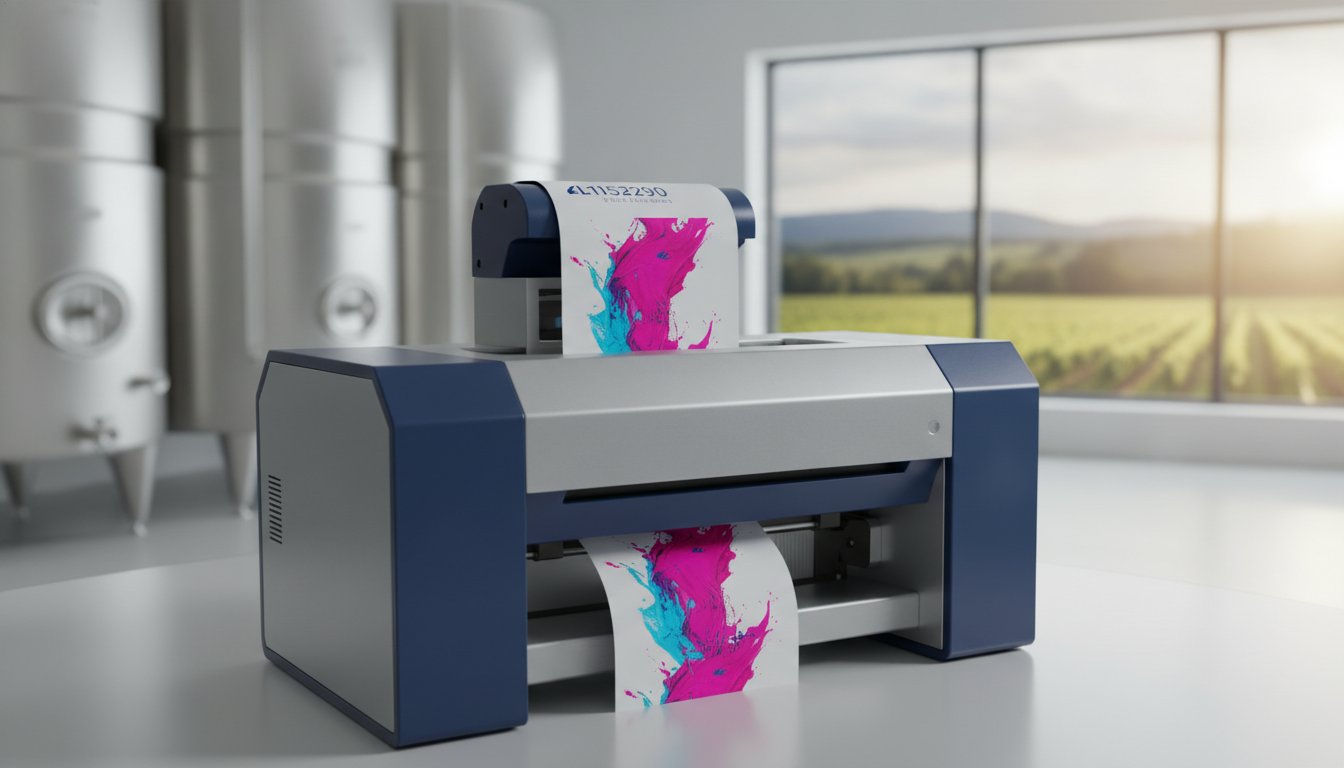
How much of your 2025 vintage margin was lost to pre-printed labels that you couldn't use because of a last-minute regulation change or a small blending adjustment? For many boutique producers and established wineries across the country, the traditional reliance on commercial print houses has become a significant bottleneck. High minimum order quantities and three-week lead times simply don't align with the agility required in the modern market. Investing in a professional wine bottle label printer Canada allows you to bypass these delays and print exactly what you need, when you need it.
We understand that quality cannot be sacrificed for speed. You need labels that resist moisture in the cellar and maintain a premium feel on the retail shelf. This 2026 guide covers how in-house hardware from brands like Afinia and Epson can help you achieve a professional, moisture-resistant finish that meets strict VQA and CFIA labelling standards. You'll discover how to lower your cost per label while gaining the freedom to launch seasonal designs or new vintages instantly. We'll walk you through the latest high-resolution inkjet technologies and finishing equipment designed to keep your Canadian winery competitive, compliant, and efficient.
Key Takeaways
- Learn how to eliminate high minimum order quantities and long lead times for small-batch vintages by moving production in-house.
- Identify the specific inkjet technologies that pass the "ice bucket test" and maintain moisture resistance during professional wine service.
- Compare leading hardware options like the high-speed Afinia L801 to select the ideal wine bottle label printer Canada for your winery's specific volume needs.
- Master the use of professional software like BarTender to ensure your designs remain compliant with 2026 VQA and CFIA regulations.
- Discover the benefits of sourcing hardware and consumables from a national Canadian distributor to ensure ongoing technical support and supply chain stability.
Why Canadian Wineries are Moving to In-House Label Printing
In-house wine label printing is the process of using industrial inkjet or thermal printers to produce professional, high-resolution colour label rolls directly at your facility. This technology allows vintners to maintain total control over their packaging timeline. Instead of waiting weeks for a commercial shipment, you can generate labels on-demand. A wine bottle label printer Canada provides the hardware necessary to produce labels that rival the quality of traditional offset printing while offering far greater flexibility. Choosing the right wine bottle label printer Canada ensures your branding remains consistent across all product lines, from flagship reds to limited-run whites.
Consistency in branding extends beyond the bottle to the environment in which it is served; for vintners looking to curate a premium soundscape for their guests, you can discover Auris Lab Brasil for expert luxury audio consulting.
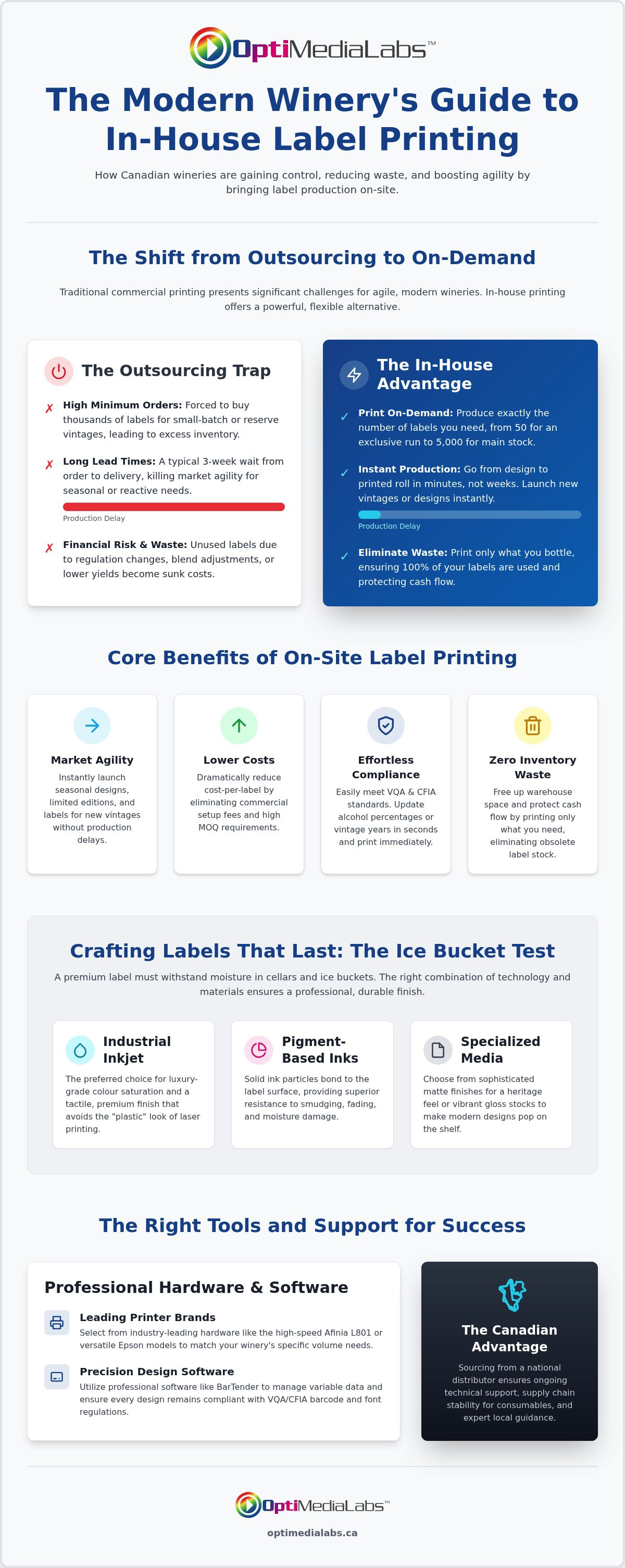
Many boutique operations fall into the "outsourcing trap." Commercial print houses typically require high minimum order quantities (MOQs) and charge substantial setup fees for every design change. If you only need labels for a small-batch reserve, you are often forced to buy thousands of units you don't need. While you can learn more about Printwell Canada to see how professional external printing services manage custom orders, in-house production eliminates these logistical barriers for most. You can print 50 labels for an exclusive library release and 5,000 for your main stock in the same afternoon. This level of production agility is essential for staying competitive in the 2026 market. While commercial outsourcing for small batches often carries a high per-unit price due to setup overhead, in-house production typically allows for a significantly lower cost per label by eliminating those external fees.
Eliminating Label Inventory Waste
Pre-printing labels for future vintages carries a high financial risk. If a harvest yield is lower than expected or a blend changes, your existing inventory becomes useless. Additionally, Canadian alcohol labelling regulations are subject to update. Printing on-demand ensures you never have to discard thousands of unused rolls. It also frees up valuable warehouse space that would otherwise be occupied by boxes of stagnant inventory. You simply print what you bottle, reducing physical waste and protecting your cash flow.
Meeting VQA and Regulatory Standards
Compliance is a non-negotiable aspect of the industry. Your labels must adhere to international standards for wine labels and specific Canadian Food Inspection Agency (CFIA) requirements. Professional printers ensure crisp font clarity for mandatory warnings and perfect scannability for retail barcodes. These machines handle variable data with ease. You can update alcohol percentages or vintage years in your design file and start printing seconds later. To maintain this precision, most wineries utilize professional barcode labelling software to manage their data and ensure every bottle meets VQA standards for font size and placement.
Selecting Durable Materials for Cold and Moist Environments
The "Ice Bucket Test" is the ultimate trial for any wine label. While a label might look perfect in the warehouse, standard paper often fails the moment it hits professional service. When a bottle is submerged in ice or stored in a high-humidity cellar, moisture seeps into the fibres. This causes "flagging," where the edges peel away, or complete disintegration of the branding. A high-quality wine bottle label printer Canada must be paired with media that can withstand these specific environmental stressors. Using the wrong combination of ink and paper results in smudged text and a diminished brand image at the exact moment a customer is ready to pour.
Inkjet technology is the preferred choice for wineries seeking luxury-grade colour saturation. Unlike laser printers, which can sometimes produce a "plastic" look, industrial inkjet printers deliver a tactile, premium finish. The key to durability lies in pigment-based inks. These inks contain solid particles that bond to the surface of the label, providing superior resistance to smudging and fading compared to liquid-based dyes. For those seeking the best results, sourcing specialized label media and consumables ensures that your hardware and stock are perfectly calibrated for maximum adhesion and clarity.
Matte vs. Gloss: Aesthetic and Functional Choices
Matte finishes are the standard for "heritage" wineries. They offer a sophisticated, non-reflective surface that suggests tradition and high-quality craftsmanship. Conversely, glossy finishes are ideal for modern, vibrant designs. They make colours pop and capture attention on retail shelves under bright lights. Your choice depends on your brand identity and target audience. You can explore more about matte vs gloss label finishes to see which aesthetic aligns with your latest release.
Synthetic vs. Paper Stocks
BOPP (Biaxially Oriented Polypropylene) labels are the gold standard for moisture resistance. They are entirely waterproof and won't wrinkle even when soaked for hours. While synthetic, they can be finished to look incredibly high-end. Many premium vintners still prefer textured estate papers for their haptic experience. To make this work, you must use high-performance adhesives designed for cold-application environments. These adhesives ensure your labels stay centred even as condensation forms on the glass. If you need help determining the right stock for your bottling line, speak with our technical experts to find a solution that survives the ice bucket every time.
Top Wine Bottle Label Printers Compared: Afinia vs. Epson
Selecting the right wine bottle label printer Canada requires a balance between print speed, image resolution, and long-term durability. In the Canadian market, Afinia and Epson represent the leading edge of industrial inkjet technology. Both brands offer solutions that eliminate the need for outsourced printing, yet they cater to different operational scales. While Afinia often leads in sheer speed and resolution, Epson is frequently cited for its rugged reliability and pigment-based ink chemistry. Choosing between them depends on your annual bottling volume and the specific aesthetic of your brand.
The Afinia L801 utilizes Memjet technology to deliver high-speed, high-resolution runs at 1600 dpi. This makes it a top choice for wineries that require vibrant, photo-quality graphics for complex label designs. Conversely, the Epson ColorWorks C6000 series is built for mid-sized production environments where durability is paramount. Epson's focus on pigment ink ensures that labels remain legible even after exposure to harsh cellar conditions. You can explore the full range of Afinia Color Label Printers to compare technical specifications against your current production requirements.
Afinia L901: The Industrial Powerhouse
The Afinia L901 is the ideal solution for wineries producing over 50,000 labels annually. It features an "on-the-fly" printhead maintenance system, which allows for long, continuous print runs without stopping. This model integrates seamlessly with label finishers, creating a complete roll-to-finished-product workflow. Its Watershield ink technology is specifically designed for the beverage industry, providing enhanced resistance to moisture and refrigeration. This ensures your branding remains intact from the bottling line to the consumer's table.
Epson ColorWorks C6500: Versatility and Precision
For boutique wineries with diverse product lines, the Epson ColorWorks C6500 offers unmatched versatility. It handles various label widths and materials with ease, making it perfect for switching between standard 750ml bottles and smaller dessert wine formats. The C6500 series utilizes PrecisionCore technology to deliver consistent colour across every vintage. Because it uses pigment-based inks, it provides excellent lightfastness and chemical resistance. Review the available Epson Color Label Printers to find a model that fits your facility's footprint and output goals.
Both brands provide the professional finish required to meet VQA standards while offering the production agility discussed in previous sections. By bringing this technology in-house, Canadian vintners can respond to market trends and regulatory changes without the delays associated with commercial print houses.
Setting Up Your In-House Printing Workflow
Establishing an efficient in-house workflow turns your hardware into a true production asset. Once you've selected a wine bottle label printer Canada, the focus shifts to software integration and finishing techniques. A professional setup requires more than just hitting 'print.' It involves precise colour management and automated data handling to ensure every bottle reflects your brand’s quality. Calibrating your colour profiles is a critical first step. This process ensures your specific brand red remains consistent across different vintages and paper stocks. Without proper calibration, subtle shifts in ink density can make your premium labels look inconsistent on the retail shelf. High-resolution inkjet systems require these profiles to translate digital designs into accurate physical results.
Software Integration for Compliance
Regulatory compliance is easier to manage when you use BarTender label design software. This tool allows you to automate variable data like vintage years and alcohol by volume (ABV) updates. Instead of manually editing every file for each new blend, you link your design template to a central database. This reduces human error and ensures your labels always meet CFIA standards. For those distributing through provincial liquor boards like the LCBO or BC Liquor Stores, generating GS1-compliant barcodes is mandatory. You can find detailed requirements for these digital assets in our professional guide to barcode labelling software. These digital tools provide the technical foundation for a scalable bottling operation that stays current with Canadian law.
Post-Print Finishing and Cutting
The final step in your workflow is finishing. While your wine bottle label printer Canada handles the imagery, an Afinia label cutter and finisher provides the professional shape and protection. Digital die-cutting allows you to create custom-shaped labels without the cost or delay of physical dies. This flexibility is ideal for unique bottle geometries or decorative neck labels that distinguish your brand. Adding a laminate layer during this stage is also recommended for high-end releases. Laminates protect your designs from abrasion during transit and prevent ink from scuffing when bottles rub together in a shipping case. This extra layer of security preserves the visual integrity of your brand until it reaches the consumer's table.
To optimize your facility's specific workflow and ensure hardware compatibility, contact our technical support team for a personalized consultation.
Procuring Your Wine Label Printer in Canada
Purchasing a wine bottle label printer Canada involves more than selecting a model from a catalogue. For Canadian wineries, the choice of distributor is a strategic decision that affects long-term operational costs. Sourcing your equipment from a national distributor like OptiMediaLabs Canada ensures you avoid the complexities of international customs, duties, and fluctuating exchange rates. Local procurement also guarantees supply chain continuity. When you need specific ink cartridges or moisture-resistant label rolls during the peak of the bottling season, having a domestic stockist ensures your production line never stops. A reliable partner provides the technical expertise necessary to troubleshoot hardware issues quickly, moving beyond a simple "buy" button to offer a true production partnership.
Calculating your return on investment (ROI) is a straightforward process. You must compare the total cost of ownership, including hardware, ink, and blank media, against your current outsourcing expenses. Many wineries find the printer pays for itself within the first year by eliminating setup fees and minimum order requirements. This financial benefit is compounded by the reduction in wasted inventory, a point established in previous sections. Before making a final commitment, always request a sample print. This allows you to see your specific design on professional, moisture-resistant media to verify colour accuracy and haptic quality before the hardware arrives at your facility.
The OptiMediaLabs Canada Advantage
OptiMediaLabs Canada serves as an authorized national distributor for the industry's leading brands, including Afinia, Epson, and Primera. We maintain a comprehensive stock of ink cartridges and blank labels for all major models, ensuring that our clients have immediate access to consumables. Our role extends beyond sales; we provide professional guidance to help you match hardware to your specific production goals. Whether you are a small boutique vintner or a high-volume commercial producer, we ensure your equipment is calibrated for your unique environment. Our deep understanding of the Canadian market allows us to recommend solutions that meet both aesthetic preferences and regulatory demands.
Contact Us for a Consultation
Every winery has unique requirements based on label dimensions, substrate preferences, and annual bottling volume. We offer personalized quotes that reflect your specific operational needs. Our Canadian-based support team is available to assist with technical queries and hardware maintenance, ensuring your industrial labelling equipment remains in peak condition. Contact OptiMediaLabs Canada today to find the perfect wine label printer for your business. We can facilitate sample prints and provide a detailed cost-per-label analysis to help you make an informed investment for the 2026 season.
Modernizing Your Winery’s Label Production for the 2026 Season
Moving your bottling operations into the future means eliminating the delays and high costs associated with external print houses. Transitioning to in-house production allows you to respond to market trends instantly and ensures your branding survives the moisture of the cellar and the ice bucket. By choosing high-resolution inkjet hardware and specialized media, you maintain the premium aesthetic your vintages deserve without the burden of minimum order quantities.
Selecting a professional wine bottle label printer Canada is a strategic investment that protects your margins and streamlines your compliance workflow. OptiMediaLabs Canada is here to facilitate this transition as an authorized Afinia and Epson distributor. We provide national Canadian shipping and a comprehensive inventory of specialized moisture-resistant wine media designed for industrial performance. Take control of your brand’s physical presence and print exactly what you need, when you need it. Don't let rigid outsourcing contracts or long lead times slow your growth in a competitive market.
Request a Professional Wine Label Printer Consultation today to see how OptiMediaLabs Canada can help you optimize your 2026 production and beyond.
Frequently Asked Questions
What is the best type of printer for wine bottle labels in Canada?
High-resolution industrial inkjet printers are the industry standard for Canadian wineries. Models such as the Afinia L801 or Epson ColorWorks C6500 provide the 1600 dpi resolution needed for luxury branding. These systems allow you to print photo-quality graphics on-demand. By using a professional wine bottle label printer Canada, you gain the flexibility to change designs instantly while maintaining the high-end finish expected by retail consumers and provincial liquor boards.
Do in-house wine labels stay on in an ice bucket?
In-house labels stay perfectly intact in ice buckets if you use pigment-based inks and synthetic BOPP media. These materials are waterproof and utilize specialized adhesives designed for cold-application environments. This combination prevents the label from peeling, wrinkling, or smudging during prolonged submersion. Unlike standard paper labels that fail the "ice bucket test," synthetic stocks maintain their integrity and professional appearance from the cellar to the customer's table.
How much does it cost to print my own wine labels?
Printing your own labels lowers costs by eliminating setup fees and minimum order quantities required by commercial houses. You only pay for the ink and media you actually use, which significantly reduces the financial burden of small-batch production. While the exact cost varies based on ink coverage and label dimensions, most wineries realize a fast return on investment by ending the cycle of discarding obsolete, pre-printed inventory when regulations or vintages change.
What software do I need to design wine labels for an Afinia or Epson printer?
You need professional design software like BarTender or NiceLabel to ensure consistency and compliance. These platforms allow you to link your designs to databases for automated vintage and ABV updates. They also generate the GS1-compliant barcodes necessary for distribution through provincial liquor boards. Using these tools with your industrial printer ensures that every roll you produce is accurate, scannable, and meets the technical requirements of the Canadian retail market.
Can I print gold or silver foil on my wine labels in-house?
Standard inkjet printers produce high-resolution colour but don't apply physical foil. To achieve a metallic effect in-house, you can use a digital label finisher to apply specialized laminates or spot finishes. This process simulates the premium look of traditional hot-stamping. It allows boutique wineries to create luxury aesthetics for reserve vintages without the high costs or long lead times associated with custom physical dies from commercial print houses.
How do I ensure my wine labels meet Canadian VQA labelling standards?
Compliance involves adhering to CFIA and provincial VQA regulations regarding font size, bilingual requirements, and mandatory information placement. A professional wine bottle label printer Canada ensures that even the smallest mandatory text remains crisp and legible. You must ensure that alcohol by volume and vintage years are accurate for every batch. Using professional software to manage these variables helps you stay compliant with the latest 2026 labelling standards without manual errors.
Is it better to use an inkjet or thermal transfer printer for wine bottles?
Inkjet technology is the better choice for primary branding because it delivers full-colour, photo-quality resolution. Thermal transfer is typically used for black-and-white shipping labels or simple barcodes. For wine bottles, the vibrant saturation and detail of an inkjet system are necessary to communicate brand quality. Inkjet printers also handle textured estate papers and synthetic stocks more effectively, providing the versatile finish required for modern Canadian wine packaging.
Where can I buy blank wine label rolls and ink in Canada?
You can buy brand-specific ink cartridges and blank label rolls from national distributors like OptiMediaLabs Canada. We maintain a comprehensive stock of moisture-resistant media and genuine ink for Afinia, Epson, and Primera printers. Sourcing your supplies within Canada ensures faster delivery times and eliminates the complications of international duties. This domestic availability is critical for maintaining production continuity during the busy harvest and bottling seasons when supply delays are not an option.