
Zebra 220Xi4 Ribbons: 2026 Industrial Labelling Guide
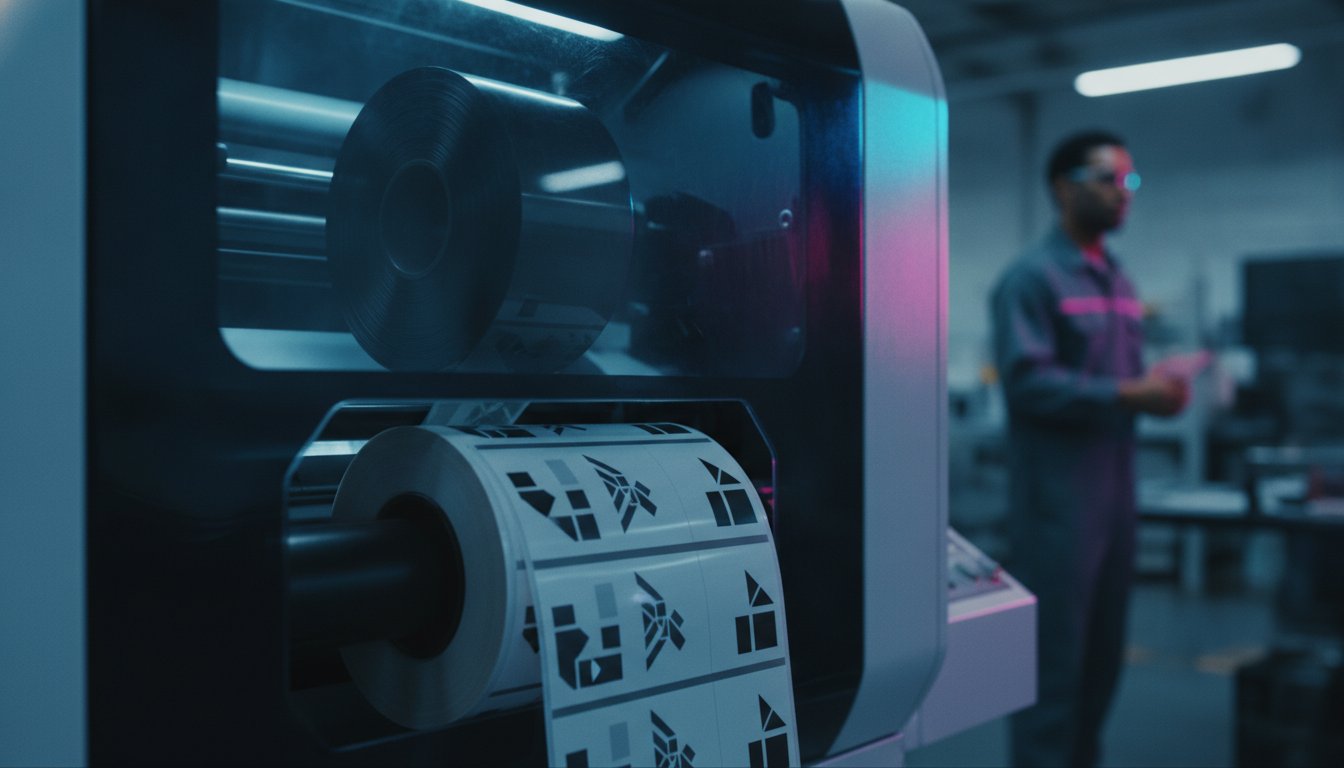
A single snapped ribbon on an 8.5 inch wide-format run does more than just halt a printer; it jeopardizes your entire industrial compliance strategy for 2026. High-volume environments require absolute precision. You already realize that inconsistent print contrast or frequent downtime can quickly derail a shift's productivity. Selecting the correct 220xi4 ribbons is a technical necessity. It ensures your wide-format synthetic labels remain legible under harsh conditions and high speeds.
You need a solution that balances cost with the durability required for GHS and WHMIS standards. This guide will help you master the material specifications and tension requirements needed to achieve crisp, smudge-proof barcodes every time. We will analyze the performance differences between wax, wax-resin, and full resin formulations. You will also learn how to align your supplies with the latest Canadian front-of-package food labelling regulations to minimize waste and maximize throughput. Use this technical overview to secure your supply chain and maintain industrial durability standards across your facility.
Key Takeaways
- Identify the specific performance requirements of the Zebra 220Xi4 engine to prevent ribbon snapping and ensure consistent print contrast at high speeds.
- Select the optimal material formulation for your 220xi4 ribbons, matching wax, wax-resin, or resin to your specific paper or synthetic label substrates.
- Maximize operational efficiency by using standard 450m ribbon lengths and widths up to 8.66 inches to minimize downtime during wide-format industrial runs.
- Ensure compliance with 2026 Canadian WHMIS and GHS standards by choosing high-durability ribbons that maintain legibility in extreme industrial environments.
- Streamline your procurement strategy through national Canadian distribution to maintain inventory stability and avoid costly production delays.
Understanding 220Xi4 Ribbons: Performance Standards for 2026
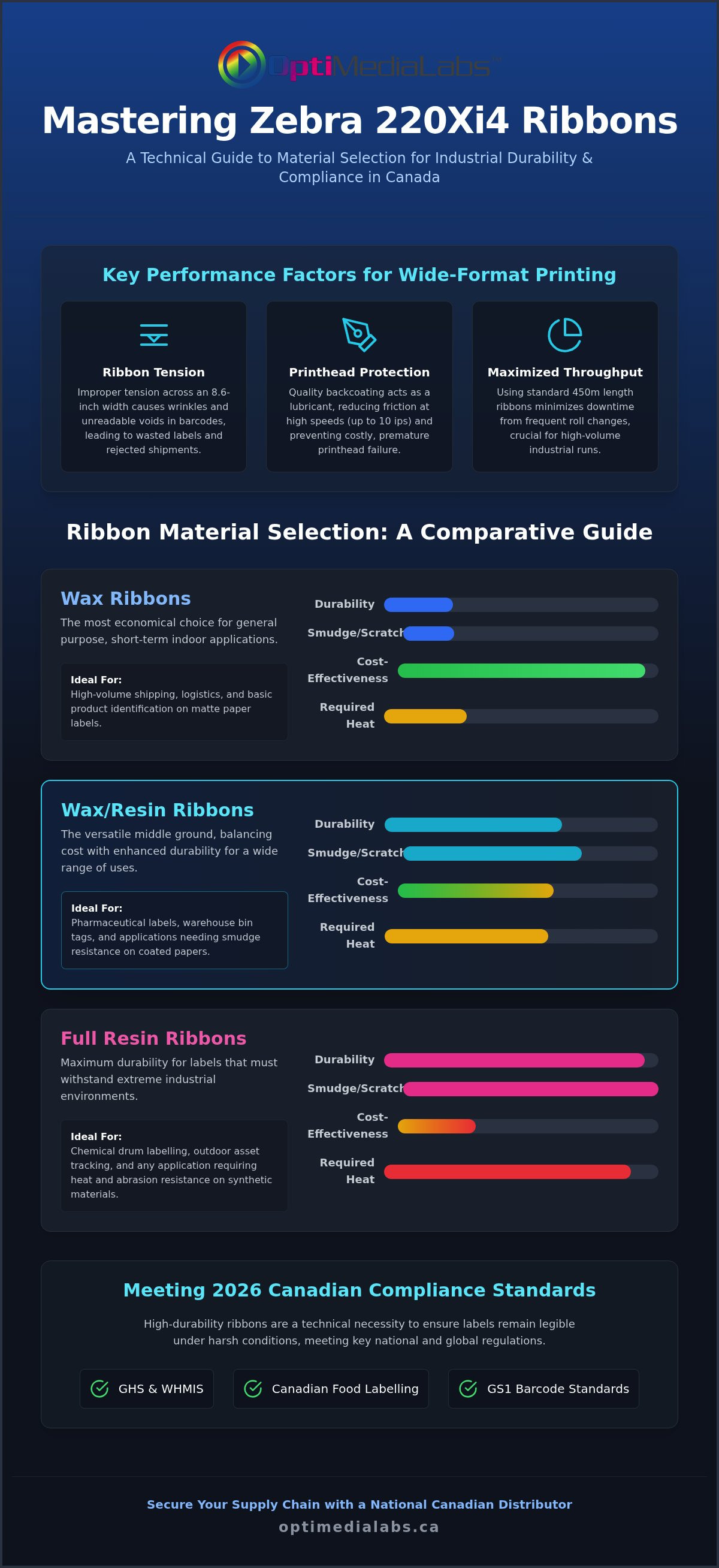
Industrial wide-format printing requires a specialized approach to consumable selection. The Zebra 220Xi4 is designed for high-volume, 8.5-inch wide labels, making the choice of 220xi4 ribbons a critical decision for your production line. In 2026, compliance standards for hazardous materials and food safety have tightened. These changes place more pressure on the legibility and durability of every barcode. These ribbons don't just provide colour; they serve as a protective barrier and a precision delivery system for complex data. Choosing the right formulation is the first step in maintaining a stable supply chain.
High-performance industrial engines like the Xi4 series utilize three primary formulations to meet different durability needs:
- Wax: The most economical choice for paper labels and general shipping.
- Wax/Resin: Provides enhanced smudge resistance for coated papers and some synthetics.
- Resin: Offers maximum chemical, heat, and abrasion resistance for harsh industrial environments.
The Critical Link Between Ribbon and Printhead
Quality ribbons do more than just print; they preserve your hardware investment. As the backbone of thermal-transfer printing technology, these ribbons must withstand extreme heat and pressure. High-quality 220xi4 ribbons feature advanced backcoating technology. This layer acts as a lubricant, reducing friction as the ribbon moves across the printhead at speeds up to 10 inches per second (ips). Low-quality generic ribbons often lack consistent backcoating. This deficiency leads to "burn-through" or premature printhead failure. Given the cost of replacing wide-format printheads, using inferior consumables is a high-risk strategy that often results in more downtime than savings.
Why Wide-Format Printing Changes the Rules
Printing at an 8.6-inch width introduces physical variables that don't exist in standard 4-inch desktop environments. Tension management is the most significant factor. If the ribbon tension isn't perfectly calibrated across the entire width, you will experience ribbon wrinkles. These wrinkles create unreadable voids in barcodes, leading to rejected shipments and wasted material. In high-volume environments, even a small waste rate on wide-format labels translates to significant financial loss. The 220Xi4 engine requires ribbons that maintain structural integrity across their full span. This ensures the ink releases consistently from the edge to the centre. Proper tracking prevents the ribbon from drifting. This is essential for maintaining the sharp edges required for high-density barcodes and regulatory symbols.
Ribbon Material Selection: Wax vs. Wax/Resin vs. Resin
The chemical makeup of your thermal transfer ribbon determines how well the image survives the lifecycle of the label. In 2026, the cost-to-performance ratio is more critical than ever. Choosing a resin formulation when wax would suffice creates unnecessary overhead; conversely, using wax for chemical labels leads to compliance failure. Selecting the right 220xi4 ribbons depends on the specific bond required between the ink and the substrate surface.
Wax Ribbons for High-Volume Shipping
Wax ribbons use a high percentage of paraffin-based wax. They are ideal for matte paper labels and general shipping logistics. Because wax has a lower melting point, you can use lower heat settings on your 220Xi4. This practice extends the life of your printhead. However, wax doesn't stand up well to moisture or heavy handling. If your labels face outdoor exposure or frequent friction, avoid this formulation. It's the most economical choice for short-term indoor applications where durability isn't the primary concern.
Wax/Resin Ribbons: The Versatile Middle Ground
This formulation mixes wax with a durable resin base to provide superior smudge resistance. It's the preferred choice for semi-gloss paper and some synthetic stocks. Many industrial users consider this the standard for the 220Xi4 because it balances cost with high-speed performance. These ribbons ensure that labels meet GS1 barcode standards for scan accuracy even after light abrasion during shipping. They're perfect for pharmaceutical labels and warehouse bin tags where longevity is required but extreme chemical exposure is unlikely.
Full Resin Ribbons for Extreme Environments
Full resin ribbons offer the highest level of durability. They're engineered with a pure resin base that bonds permanently with high-end synthetics like polyester and polyimide. These 220xi4 ribbons provide maximum resistance to extreme heat, moisture, and harsh industrial solvents. If your facility must comply with 2026 GHS hazardous material labelling or automotive standards, resin is the only viable option. While the initial investment is higher, the reliability prevents costly re-labelling and ensures compliance in a stricter regulatory environment. If you aren't sure which material fits your specific application, you can consult with a technical specialist to verify your requirements.
Sizing and Specifications for the Zebra 220Xi4
The Zebra 220Xi4 is an industrial workhorse designed for wide-format output. To maintain this machine's performance, you must adhere to specific physical requirements for your consumables. This printer utilizes a 1-inch (25.4mm) core, the standard for high-performance industrial systems. You must ensure your 220xi4 ribbons are wound in the Coated Side Out (CSO) configuration. Using the wrong ink orientation will cause the ink to transfer directly onto the printhead, leading to immediate failure and a difficult cleaning process. The 220Xi4 supports ribbon widths up to 8.66 inches, allowing for full-width coverage on large industrial labels.
One technical requirement that many operators overlook is the "over-width" rule. Your ribbon must always be wider than the label stock, including the backing liner. If you use a ribbon that is exactly the same width as your label, the exposed edges of the abrasive label liner will grind against the printhead. This friction causes permanent damage to the heating elements. Always select a ribbon that is approximately 2mm to 4mm wider than the backing paper to provide a protective lubrication layer across the entire printhead surface.
Optimizing Ribbon Width for Printhead Protection
The ribbon's backcoating is engineered to dissipate heat and reduce static during high-speed operation. When the ribbon overlaps the label liner, it ensures the entire active area of the printhead is shielded from friction. For common wide-format applications, matching an 8.5-inch ribbon with an 8-inch label is the safest configuration. This setup prevents localized wear patterns on the printhead heating elements. It extends the life of your hardware and maintains consistent print density from the left edge to the right edge of your labels.
Standard vs. Jumbo Roll Lengths
Efficiency in high-volume environments depends on minimizing operator intervention and downtime. The 220Xi4 is specifically built to accommodate 450m (1476ft) jumbo rolls. These rolls provide significantly more capacity than the 74m or 300m lengths found in smaller desktop or mid-range printers. While smaller machines might struggle with the weight and outer diameter of these jumbo rolls, the Xi4's heavy-duty spindle handles the torque easily. Using 450m rolls reduces the frequency of ribbon changes by 33% compared to 300m alternatives, directly increasing your daily production throughput.
Canadian Industrial Application Guide
Operating a Zebra 220Xi4 in Canada requires a strategy that accounts for extreme environmental shifts. From the humidity of coastal distribution centres to the sub-zero temperatures of Prairie warehouses, your choice of 220xi4 ribbons must withstand more than just the printing process. In 2026, industrial facilities face stricter requirements for label durability, particularly in the food and chemical sectors. Selecting a ribbon that fails under Canadian conditions leads to non-compliance and supply chain bottlenecks.
Cold Storage and Outdoor Durability
Standard wax formulations often fail in the Canadian winter. When temperatures drop, wax-based inks can become brittle and undergo crystallization. This process causes the ink to flake off the label surface, rendering barcodes unreadable. For cold storage facilities or outdoor lumber yards, full resin 220xi4 ribbons are the recommended standard. Resin provides the necessary bond to synthetic stocks that prevents cracking. It also offers the UV resistance required for construction materials stored outdoors, ensuring that labels remain legible after months of exposure to the elements.
Compliance Labeling: GHS and Beyond
The regulatory landscape for hazardous materials has reached a critical milestone. As of December 14, 2025, all hazardous products in Canada must comply with amended Hazardous Products Regulations. This means your chemical drum labels must use ribbons capable of passing rigorous "smear tests" against solvents and oils. For GHS-compliant labelling, resin ribbons are essential to ensure that safety data remains intact during transit and handling. You can find more details on these requirements in our Industrial Labeling Solutions Canada guide. These standards protect workers and ensure your facility avoids the penalties associated with illegible safety information.
The Canadian food and beverage industry also faces new challenges in 2026. New regulations mandate front-of-package nutrition symbols for products high in sodium, sugar, or saturated fats. Wide-format printers like the 220Xi4 are often used to overprint these symbols on secondary packaging. Using a high-contrast wax/resin ribbon ensures these symbols meet visibility requirements without smudging during the high-speed packing process. If you need help matching your ribbon formulation to these new 2026 regulatory standards, you should speak with our compliance specialists today.
Procurement Strategy: Sourcing 220Xi4 Ribbons in Canada
Effective procurement for high-volume industrial printing goes beyond finding the lowest per-roll price. For facilities operating the Zebra 220Xi4, supply chain stability is the primary metric of success. A single stock-out on specialized 8.6-inch 220xi4 ribbons can halt an entire shipping department or production line. Canadian businesses must prioritize distributors who understand the technical nuances of wide-format thermal transfer and maintain deep inventory levels within the country. This ensures that your labelling operations remain continuous even during global supply shifts.
The Advantage of National Distribution
Sourcing from a national Canadian distributor eliminates the hidden costs associated with cross-border logistics. When you order from outside Canada, you face unpredictable brokerage fees, duties, and customs delays that can turn a just-in-time delivery into a costly production halt. OptiMediaLabs provides national distribution that ensures consistent lead times across all provinces. This local presence also means you have access to experts who specialize in Zebra label printer hardware. They can troubleshoot tracking issues or tension settings specific to the Xi4 series. Having Zebra ribbons available in wide-format sizes ready for immediate dispatch is a significant operational advantage for Canadian industrial hubs.
Maximizing Value and Reducing Waste
Your inventory strategy should balance bulk purchasing with storage capacity. While just-in-time inventory reduces carrying costs, the specialized nature of wide-format consumables makes a safety stock approach more prudent. Buying 450m rolls in bulk reduces the frequency of procurement cycles and lowers the total cost of ownership. The correct ribbon choice also reduces waste by preventing printhead damage and barcode failures, as discussed in previous technical sections. OptiMediaLabs facilitates this by providing technical guidance to ensure your formulation matches your environment perfectly. This precision reduces the volume of discarded labels and maximizes the lifespan of your equipment. View our full range of 300m and 450m Zebra ribbons to secure your 2026 supply chain requirements and maintain peak industrial efficiency.
Secure Your Industrial Output for 2026
Maintaining a high-volume wide-format printing environment requires more than just hardware; it demands a precise match between your substrate and your consumables. You now realize how selecting the correct 220xi4 ribbons prevents unnecessary downtime and protects your expensive printhead heating elements. Whether you're navigating the latest Canadian GHS compliance standards or managing cold storage logistics, the right material formulation ensures your barcodes remain scannable and smudge-proof under any conditions.
OptiMediaLabs simplifies this process by providing national Canadian shipping on all industrial consumables. We maintain a comprehensive inventory of wax, wax-resin, and full resin formulations ready for immediate dispatch. Our team offers expert technical support for the Zebra Xi4 series to help you troubleshoot tension settings and maximize your production throughput. Don't let supply shortages or inferior ribbons halt your facility's operations. Order High-Performance Zebra 220Xi4 Ribbons Today and stabilize your labelling workflow for the year ahead. We look forward to supporting your long-term industrial success.
Frequently Asked Questions
What is the maximum ribbon width for the Zebra 220Xi4?
The maximum ribbon width for the Zebra 220Xi4 is 8.66 inches (220 mm). This capacity allows the printer to handle wide-format industrial labels up to 8.5 inches wide while adhering to the protective "over-width" rule. Using the full width of your 220xi4 ribbons ensures the abrasive edges of the label liner don't touch the printhead heating elements. This practice prevents premature hardware failure in high-volume production environments.
Do I need a wax or resin ribbon for my 220Xi4 labels?
Your choice between wax and resin depends on your label material and durability requirements. Wax is the most economical choice for matte paper shipping labels used indoors. Resin is required for synthetic materials like polyester, especially in harsh environments. For 2026 compliance with GHS or WHMIS standards, resin provides the chemical and abrasion resistance needed to keep safety data legible through the entire product lifecycle.
Can I use ribbons from other Zebra models in my 220Xi4?
You can use ribbons from other industrial Zebra models provided they meet the 1-inch core size and "coated side out" (CSO) configuration. However, most desktop or mid-range ribbons are too narrow for the 220Xi4 wide-format printhead. Ensure any alternative ribbons you source are at least as wide as your label liner to prevent printhead damage. The 220Xi4 is also optimized for 450m lengths, which might not fit smaller printer models.
Why is my ribbon wrinkling on the 220Xi4?
Ribbon wrinkling on the 220Xi4 usually results from uneven tension across the 8.6-inch wide printhead or a misalignment of the ribbon supply spindle. If the ribbon is too narrow for the label stock, it may also track poorly. Ensure you are using high-quality ribbons with consistent backcoating to reduce friction. Adjusting the printhead pressure toggles can often resolve minor wrinkling issues by evening out the force applied across the wide-format media.
What does "coated side out" mean for 220Xi4 ribbons?
"Coated side out" (CSO) means the thermal transfer ink is wound on the outside of the ribbon roll. The Zebra 220Xi4 is designed specifically for this configuration. If you attempt to use "coated side in" (CSI) ribbons, the ink will face the printhead instead of the label. This mistake causes the ink to melt directly onto the heating elements, resulting in poor print quality and a difficult cleaning process for your equipment.
How often should I clean the printhead on my 220Xi4?
You should clean the printhead on your 220Xi4 every time you replace a ribbon roll. For high-speed industrial applications, this preventative maintenance is essential to remove dust, adhesive residue, and carbon buildup. Use a cleaning swab or a lint-free cloth dipped in 99.7% isopropyl alcohol. Regular cleaning prevents "hot spots" on the printhead and ensures consistent barcode contrast, which is vital for meeting 2026 industrial scan durability standards across your facility.
Are there eco-friendly or plastic-free ribbon options for 2026?
While thermal transfer ribbons still rely on a polyester film base, 2026 industry trends focus on reducing waste through thinner ribbon substrates and recycled fibre cores. Some manufacturers have moved toward plastic-free bulk packaging for 450m rolls to minimize environmental impact. Choosing the correct ribbon width for your label size also reduces material waste. We recommend reviewing technical datasheets for specific formulations to identify products with higher recycled content or reduced carbon footprints.
How do I prevent the ribbon from snapping during high-speed printing?
To prevent ribbon snapping during high-speed printing, you must match your printer's darkness and speed settings to the specific ribbon formulation. High-speed resin ribbons are engineered with stronger backcoatings to handle the friction of 10 ips (inches per second) runs. If snapping persists, check for excessive tension on the supply spindle or sharp burrs on the ribbon take-up core. Using premium 220xi4 ribbons with superior tensile strength ensures stability during rapid production cycles.