
Zebra RFID Printers Canada: The 2026 Industrial Procurement Guide
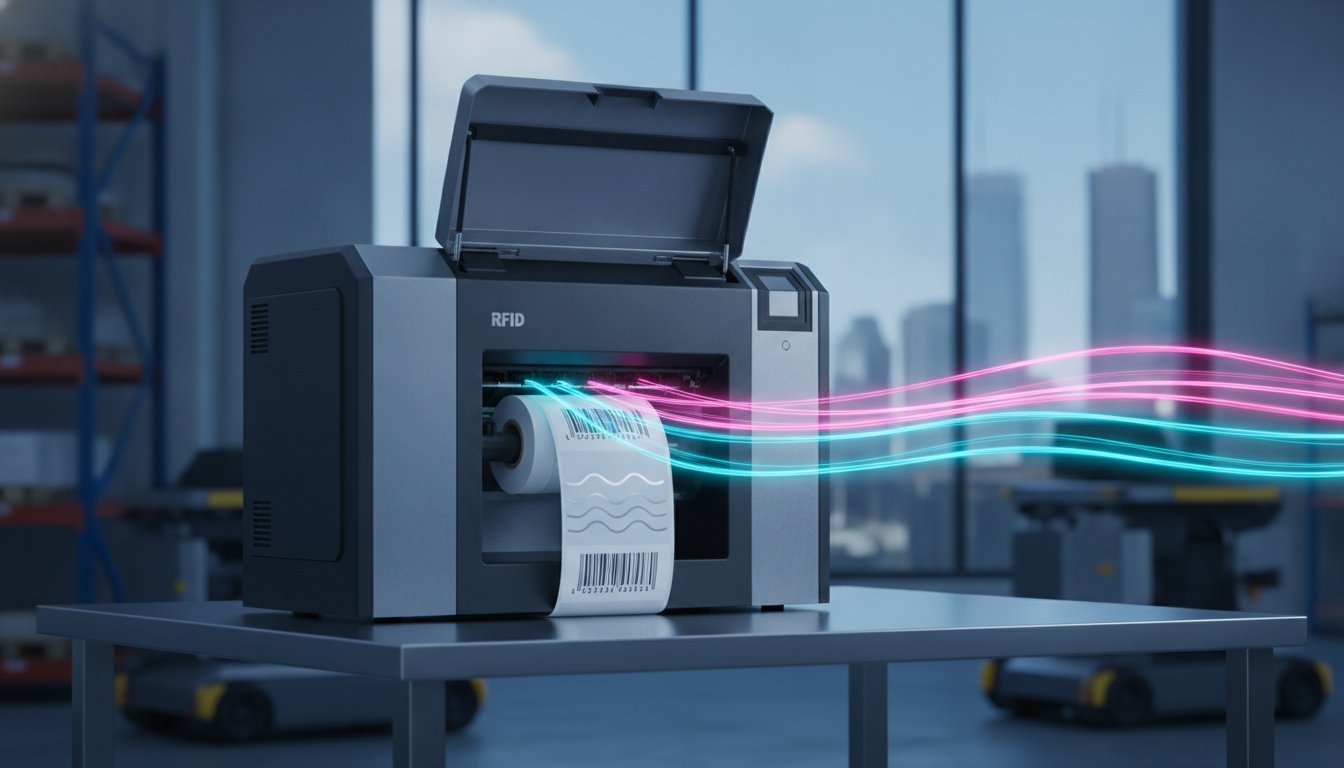
Did you know that implementing RFID technology can improve inventory accuracy by 25% while slashing inventory-related labour hours by up to 15%? For Canadian warehouse managers, these numbers represent more than just efficiency; they mean the difference between a fluid supply chain and costly operational bottlenecks. You likely already recognize that the shift toward item-level visibility is no longer optional, and sourcing the right Zebra RFID printers Canada is the first step toward meeting these modern requirements. However, the technical hurdles of RFID encoding and the risk of downtime can make the transition feel overwhelming.
This guide simplifies the process of selecting and deploying the right printing solutions to ensure your operations remain precise and profitable. You'll learn how to navigate the latest ISED regulations, choose between industrial and mobile hardware, and secure a dependable national supply chain for ribbons and labels. We'll examine the specific 2026 hardware landscape to help you build a system that integrates seamlessly into your existing workflow without the typical integration headaches.
Key Takeaways
- Learn how to combine high-resolution visual printing with digital tag encoding to achieve real-time asset visibility across your facility.
- Identify the ideal duty cycle for your operations by comparing the performance requirements of industrial, desktop, and mobile models.
- Select the correct print resolution and width to ensure every RFID tag remains legible and compliant with Canadian ISED standards.
- Streamline procurement by sourcing Zebra RFID printers Canada alongside compatible thermal transfer ribbons and professional software from a single national distributor.
- Discover how to integrate RFID hardware into existing workflows to reduce inventory tracking errors and eliminate the high cost of manual data entry.
Understanding Zebra RFID Printing Technology in 2026
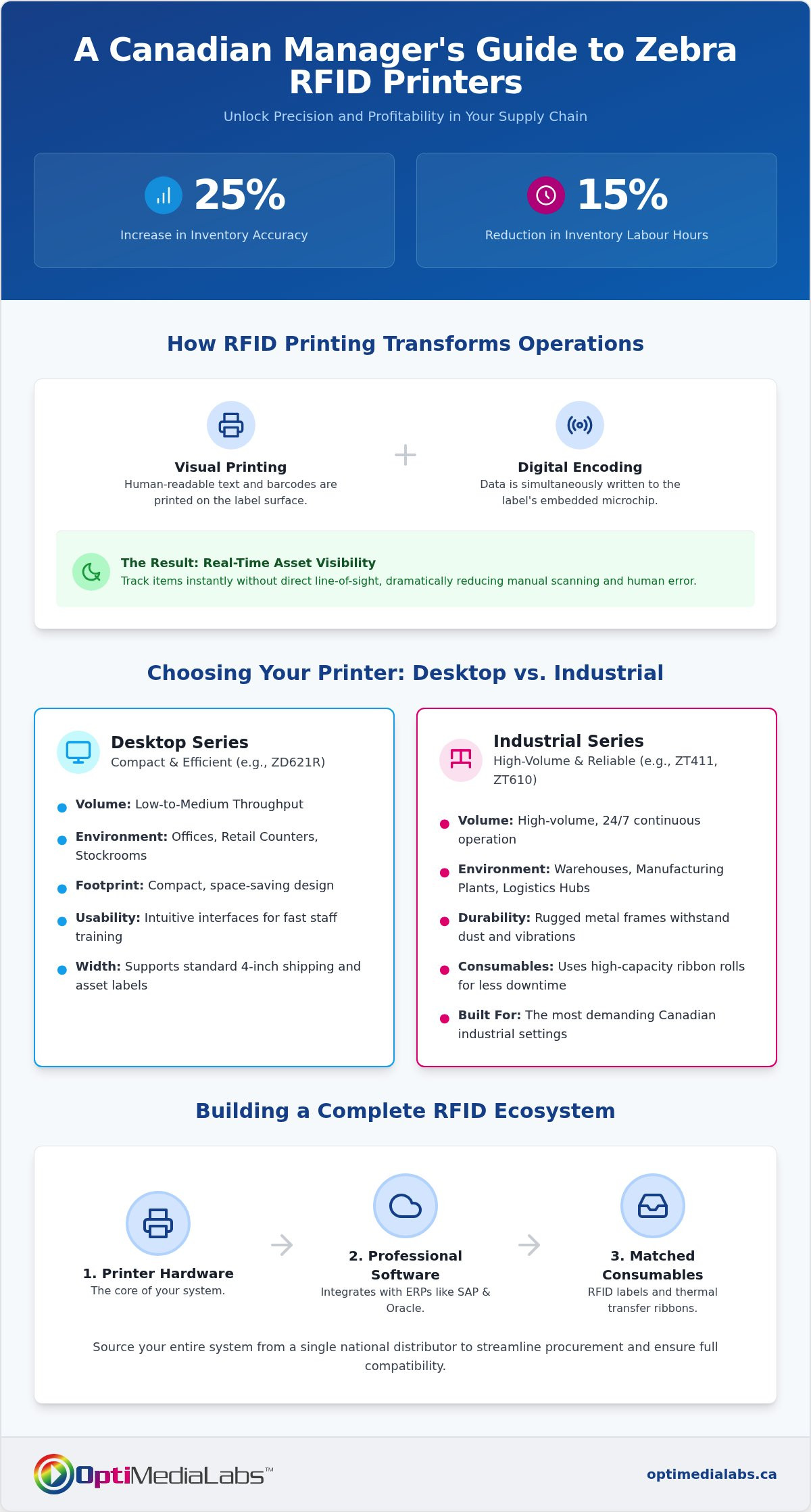
RFID printing is a dual-stream process. It combines traditional thermal transfer printing for human-readable text with the digital encoding of a microchip. This technology allows businesses to manage assets with unprecedented speed. Using Zebra RFID printers Canada ensures your facility can transition from manual barcode scanning to automated data capture without sacrificing reliability. While traditional barcodes served the industry well for decades, the 2026 logistics landscape demands the high-speed throughput that only Radio-frequency identification (RFID) provides.
Most Canadian industrial environments now rely on Ultra-High Frequency (UHF) standards. This frequency band allows for long-range reading and high-speed data transfer, which is essential for tracking pallets moving through loading docks. Zebra hardware is specifically engineered to handle these mission-critical tasks, offering the technical precision needed for 24/7 operations in demanding warehouse settings.
How RFID Printers Differ from Standard Thermal Printers
A standard thermal printer only manages the physical printhead. In contrast, an RFID-enabled printer contains an internal encoder and reader module. This module communicates with the chip embedded inside the label material as it passes through the chassis. Proper calibration is essential because different label designs place the RFID inlay in various positions. The printer must precisely align the encoding signal with the tag's antenna to ensure data integrity. The encoding process is the digital heart of the label.
Benefits of Implementing RFID in Canadian Facilities
Implementing RFID label printers offers immediate operational advantages. You gain real-time inventory visibility without requiring a direct line of sight to every individual item. This capability significantly reduces manual scanning errors and the labour costs associated with physical cycle counts. Verified data indicates that RFID can improve inventory accuracy by 25% or more. As of 2026, many major Canadian retailers and logistics providers have established mandatory RFID tagging requirements for their suppliers. Adopting this technology ensures your business remains compliant while gaining a competitive edge in supply chain precision.
Comparing Zebra RFID Printer Categories for Industrial Use
Selecting the right Zebra RFID printers Canada requires a clear understanding of your facility's daily throughput and environmental conditions. You shouldn't buy more printer than you need, but under-specifying a hardware solution leads to premature wear and costly downtime. Most Canadian warehouses categorize their requirements by duty cycle. This metric defines how many labels a machine can reliably produce in a 24-hour period. While a small distribution centre might only require 500 tags a day, a national logistics hub might process tens of thousands.
Durability is the primary differentiator between these categories. Industrial models feature rugged metal frames designed to withstand the vibrations and dust of a manufacturing floor. Conversely, desktop models prioritize a compact footprint for tight retail spaces or office environments. Connectivity also plays a vital role in 2026. Modern Canadian ERP integrations rely on stable data streams. Whether you use SAP, Oracle, or Microsoft Dynamics, your printer must support high-speed Ethernet or Wi-Fi 6 to ensure encoding data reaches the tag without latency issues. This level of precision is especially important when considering RFID applications in regulated industries, where tracking accuracy is a legal necessity.
Zebra Desktop RFID Printers: Compact and Efficient
For low-to-medium volume applications, the Zebra ZD-series RFID models are the standard choice. These units, such as the ZD621R, offer a space-saving design that fits easily on a desk or retail counter. They're remarkably easy to use, featuring intuitive interfaces that reduce training time for your staff. Most desktop models support a 4-inch print width. This makes them perfect for standard shipping labels or asset tags. If your team needs to organize a stockroom or track IT assets across a corporate campus, these compact units provide plenty of power without the bulk of industrial hardware.
Zebra Industrial RFID Printers: High-Volume Reliability
When your operations run 24/7, you need the heavy-duty performance of an industrial chassis. Models like the ZT411 and ZT610 are engineered for the most demanding Canadian manufacturing plants. These machines utilize high-capacity ribbon rolls, which means your operators spend less time changing consumables and more time moving product. They also offer significantly faster print speeds, often measured at 14 inches per second (ips). This ensures your loading docks never wait on a printer to finish a batch. You can review the full technical specs for these high-performance Zebra printers to see which model fits your specific ips requirements.
Mobile RFID printers round out the ecosystem by allowing workers to encode tags at the point of application. This is ideal for re-labeling pallets in the yard or managing inventory in large outdoor storage areas. If you're struggling to decide which category fits your current growth trajectory, you can speak with a labeling specialist to review your specific volume requirements.
Technical Selection Criteria: DPI, Width, and Encoding
Selecting technical specifications for Zebra RFID printers Canada involves balancing visual legibility with long-term data integrity. While a base model might offer 203 dots per inch (dpi), many industrial applications require the precision of 300 dpi. This choice directly impacts how easily automated systems read your labels. Beyond resolution, you must determine the required print width. Most standard shipping and pallet labels utilize a 4-inch width, but specialized asset tracking might require 2-inch or 6-inch configurations. Choosing the wrong width can lead to wasted media or labels that don't fit your products.
Calibration is another critical factor. Every RFID tag has a specific inlay position. Your printer must be calibrated to align its internal encoder with that chip. If the alignment is off, you'll face high "void" rates where the printer can't encode the tag correctly. This level of technical detail is what defines the Role of RFID Technology in Inventory Management today. It's not just about sticking a label on a box; it's about ensuring every data point is captured accurately as it moves through the supply chain.
Print Resolution and Label Clarity
A 300 dpi resolution is essential for high-density barcodes and small asset tags. If your labels contain small fonts or complex 2D barcodes, the higher resolution prevents ink bleeding and ensures scanners pick up the signal on the first pass. This precision is vital for the scanning success rate of automated sorting systems in high-velocity Canadian hubs. Choosing a higher resolution also allows you to run the print head at lower heat settings, which helps to maximize the longevity of the print head by reducing thermal stress.
Media Handling and Core Specifications
Standardizing your media is key to warehouse efficiency. Most industrial label stock in Canada uses either 1-inch or 3-inch cores. You'll want to match your printer's spindle to your existing stock to avoid needing specialized adapters. Pay close attention to the outside diameter (OD) of your label rolls. Larger OD rolls mean fewer changeovers during a shift, which keeps your production lines moving. For a full range of hardware that supports these various media types, you can browse available thermal label printers to find a match for your core requirements.
Finally, consider the printing method. Thermal transfer is generally preferred for RFID because the ribbon creates a permanent image that resists heat and friction. Direct thermal labels are prone to fading, which can render the human-readable portion of your RFID tag useless over time. If your assets will be stored in a warehouse for more than a few months, the extra durability of thermal transfer is a necessary investment.
The RFID Ecosystem: Software and Consumables
Hardware alone can't manage a complex supply chain. To fully leverage Zebra RFID printers Canada, you must integrate specialized software and high-grade consumables. This combination ensures that the data encoded into your tags matches the physical print on the label. When these elements work in harmony, you eliminate the risk of "orphan" tags that contain digital data but no human-readable information. Sourcing your software, ribbons, and labels from a single national distributor also ensures that every component is tested for compatibility, which reduces the technical friction often associated with RFID deployment.
Consumables represent the ongoing pulse of your labeling operation. Using low-quality ribbons can lead to poor encoding rates and premature print head wear. By maintaining a steady supply of Canadian-stocked consumables, you avoid the long lead times and customs delays that can halt a production line. This reliability is essential for businesses that must adhere to strict GHS or GS1 standards, where label legibility is a regulatory requirement rather than just a preference.
Professional Labeling Software for RFID
Designing an RFID tag differs significantly from a standard barcode. You need a software interface that can map variable data from your ERP system directly to the tag's digital memory. BarTender software provides a robust platform for these automated workflows. It handles the complex logic required for high-volume serialization and ensures each tag is unique. For facilities managing enterprise-level data across multiple locations, NiceLabel offers a streamlined approach to managing variable data encoding. You can find more details on choosing the right platform in our Professional Guide to Barcode Labeling Software in Canada.
High-Performance Zebra Ribbons
The choice of ribbon dictates the durability of your printed data. You must match Zebra ribbons to your specific label material to ensure long-term adhesion. Consider these three main types:
- Wax Ribbons: Best for standard paper RFID labels used in indoor storage.
- Wax-Resin Blends: Ideal for high-speed printing on coated paper or some synthetics.
- Resin Ribbons: Necessary for synthetic RFID tags that face chemical exposure or outdoor conditions.
Industrial-scale operations should standardize on 300m ribbons to minimize the labour hours spent on roll changes. If you're ready to optimize your current supplies, contact our labeling experts to find the exact ribbon-and-tag match for your environment.
Sourcing Zebra RFID Solutions from OptiMediaLabs
Sourcing industrial hardware in Canada requires a partner that understands local logistics and regulatory standards. Procuring Zebra RFID printers Canada from a national distributor like OptiMediaLabs eliminates the complexities of international shipping, customs delays, and unpredictable brokerage fees. We maintain a deep inventory of hardware and consumables to ensure your production lines remain operational at all times. This commitment to availability extends across all provinces, providing timely delivery from a specialized vendor that understands the unique technical requirements of high-volume RFID encoding.
Our expertise goes beyond simply moving boxes. We position ourselves as a technical facilitator for Canadian manufacturers and logistics providers. Whether you're integrating RFID for the first time or upgrading an existing fleet of industrial machines, we provide the hardware, thermal transfer ribbons, and professional software needed for a seamless deployment. We also carry high-quality consumables from industry leaders like Afinia and Epson. This ensures you have access to the best materials for your specific environment, whether you need chemical-resistant synthetics or standard paper tags.
A Single Source for Hardware and Supplies
Consolidating your printer and ribbon procurement with one supplier creates immediate operational efficiency. It ensures that the RFID printers you purchase are perfectly matched with compatible ribbons and media from the start. You also gain access to specialized Afinia labels and other industrial media designed specifically for harsh warehouse conditions. This unified approach prevents the common technical errors that occur when mixing incompatible hardware and consumables. For a deeper look at the broader equipment landscape for 2026, consult our Industrial Labeling Solutions Canada: The 2026 Reference Guide.
Supporting Your Long-Term Labeling Strategy
Your labeling needs will evolve as your business grows and supply chain requirements change. OptiMediaLabs assists in scaling your RFID implementation by providing consistent access to the same professional-grade hardware and consumables you've come to rely on. We build trust through transparent pricing and a focus on long-term partnerships rather than one-off transactional sales. This stability is vital for maintaining inventory accuracy and meeting the strict compliance demands of major retail partners. Our team understands the nuances of Canadian industrial environments and is ready to support your transition to more intelligent data capture. If you're ready to modernize your Canadian supply chain with precision, browse our full selection of Zebra RFID printers today.
Modernizing Your Canadian Supply Chain with Precision
Deploying a successful RFID system requires more than just picking a printer. It demands a strategic approach that considers daily duty cycles, precise resolution requirements, and professional software integration. By selecting the right Zebra RFID printers Canada, your facility can realize significant gains in inventory accuracy and operational speed. You've seen how matching the correct thermal transfer ribbons with industrial-grade hardware prevents downtime and ensures long-term label legibility in demanding environments.
OptiMediaLabs is an authorized Canadian distributor of Zebra hardware. We maintain a full stock of thermal transfer ribbons and RFID-compatible media to support your mission-critical workflows. With national shipping across Canada, we ensure your facility has the resources it needs to scale efficiently. Our team is ready to help you evaluate technical specifications and find the ideal solution for your specific industrial requirements. Take the next step toward a more transparent and error-free supply chain today.
Shop Zebra RFID Printers and Industrial Solutions at OptiMediaLabs
Frequently Asked Questions
Do I need special software to use a Zebra RFID printer in Canada?
Yes, you require professional labeling software to manage the encoding process. While standard drivers allow for basic printing, platforms like BarTender or NiceLabel are necessary to write data to the RFID chip's memory bank. These tools allow you to link your internal database to the printer's encoder. This ensures that the digital information inside the tag matches the human-readable text printed on the label surface for accurate tracking.
What is the difference between UHF and HF RFID printers?
Ultra-High Frequency (UHF) printers are the standard for Canadian industrial logistics due to their long read range of up to 10 metres. High Frequency (HF) printers operate at a much shorter range, typically under one metre; they're often used for library systems or secure access badges. Most supply chain applications for Zebra RFID printers Canada utilize UHF technology to allow for the bulk scanning of pallets as they pass through loading dock portals.
Can a Zebra RFID printer also print standard 1D and 2D barcodes?
Yes, these machines are fully capable of printing traditional 1D and 2D barcodes alongside RFID encoding. This dual-functionality is essential for maintaining backward compatibility with systems that don't yet support RFID. You can design labels that feature a standard GS1 barcode for manual scanning while simultaneously encoding a digital tag for automated tracking. This ensures your labels remain functional across every stage of the Canadian supply chain, regardless of the technology available.
Which thermal transfer ribbon is best for RFID labels used in harsh environments?
Full resin ribbons provide the highest level of durability for RFID labels exposed to chemicals, extreme temperatures, or abrasion. While wax-resin blends work well for general shipping, they may smudge if handled roughly in industrial settings. Resin ribbons create a permanent bond with synthetic label materials, ensuring that the human-readable data remains legible even if the tag is stored outdoors. Always match your ribbon type to your specific label substrate for the best results.
How much does it cost to implement an RFID printing system for a Canadian warehouse?
Implementation costs depend on the scale of your operation and the specific hardware models required. A complete system includes the initial investment in RFID-enabled printers, professional design software licenses, and ongoing consumables like specialized tags and ribbons. Because every facility has unique volume requirements, it's best to request a customized quote. This allows you to account for specific duty cycles and integration needs while ensuring you don't overspend on unnecessary features.
Are Zebra RFID printers compatible with BarTender and NiceLabel software?
Yes, Zebra hardware is fully compatible with industry-standard platforms like BarTender and NiceLabel. These software packages include native drivers specifically designed to handle RFID encoding logic. Using these professional tools allows you to automate data serialization and manage complex variable data across your entire printer fleet. This compatibility is a primary reason why many Canadian firms choose Zebra for mission-critical labeling, as it ensures seamless integration with existing enterprise resource planning (ERP) systems.
Is it possible to convert a standard Zebra printer to an RFID-enabled model?
Converting a standard thermal printer to an RFID model is generally not possible because the internal encoder and antenna must be integrated into the chassis during manufacturing. While some specific Zebra models offer field-installable upgrade kits, most industrial applications require a factory-built RFID unit to ensure signal precision and reliability. It's almost always more cost-effective to purchase a dedicated RFID-enabled printer rather than attempting to retrofit older, non-RFID hardware that lacks the necessary internal shielding.
How do I ensure my RFID tags are compliant with Canadian retail standards?
Compliance requires adhering to both ISED radio standards and specific retailer mandates. All RFID equipment used in Canada must be certified by Innovation, Science and Economic Development Canada to ensure it operates within approved frequency bands. Additionally, major retailers often have their own serialization and placement requirements. Working with a knowledgeable distributor ensures your hardware and tags meet the latest July 2026 updates to RSS-Gen and RSS-310 regulations for radio-frequency devices.